You buy a wok expecting your stir fry to finally taste like the restaurant version. Then the food comes out tasting a lot like it did in your skillet, and you are left wondering what you actually paid for.
A wok's real advantage over a skillet is not flavor, and it is not searing. It is the sloped walls. Those walls give you capacity, splatter control, and room to keep food moving through the heat. On the flat base where searing actually happens, a full-size skillet gives you more flat contact than a typical steep-curve wok.
That reframe cuts against almost every comparison, which crowns the wok on flavor and moves on. Here is what actually separates the two once you cook on a home burner.
Wok vs Skillet for Stir Fry: What Actually Separates Them#
We looked at how the two hold up for a home cook, across the four things that decide whether dinner comes out seared or steamed:
- Capacity and usable cooking surface
- Tossing and movement
- Flat searing contact for proteins
- Electric or induction stability

The Walls Are the Wok's Real Edge#
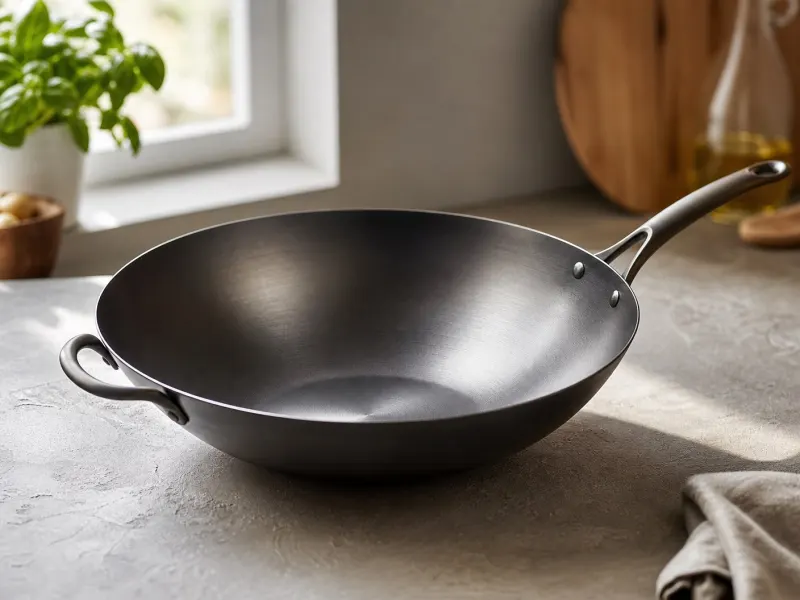
A flat-bottom wok is a bowl with a flat spot at the bottom. The sloped walls above that base are not dead space. Food rides up them and rests there between passes, which is how you fit more in without crowding the hot center.
Stir fry is really a toss-and-tumble technique. The tilt-and-push motion cycles food through the hottest zone at the base and briefly up the walls, where surface moisture flashes off. Dry surfaces sear. Wet surfaces steam.
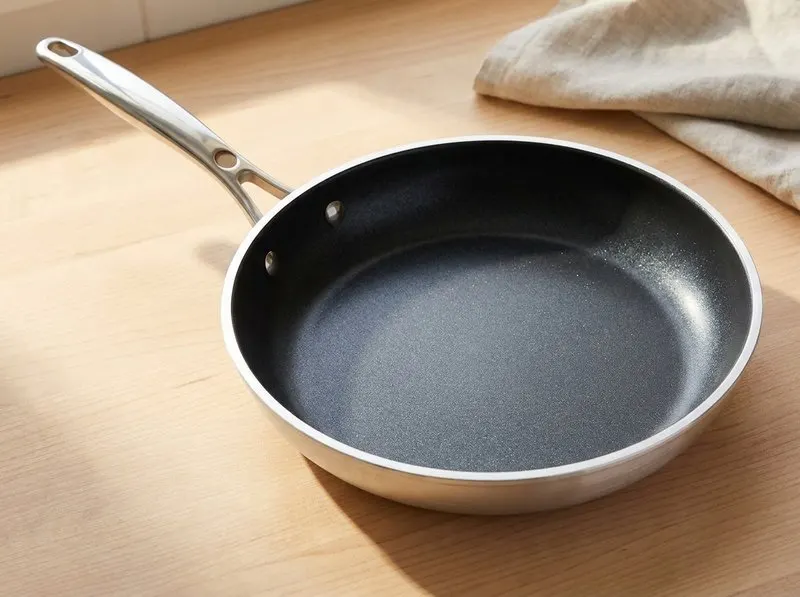
A skillet has none of that. Its short straight sides only contain food, they are not a cooking surface. Stack ingredients too deep and the top pieces never touch hot metal, so they steam instead. Owners on r/Cooking who stir fry in a skillet keep saying the same thing: it works, it is just more work, because you cook in smaller batches and turn carefully to avoid launching food across the cooktop.
That is the wok's genuine advantage. Not flavor. Room.
Where the Skillet Wins: Flat Searing Contact#
Here is the part that surprises people. The flat base of a carbon steel wok, the part that actually sears, is smaller than you would guess.
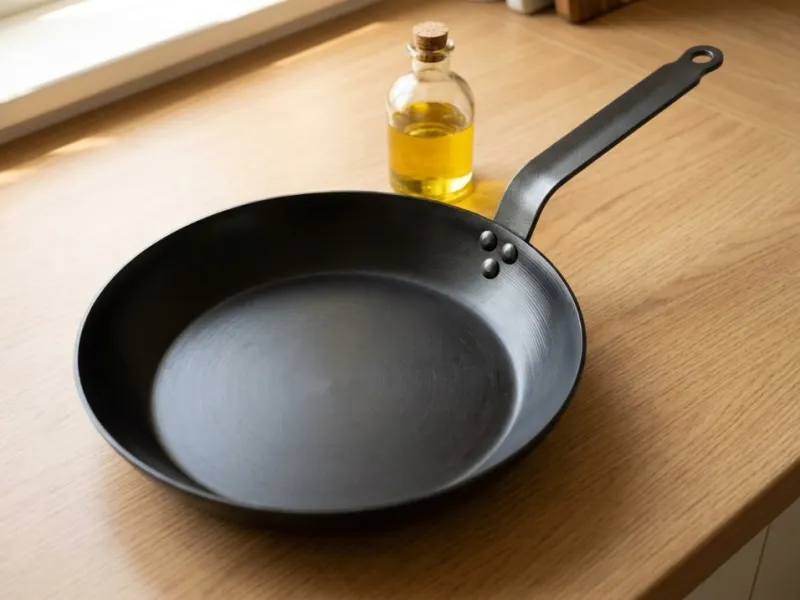
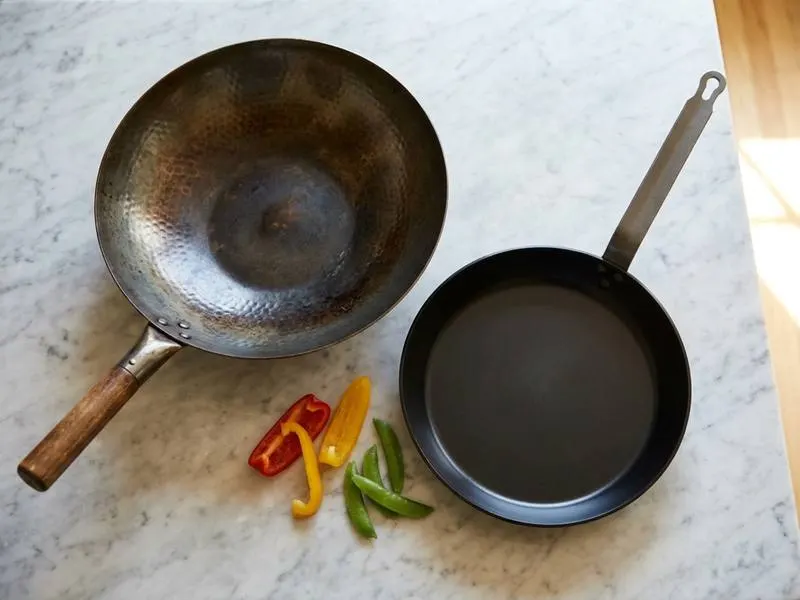
Look at any flat-bottom wok from the side and you can see it. The flat spot at the base is a fraction of the rim's width, and the walls curve away fast. A full-size skillet is flat from edge to edge. That is the whole cooking surface, so you can lay proteins flat in a single layer with room to spare.
The steeper a wok's bowl, the smaller its flat spot, which is why aggressively curved bargain woks give you almost no flat searing room at all.
So if searing a pile of beef or chicken in one go is your priority, the skillet you already own is not the thing holding you back. A wok with an unusually wide flat section narrows that gap, which is why the flat base is the spec worth checking most when you shop for one.

On Electric and Induction, the Stove Changes the Answer#
Most comparisons assume a gas stove. On a flat electric or induction element, the picture shifts.
A skillet's fully flat base keeps constant contact with the element, edge to edge, with no fuss. A wok has to earn that contact. Owners in carbon steel wok communities report that the thinnest budget woks warp on a flat element and then wobble or spin. A heavy-gauge flat bottom fixes it, and the Craft Wok's 1.8mm carbon steel sits comfortably in "heavy enough" territory.
The trade-off with any wok on a flat element is that it preheats slower and holds heat longer than it would on gas. You preheat a little longer, then lift it off the element the moment you finish so the residual heat does not keep cooking.
None of this touches flavor. Home burners, gas or electric, put out a fraction of the heat a commercial wok burner does, and that is where restaurant wok hei really comes from, not the pan.
Tossing: The Motion the Wok Was Built For#
The tossing motion is the other place the wok pulls ahead. Its curved walls guide food through the arc on their own. A skillet's flat profile fights it, and pushing too hard sends dinner onto the cooktop.
The skillet workaround is to spread food flat and let it sit before turning. That browns well, but it is pan-frying borrowed for stir fry, not the traditional stir fry technique. It works. It is just slower and more deliberate.
The Verdict: Do You Want the Walls?#
Both tools get dinner on the plate. The wok wins on capacity, tossing, and splatter control. The skillet wins on flat searing contact and rock-solid stability on a flat element. Pick based on your stove and how often you cook:
- On electric or induction, the setup in most home kitchens: buy a flat-bottom wok whose listing says it suits flat electric or induction stoves, and skip the thinnest bargain woks that warp. If you would rather not fuss with that, the skillet you own is the more reliable performer on a flat element.
- On gas, a flat-bottom wok's sloped walls contribute more than on a flat element, because the flame reaches up the sides, not just the base.
- Protein-heavy cooking, or you only stir fry now and then: keep the skillet on any stove. Its full flat base gives you more room to lay food flat than a typical steep-curve wok, and you are trading ease, not flavor.
If you cook stir fry regularly and want the process to feel effortless, a 14-inch flat-bottom carbon steel wok like the Craft Wok is the one we recommend. Its heavy build is made for the flat elements most home kitchens have. If you only stir fry now and then, or mostly sear proteins, the skillet you already own is the honest pick.
We broke down which flat-bottom woks hold up on electric in our best wok for electric stove guide, and whether a dedicated wok earns cabinet space at all in is a wok worth it. If you are still deciding what kind of pan fits your cooking, the material selector quiz walks through it in about 30 seconds.
The honest answer to "do I need a wok?" is that your skillet already gets the food right. A wok gets the walls right: the room to toss, the capacity, the splatter control. Whether that is worth a new pan and its seasoning routine comes down to how often you stand at the stove pushing vegetables around on a weeknight. For the material that takes high heat best in either shape, see the best pan for high heat cooking.