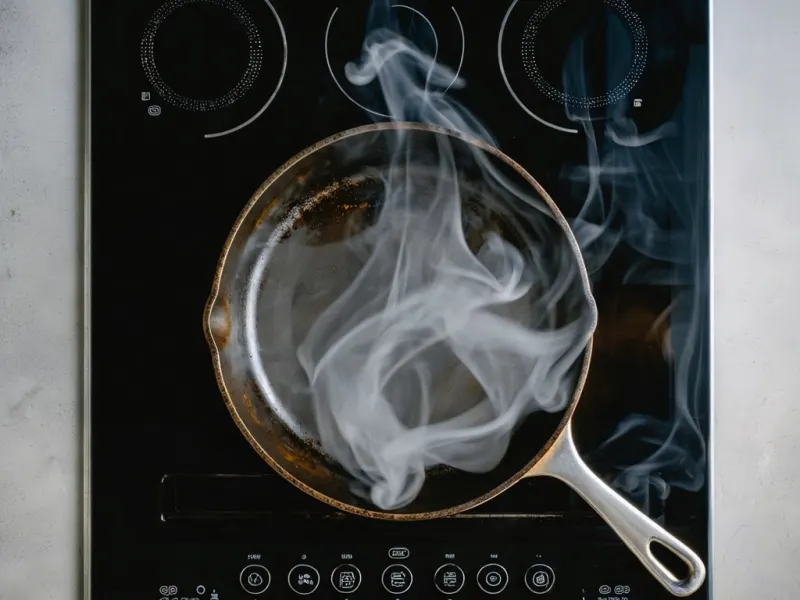
You turn the burner on, the pan starts hazing before the food is anywhere near it, and the smoke alarm is one degree away from going off. Sound familiar?
Heavy cast iron smoke is almost always technique, not a defective pan, and the moment the smoke starts tells you the fix. Smoke from a bare, dry pan before any oil means old buildup is burning off. Smoke the instant oil hits the surface means the oil is wrong or the burner is too high. A light haze that fades over the first few cooks is just fresh seasoning curing, so read the timing and the fix is usually free.
Our cast iron cookware guide covers the seasoning habit in full, along with rust, storage, and the enameled alternative.
So the real question is not why the pan smokes. It is when the smoke starts, because that one detail points straight at the fix.
We sorted through owner threads on r/castiron and cooking forums and checked what actually stopped the smoke for people. Then we cross-referenced it against the care instructions from Lodge and University of Maine Extension. The same handful of causes come up again and again. Four of them are technique, not hardware.
Why Does My Cast Iron Pan Smoke So Much? Read the Timing First#
Before you change a thing, watch the pan through one heat-up and note the exact moment the haze appears. That observation is the entire diagnosis, and it costs you a single cook.
Match the timing to one of the sections below and you already know which fix you need. Each one takes a single cause and walks through it.
You Are Probably Cranking the Heat Too High#
This is the most common self-inflicted cause, and it comes straight from cooking on thin pans. A cheap aluminum pan needs a high setting because it dumps heat the second food lands. Cast iron behaves the opposite way.
Because cast iron holds heat, a burner set above medium keeps driving the surface hotter long after a thin pan would have settled. Lodge says it flatly in their own cooking guide. Since cast iron holds heat, "it's not necessary to use a heat setting above medium." Push the dial higher and the surface eventually climbs past the smoke point of whatever oil you poured in.
The fix costs nothing. Set the burner to medium heat, then give the pan a couple of minutes to warm through on a similar-sized burner before anything else. Lodge is specific about the order too. The pan preheats first, and the oil goes in after, never into a cold pan you then blast on high.
You Are Using the Wrong Oil#
Grab whatever bottle is closest and there is a good chance it smokes before your food is even in the pan. Extra virgin olive oil and butter break down at a much lower temperature than a hot skillet reaches, so they haze almost on contact.
For cooking, both the Lodge Test Kitchen and University of Maine Extension point to a neutral oil with a high smoke point, such as vegetable or canola. Save the extra virgin and the butter for finishing a dish off the heat, where the flavor actually helps. If you want the full rundown of which oils hold up and which flake off, we compared them in our guide to the best oil for seasoning cast iron.
You Are Using Too Much Oil#
More oil looks generous and acts like sabotage. Pour a visible puddle in and it pools below the level of the cooking surface, overheats in spots, and smokes long before the pan is ready.

Cast iron needs far less oil than most people use. A thin film wiped across the surface with a paper towel heats evenly and stays put. University of Maine Extension makes the same point about seasoning oil, that any excess should be removed rather than left to sit.
If you can see the oil moving or running to one side, there is too much of it. That leftover pool is also what leaves the gummy patches that make a pan feel tacky the next day. We get into that in why a cast iron skillet turns sticky after seasoning.
Old Buildup Is Burning Off#
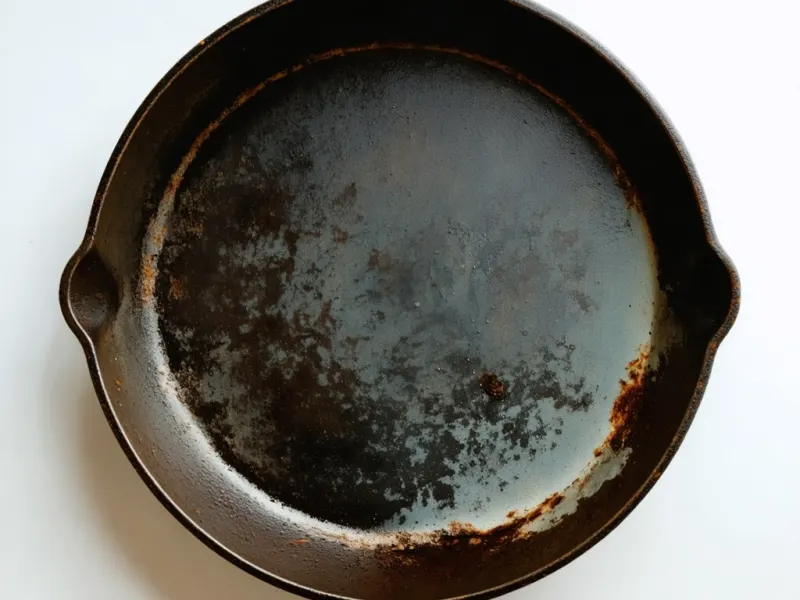
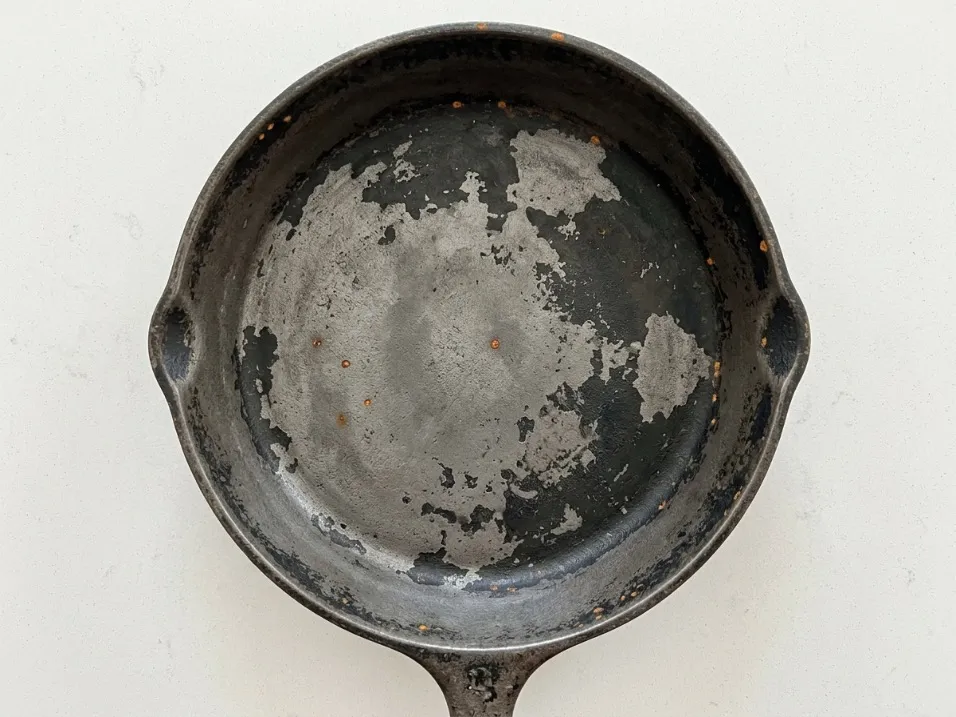
If the pan smokes while it is still bare and dry, before a drop of oil, the culprit is already on the surface. Months of cooking leave behind food particles and scorched oil that harden into a rough, flaky layer of carbonized buildup on top of the real seasoning. Heat it up and those particles burn off with an acrid smell.
Telling this apart from good seasoning is easy. Seasoning is smooth, dark, and bonded. Buildup is rough, patchy, and crusty to the touch.
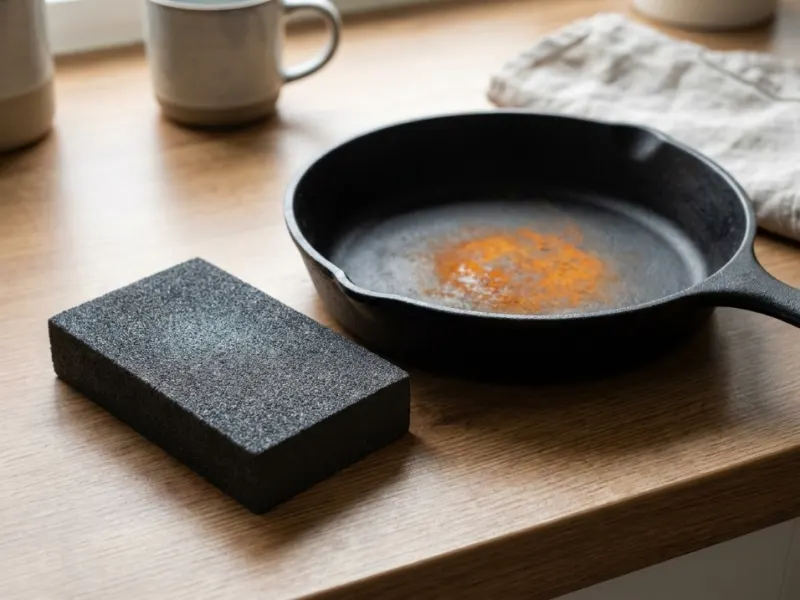
A salt scrub lifts the debris without harming the polymerized oil underneath, which is bonded to the iron and does not smoke on its own. University of Maine Extension recommends exactly this for stuck-on residue, a few tablespoons of coarse salt worked with a nonabrasive brush. For heavier crust, a full re-season in a 450 to 500°F oven for 1 hour per Lodge's own instructions resets the surface.
When the Smoke Is Actually Normal#
Not every wisp is a problem. A brand-new pan, or one you just re-seasoned, will often smoke lightly for the first few cooks as the coating finishes hardening onto the iron. Owners consistently report this settling on its own across cast iron threads.
The tell is that it fades. Curing smoke gets lighter each cook and then disappears. Smoke that shows up heavy every single time, with no sign of easing, is one of the technique causes above.
When the Pan Really Is the Problem#
Here is the honest part, and it is the one that saves you money. In most cases the pan is fine and the fix is free. A pan only earns the blame in a few specific situations:
- It is genuinely warped and wobbles on the burner, creating a scorching hot center.
- It was stripped with a harsh oven cleaner and never fully neutralized.
- It is so caked in buildup that a normal scrub will not touch it.
If you have worked through the heat, oil, and cleaning fixes and the smoke persists, switching materials will not save you. The same physics applies to carbon steel as it does to cast iron. A full strip and re-season usually clears whatever a harsh cleaner or years of neglect left behind.
Only if the pan is truly warped, or you just want a clean slate, is a replacement worth it. The safe default is a Lodge pre-seasoned skillet. At 10.25 inches it weighs about 5.7 pounds, comes seasoned and ready to cook, and Lodge has made cast iron since 1896.
The factory seasoning goes on thin and cured, which sidesteps the thick-DIY-coating smoke that trips up beginners. Know the trade-off going in. The cast surface is rough and pebbly, so eggs and delicate food stick more than on a machined-smooth pan until a few months of cooking smooth it out.
For most people reading this, the takeaway is simpler. Turn the heat to medium, use a barely visible film of a neutral high-smoke-point oil, add it after the pan is warm, and scrub off old buildup first. Do those four things and the haze is gone by the next cook, no new pan required. If you do decide to start fresh, the Lodge skillet is where we would point you.