You have probably stalled on the same fork every first-time buyer hits. Le Creuset's most popular pot is 5.5 quarts. Lodge's enameled flagship is 6 quarts. Half a quart apart, and it feels like a decision.
It is not. The honest answer to what size dutch oven do I need is the 5.5 to 6 quart range for nearly everyone buying one pot. It handles a full batch of chili for four with seconds, a pot roast over root vegetables, and a round sourdough loaf, all without weighing so much that you dread lifting it from a low oven shelf.
So why does every buying guide hand you a seven-row chart with serving counts? Because a chart looks thorough. The truth looks like one line.
The 5.5 to 6 Quart Range Is the Sweet Spot#
Here is the half-quart myth, plainly. Le Creuset selling 5.5 and Lodge selling 6 does not mean they built two different tools for two different jobs. They are the same size for cooking purposes, and both land in what long-term owners on r/Cooking and r/castiron keep calling the "do-everything" pot. When you read years of those threads, the recommendation barely changes: buy one dutch oven, buy it in the 5.5 to 6 quart range.
The "one quart per person" rule you see everywhere is where those charts go wrong. It counts liquid and forgets that solid food eats space. Drop a whole chicken, potatoes, and broth into a 4-quart pot and it is full before the carrots go in. The half-quart of extra room in the 5.5 to 6 range is the margin between comfortable cooking and overflow anxiety.
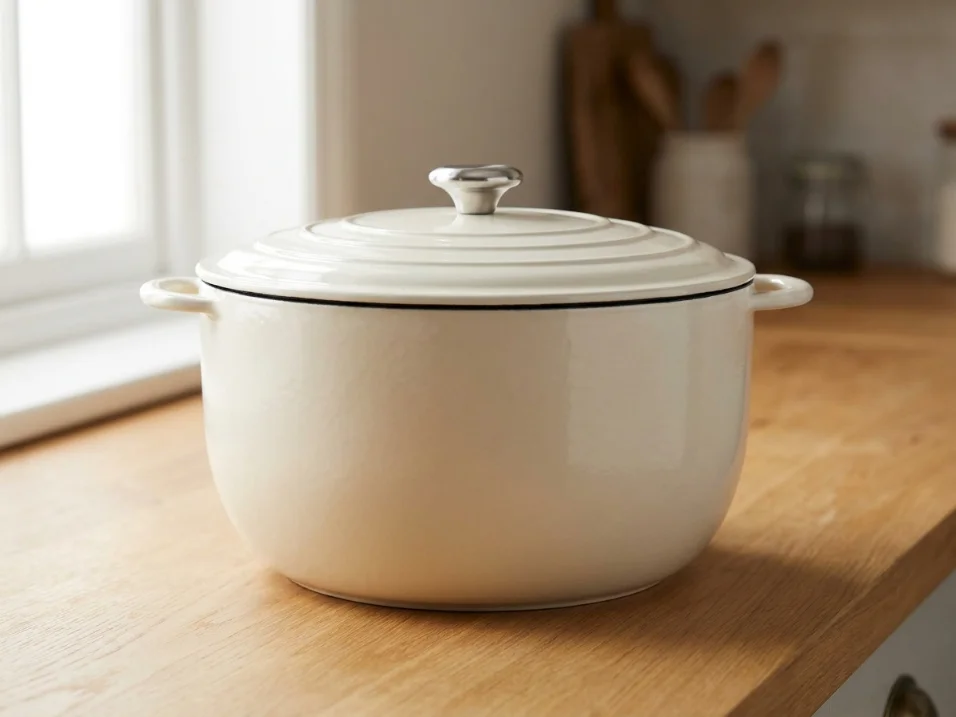
Our pick here is the Lodge 6 Quart Enameled Cast Iron Dutch Oven. It sits dead center in the range, needs no seasoning, and is oven-safe to 500°F on the stovetop and in the oven. At 13 pounds empty it is no featherweight, heavier than the Le Creuset 5.5-quart at 11.5 pounds. You can check the oven rating a brand publishes for a given line in our oven-safe temperature lookup.
The tradeoff is honest. The rim enamel can chip where the lid seats, with owner reports scattering from a chip inside a year to no wear after six years, and the light interior stains from tomato sauces, though that staining is only cosmetic.
When a Smaller Pot Makes Sense#
Cook for one or two most nights and rarely batch anything? A 3.5 quart pot saves weight and shelf space. It manages a weeknight soup, a braise for two, or a small chili without making you wrestle a heavy pot for a single bowl.
The catch is browning surface. A narrower base fits fewer pieces of meat in one layer, so you sear in two or three rounds instead of one. That adds time on any recipe where a good crust matters. For quick soups where searing is not the point, the small pot is the smarter buy.

When You Need to Size Up#
The jump to a 7.25 quart pot is not about feeding more people at dinner. It is about batch cooking. If you cook a full week of soup at once, double a chili to freeze half, or braise a large pork shoulder for pulled pork, the bigger pot keeps liquid off the rim while it works.
Weight is the real cost. A loaded 7.25 quart pot is heavy enough that you should think twice if you have any grip or wrist trouble, and it claims serious shelf space. And if your batch cooking runs to stockpot territory, boiling pasta for a crowd or simmering a big pot of stock, a dutch oven's thick walls work against you. You are heating dead metal you do not need for a rolling boil, so a lighter pot wins there.
Round or Oval#
Round for the vast majority of cooks. A round pot sits centered on a standard burner, so heat spreads evenly and bread bakes without cold spots. An oval pot always leaves edges that heat slower than the middle on a round element.
Oval exists for one job: long cuts. Brisket, pork loin, or a leg of lamb that will not fit a round pot without cutting. Braise those often and an oval pot solves a real problem. Otherwise it is the answer to a question you do not have.
Bread Baking Changes the Calculation#
Bread flips the usual "bigger is safer" instinct on its head. A covered pot works as a steam chamber: the dough releases moisture, the lid traps it, and that steam keeps the crust soft long enough for the loaf to spring tall. Steam concentration is the whole game, and it is governed by headspace, not brand.
That is why a bigger pot bakes worse bread. More empty air above the dough means the same moisture spreads thin instead of pooling at the crust, so the loaf comes out paler and flatter. A 5 to 5.5 quart round pot suits a standard loaf.
If bread is the main event, a shallow pan like the Lodge Combo Cooker at 3.2 quarts works beautifully. Its low dome keeps steam pinned to the crust and its flat base lets you load dough at counter height, and we walk through the full mechanics in our dutch oven for sourdough breakdown.
The Material Behind the Size#
Size and material are separate calls, but material decides how a given size behaves. Most home cooks land on enameled cast iron because it works on every stovetop including induction, tolerates oven heat to 500°F, and skips seasoning entirely. Its enamel will not react with tomato or wine, which matters for braises that simmer for hours.
One limit worth knowing: Lodge's own care guide warns against running an enameled pot empty and dry over heat, so it is not built for the bare-metal dry sear that plain cast iron shrugs off. Our enameled versus bare cast iron guide covers where each one wins.
Lodge or Le Creuset at the same size cook identically, owners and side-by-side reviewers agree on that. The gap is durability, weight, and finish, and it shows up over years, not months. Our Lodge versus Le Creuset piece lays out the durability and price tradeoff. If you are unsure your cooktop will drive a given pot, our induction compatibility checker confirms whether the base is truly magnetic.
One Pot or Two: The Storage Play#
If you have room for exactly one dutch oven, the 5.5 to 6 quart round enameled pot is the answer. It bakes bread, braises short ribs, simmers chili for four, and fries in a pinch. You give up big-batch volume and the room for very large roasts, and portion planning covers most of that.
If you have room for two, the pairing that covers the most ground is a 5.5 to 6 quart round as the daily driver plus a 3.5 quart for quick weeknight soups and sides. Here is the detail the size charts skip: the smaller pot nests inside the larger one, so two pots cost you barely more shelf space than one.
What Size Dutch Oven Do I Need? Quick Reference#
- Cooking for 1 to 2, no batch cooking: 3.5 quart. Light, affordable, handles weeknight meals without excess weight.
- Cooking for 2 to 4, some leftovers: 5.5 to 6 quart. The sweet spot. Handles the vast majority of recipes without compromise.
- Regular batch cooking or feeding 4 to 6: 7.25 quart. The extra volume earns its weight for large-batch stews and entertaining.
- Bread baking only: 5 to 5.5 quart round, or a shallow combo cooker for a dedicated bread setup.
- One pot, maximum flexibility: 5.5 to 6 quart round enameled. No single size covers more ground, and the Lodge 6-quart is the budget-tier default we point to.