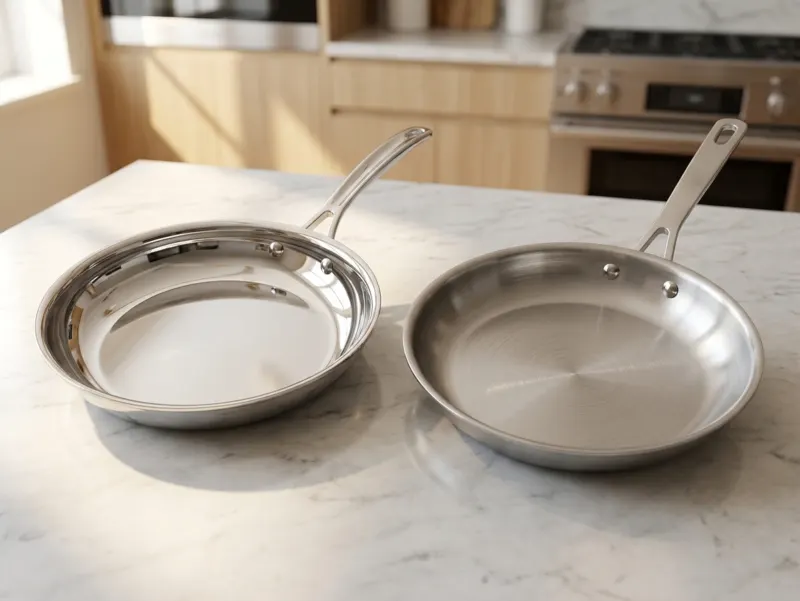
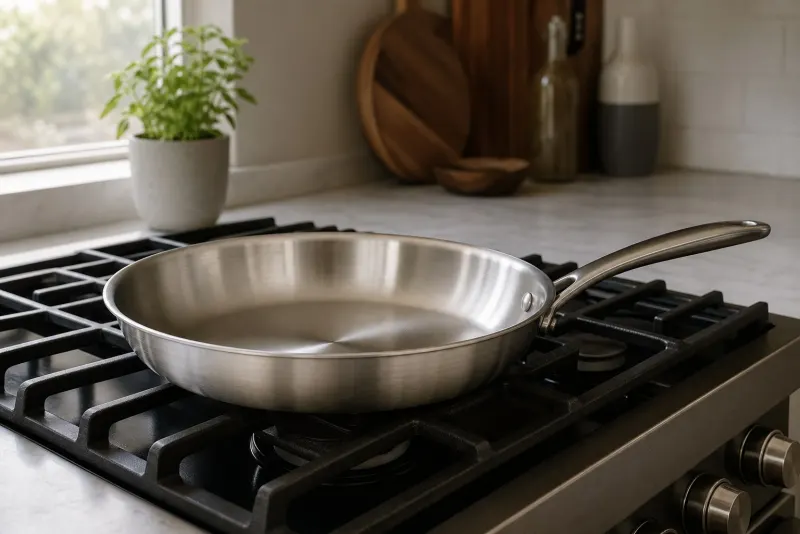
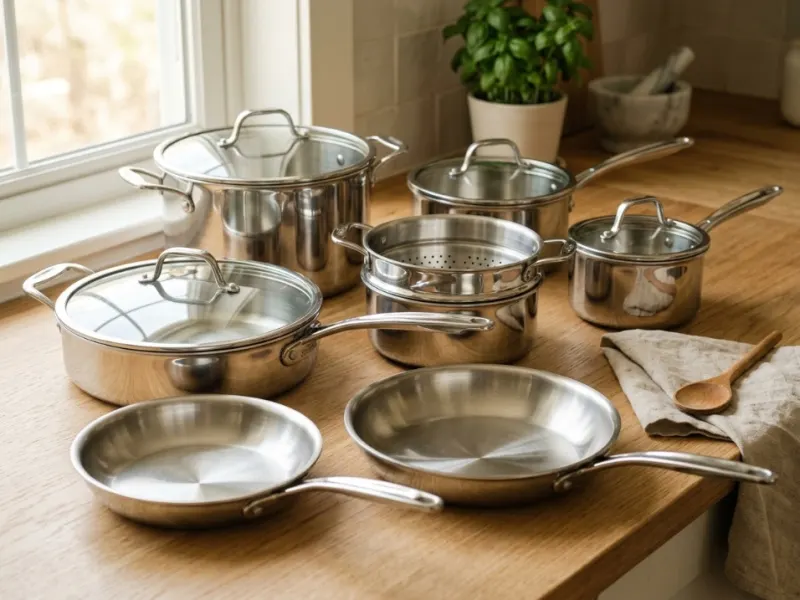
You picked stainless steel based on price, and now two brands both claim the same "fully-clad" construction. One costs more. The other's cheapest option is quietly the worse pan.
Tramontina's Tri-Ply Clad and Calphalon's Brushed 3-Ply cook the same once you confirm both are genuinely fully-clad. In 2026, the real price gap between them is far smaller than people assume.
Our stainless steel cookware guide covers that same fully-clad confirmation across brands, plus induction and maintenance.
The bigger risk isn't picking the wrong brand. It's picking the wrong line inside either brand's own catalog.
Here's what almost nobody checks first. Calphalon sells a "Classic" stainless set that costs more than its better-built Brushed 3-Ply set. On a search page, the two look nearly identical.
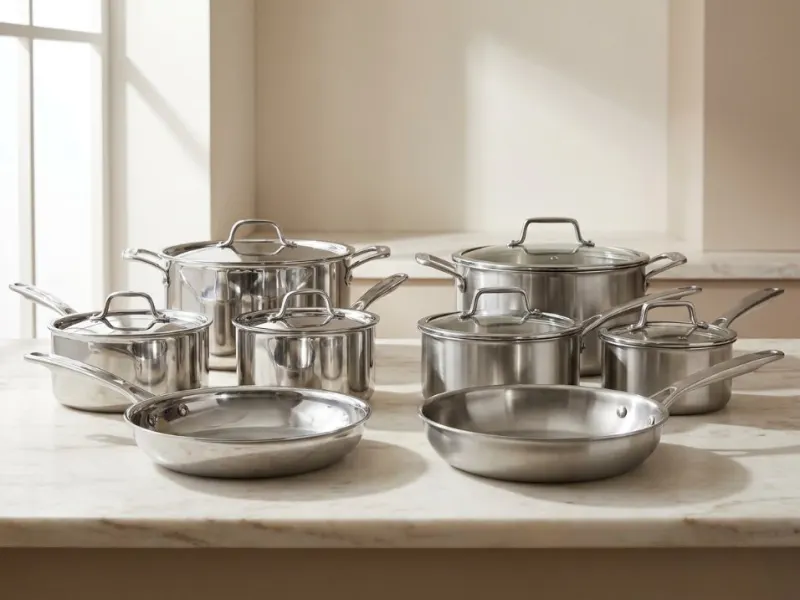
The Construction Is the Same Where It Counts#
Fully-clad construction means the aluminum core runs from the base up through the sidewalls. That's what separates an even-heating pan from a disc-bottom pan, where only the base carries aluminum and the walls are plain stainless.
Tramontina's fully-clad line is called Tri-Ply Clad. Calphalon's current fully-clad line is Brushed 3-Ply, marketed under the name "Turbo Heat Tech." That's a brand name, not a different physics; the listing title itself says "3-Ply." Calphalon uses that exact fully-clad language elsewhere on its site. For its Premier stainless line, Calphalon's own product page says: "fully clad, 3-layer metal construction delivers performance and durability for years to come," the same construction principle Brushed 3-Ply's 3-ply naming describes.
Both brands also sell a cheaper line that borrows confusing naming from their premium construction. Tramontina's Tempo line says "Tri-Ply" on the box, but it's disc-bottom at the base only. Calphalon's Classic line uses "impact-bonded aluminum base" on its own care page. Same disc-bottom shortcut, different words.
The Trap Inside Calphalon's Own Catalog#
Assume higher price means better construction and Calphalon will mislead you. Its disc-bottom Classic 10-piece set currently costs more than its fully-clad Brushed 3-Ply 10-piece set. The worse-built pan is the pricier one.
It gets messier. Amazon's own listing data shows a single Calphalon product rendering under three different titles across separate searches on the same day. One calls it a plain "3-Piece Cookware Set." Another calls it "Premier Brushed 5-Ply." A third calls it "Brushed 3-Ply." Same product, three names, live right now.
The fix is simple once you know to look. Check the listing for "fully clad" or "3-Ply" construction language before you buy any Calphalon stainless set. If the description only says "impact-bonded aluminum base," you're looking at the disc-bottom line, whatever the collection name implies.
What the Tramontina vs Calphalon Price Gap Actually Looks Like#
Most comparisons online still treat Calphalon as roughly double Tramontina's price. That was true when the comparison point was Calphalon's older Premier set, which Calphalon's own site now lists as unavailable.
Anchor on Calphalon's current fully-clad line instead, and the picture changes. A 10-piece Tramontina set runs less than the equivalent Calphalon 10-piece set, but the gap sits closer to 15 to 20 percent than to double. At the individual skillet level, the gap nearly disappears.
Calphalon's standalone 10-inch fry pan and Tramontina's individual skillet land in almost the same price range. Tramontina's 10-piece set carries more than 30,000 Amazon ratings at 4.4 stars, and Calphalon's Brushed 3-Ply 10-piece set carries nearly 5,000 ratings at a similar 4.3 stars. The standalone Calphalon fry pan is a different story, sitting at only 4.0 stars from 57 reviews. We're flagging that last number as a real but low-confidence data point, not a settled verdict.
One Independent Lab Already Tested One of These#
Consumer Reports ran Tramontina's Tri-Ply Clad frying pan through its lab program. The results were excellent for cooking evenness, excellent for food release, and excellent for handle temperature. Handle sturdiness scored very good. No Poor or Fair rating shows up anywhere in the accessible results.
Calphalon's current Brushed 3-Ply line hasn't been through that same lab program yet. Consumer Reports has tested Calphalon's older Classic and Premier lines, just not the one this article compares against Tramontina. That's a real gap, and we'd rather say so than paper over it.
Where the Real Difference Might Show Up#
We couldn't find a documented, repeatable failure mode for either brand's current fully-clad line. One verified buyer of Tramontina's 10-piece set did report the handles are "very rounded," with a narrow attachment point that makes wide pans harder to keep steady when flipping.
That's one owner's account, not a pattern we found corroborated elsewhere. Treat it as a single data point, not a consensus complaint. If handle grip matters more to you than price, handle both in person before you commit.
Both fully-clad lines pass the magnet test for induction. The trap lives in the disc-bottom lines again. Calphalon's Classic line touches "most stovetops including induction" on its own care page, language that describes a partial magnetic base rather than the full-surface contact a genuinely fully-clad pan gets. If you're not sure whether a specific set you're eyeing will actually work on your cooktop, the induction compatibility checker confirms it before you buy.

If you're trying to spread a fixed budget across more pieces instead of one brand, running the actual numbers helps more than guessing. The cookware cost calculator does that math for your own usage in under a minute.
Who Should Buy Calphalon#
Buy Calphalon's Brushed 3-Ply line specifically, never Classic, if the brushed finish or the Calphalon name is worth a modest premium to you. Confirm the exact listing says "fully clad" or "3-Ply" before checkout. That one check protects you from the trap this article opened with.
Who Should Buy Tramontina#
Anyone building a first stainless steel set, or anyone who'd rather put the savings toward a carbon steel pan than pay a premium for a brushed finish. Tramontina's Tri-Ply Clad delivers the same fully-clad physics Calphalon's fully-clad line does. It's also independently lab-tested, which Calphalon's current line isn't yet.
We covered this same fully-clad-versus-disc-bottom trap from the premium side in our All-Clad vs Tramontina comparison. The pattern holds again here. Construction type decides how a pan cooks, not the logo on the handle. If cleaning habits are what's actually holding you back from stainless steel, our guide on why stainless steel discolors covers that separately.
The Verdict#
Buy Tramontina's Tri-Ply Clad if construction and lab-tested performance matter more to you than finish. That's the right call for most first-time or budget-conscious buyers. Buy Calphalon's Brushed 3-Ply line, and only that line, if the finish is worth a modest premium.
Whichever you pick, avoid the one real mistake here: paying disc-bottom prices while assuming you got fully-clad construction. Check the listing language, not the collection name.