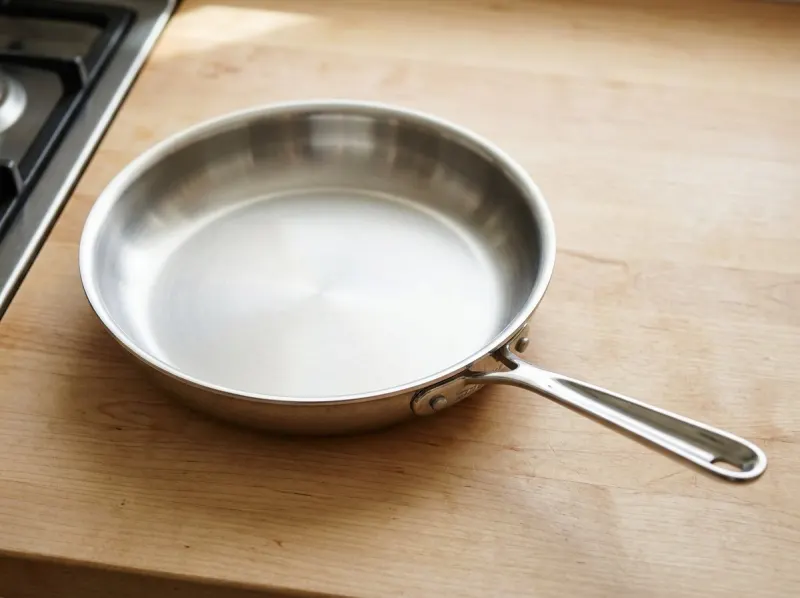
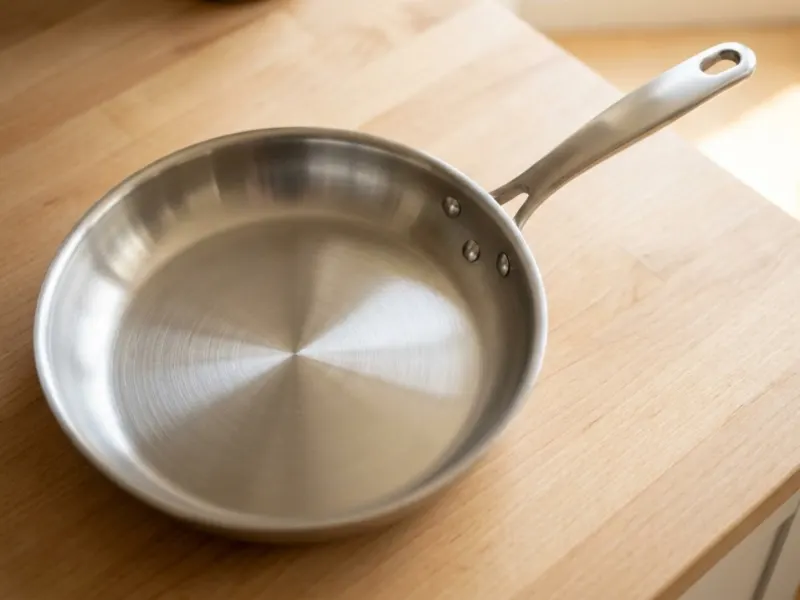
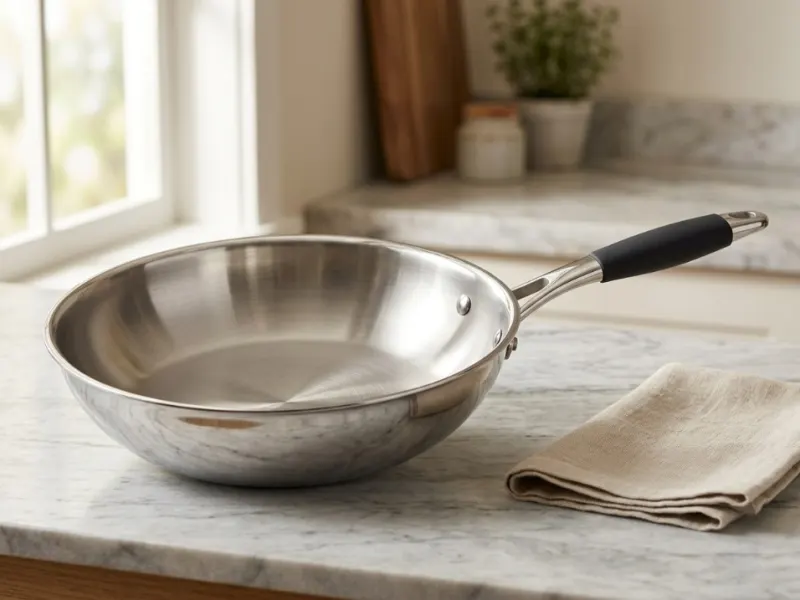
How often do you pull a pan off the stove, catch the light at a new angle, and see a rainbow shimmer that was not there before? If this is your first stainless steel pan, that moment feels like something went wrong.
Stainless steel pan discoloration is cosmetic in every case except one. Rainbow heat tints, brown oil buildup, and white chalky spots are surface-level changes that do not affect cooking performance or food safety. Bar Keepers Friend handles rainbow tints and mixed staining.
Once the pan looks right again, our stainless steel cookware guide covers the construction and induction questions worth checking too.
Here is what we found after digging through r/cookware threads, manufacturer safety data, and owner reports: each discoloration type has a different chemical cause and responds to a different cleaner. Matching the chemistry to the stain type means far less effort than reaching for one product and hoping.
The one exception is pitting. If you can catch your fingernail in small dark craters on the surface, that is salt corrosion eating into the metal itself. Everything else wipes off.
What the Color Tells You#
The color of the discoloration identifies the cause, which determines the fix. Get this right and cleanup is quick instead of a long session of confused scrubbing.
Rainbow, blue, gold, or purple film means heat tint. The protective chromium oxide layer on the steel thickened slightly from high temperature and now refracts light differently. This is the most common type. The chromium oxide layer is what makes stainless steel "stainless" in the first place, so a thicker version of it changes nothing about your food or your cooking results.
Brown patches that resist dish soap mean polymerized oil residue. Cooking fat heated too high undergoes changes that fuse it to the metal surface. Cooking spray is the worst offender here. The lecithin in aerosol sprays burns and bonds to steel at lower heat than regular cooking oil, building up a thin layer with every use until it shows.
White chalky film or spots mean calcium deposits from hard water. When water dries after boiling pasta or blanching vegetables, the minerals stay behind on the steel. The harder your tap water, the faster this accumulates.
The Right Cleaner for Each Type#
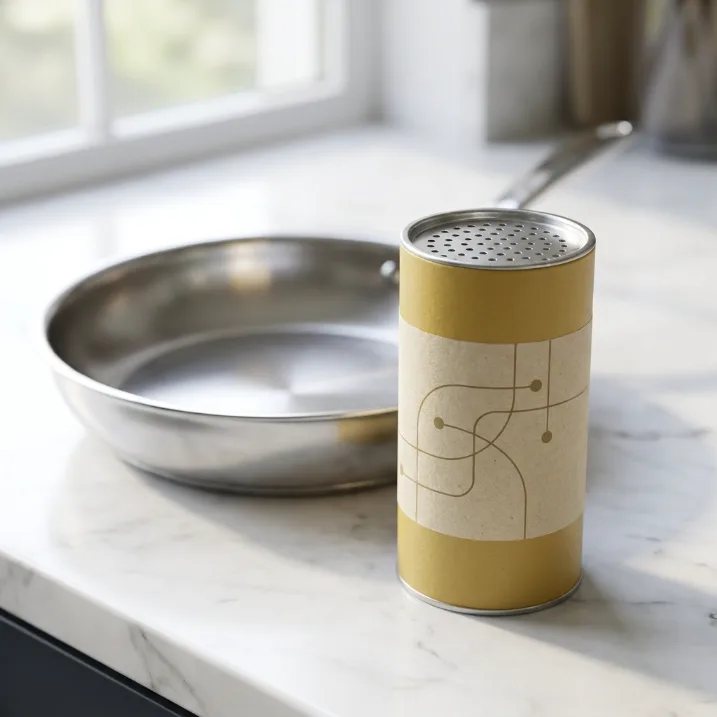
Most cleaning guides recommend Bar Keepers Friend for everything. BKF is excellent, but its strength is specific.
The active ingredient is oxalic acid, which dissolves metal oxide layers on contact. That makes it the right choice for rainbow heat tint and mixed discoloration where the cause is unclear. Sprinkle a small amount on the wet pan, work it into a paste with a non-scratch sponge, scrub gently until the rainbow lifts, and rinse.
For white calcium spots, owners and cleaning guides consistently recommend vinegar instead. Acid dissolves mineral deposits directly, and since the problem is calcium rather than metal oxide, vinegar addresses the cause while BKF does not target it specifically. Fill the pan with equal parts vinegar and water and bring it to a gentle simmer for a few minutes. The deposits dissolve or wipe away with a soft sponge.
For thick brown oil buildup, owners on r/cookware consistently reach for a baking soda paste rather than BKF. Baking soda is alkaline, and that alkalinity breaks the oil bonds holding residue to the steel.
Mix baking soda with water into a paste, spread it on the affected area, and let it sit for several minutes before scrubbing. BKF targets oxides and minerals while baking soda targets organic oil residue. Different chemistry for different problems.

One Safety Note About Bar Keepers Friend#
BKF contains oxalic acid and is not food-grade. Missouri Poison Center guidance recommends keeping dwell time brief and applying to a wet surface rather than dry. After cleaning, rinse the pan thoroughly with warm water and give it a wipe with dish soap before cooking in it again. The product works fast by design, so leaving it sitting on the surface does not improve results and can etch stainless steel.
The original Bar Keepers Friend powder works for all stainless maintenance, but they also make a "Cookware Cleanser" sold in a metal can and marketed specifically for pots and pans. Same active ingredient, same sprinkle-on-wet-surface application. The BKF label lists the product as recommended by All-Clad, Calphalon, Tramontina, and Viking among others.
When Discoloration Reveals Your Pan's Construction#
One pattern no competitor guide covers. If your pan shows a distinct ring of heavy discoloration around the edge of the base, with the center relatively clean, you are looking at the thermal boundary of a disc-bottom pan.
Disc-bottom pans have an aluminum core bonded only to the base, not the sidewalls. Where that disc ends, unclad stainless steel begins. The bare steel overheats because nothing conducts heat away from it. That focused heat produces a visible ring at the boundary.
Fully-clad tri-ply pans distribute heat through the entire surface including the walls, which is why they show more even, less dramatic discoloration patterns.
That ring is a diagnostic. If your pan produces one, you now know its construction type without flipping it over. Hot spots along that boundary may affect searing and browning over the life of the pan.
If heavy, dramatic discoloration keeps coming back within days of cleaning, the pan's construction is the underlying cause rather than your technique. Our stainless steel sticking guide covers how construction differences affect cooking performance.
The One Type That Actually Matters#
Pitting is the only form of stainless steel pan discoloration that represents real damage. Small dark dots that feel like tiny craters when you run your fingernail across them mean salt corrosion has breached the chromium oxide layer in concentrated spots. Chloride from dissolved salt eats through the chromium film in small spots, letting the iron beneath corrode. This requires prolonged contact with undissolved salt sitting on the surface.
BKF can clean the dark discoloration around mild pits, but the pits themselves are permanent physical damage to the metal. The distinction is tactile. Discoloration sits on top of the surface. Pitting eats into it.
The prevention is straightforward. Add salt only to water that is already boiling so it dissolves immediately rather than sitting as granules on the pan surface. Do not leave salty sauces or salted water sitting in the pan after cooking.
The grade of steel matters too. Pans made with 18/10 stainless (higher nickel content) resist pitting more effectively than 18/0 stainless, which appears more often in budget cookware. If you rinse your pan reasonably soon after cooking, pitting is unlikely regardless of alloy.
Preventing Stainless Steel Pan Discoloration#
You cannot fully prevent heat tint on stainless steel. Cooking involves heat, heat produces oxide. But you can minimize how dramatic it gets.
Preheat on medium rather than high. The water droplet test we describe in our stainless steel sticking guide naturally keeps you in the right temperature range without excess heat that produces heavy rainbow discoloration.
Skip cooking spray entirely. Switch to liquid oil applied with a paper towel or poured directly. This single change eliminates brown buildup for most people.
Pull the pan off the cooktop when you finish plating. Residual heat accelerates oxide formation.
Avoid thermal shock. Running cold water over a hot pan stresses the oxide layer and can cause warping in thinner constructions. Let the pan cool briefly before washing.
Does Any of This Affect Cooking?#
No. A discolored pan heats identically, releases food identically, and lasts exactly as long as a spotless one. Unlike nonstick pans that degrade over time, stainless steel has no applied coating that wears out. The cooking surface is the pan material itself, so it cannot degrade.
If you want it looking new, a quick BKF scrub after any session that leaves visible marks keeps things pristine. If you do not care about aesthetics, skip it entirely. The marks are not hurting anything. If you want the full technique breakdown, we wrote a dedicated walkthrough on using Bar Keepers Friend on stainless steel that covers paste ratios, dwell timing, and the sponge choice that prevents scratching.