Every pressure cooker vs dutch oven comparison online tells you the same two things. The pressure cooker is faster. The dutch oven tastes better.
Almost none of them explain why that flavor gap exists. The real answer is a temperature ceiling built into how a sealed pot works, not a difference in skill or recipe.
A dutch oven produces better-tasting braises because a pressure cooker's sealed cooking cycle peaks around 250°F even at full pressure. That is below the roughly 280°F point where the Maillard reaction browns food at a normal pace. A pressure cooker earns its keep on beans, stock, and tough cuts instead, where browning does not matter and the time savings are real, even after pressure build and release.
That does not mean a pressure cooker can never brown anything. We dug into Instant Pot's own manual and owner reports to find out why the flavor gap exists, and the mechanism turned out simpler than the marketing suggests: the manual keeps its Sauté function completely separate from the pressure cycle, on purpose. What that separation costs in real time, once you count all of it, is the part most comparisons skip.
Why the Dutch Oven Still Wins on Flavor#
The difference between these two tools is not really speed. It is fond, the browned, concentrated residue a sear leaves on the bottom of the pot.
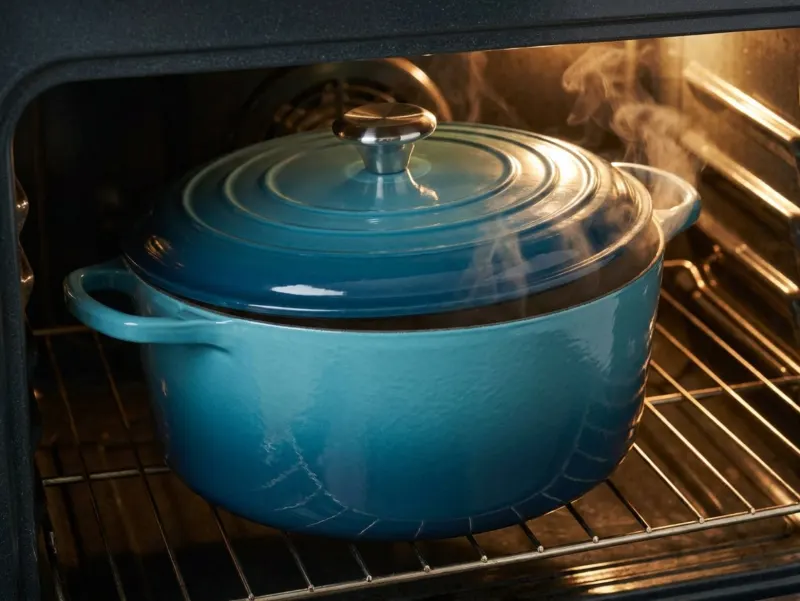
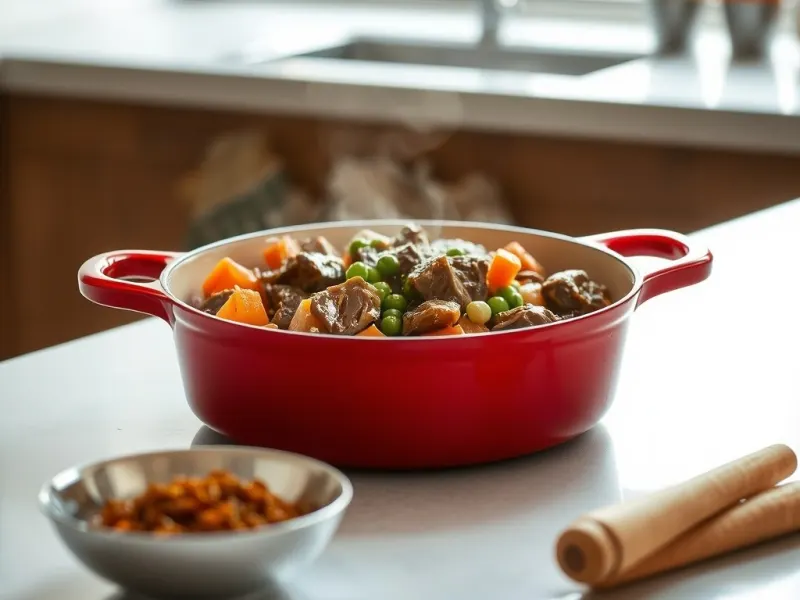
A dutch oven sits flat on a burner with a heavy, even base. Its lid comes off whenever you want to check, stir, or add something. Sear a chuck roast in it before braising and that fond dissolves straight into the liquid. It becomes the backbone of the sauce.
Fond only forms through the Maillard reaction, the chemical process behind browning and roasted flavor. Cooking science research puts the threshold for that reaction at a normal pace around 280°F. Water alone tops out at 212°F, no matter how long it simmers. That is why a boiled or steamed piece of meat never browns.
A sealed pressure cooker raises that ceiling, but only so far. University extension guidance on pressure canning documents water boiling at 239°F under 10 psi and 250°F under 15 psi. That is the same pressure-to-temperature physics that governs any sealed steam vessel. Instant Pot's own manual lists its electric pressure cookers' High setting at roughly 9.3 to 11.6 psi, close to that same 10 psi mark.
Either way, the sealed cycle stays well short of the 280°F Maillard threshold. It runs too cool, too consistently, to brown food at a practical pace. This is exactly why Instant Pot's manual keeps Sauté as its own separate, unsealed mode. If a multicooker could brown while sealed, there would be no reason for a second, dry step at all.
Where the Pressure Cooker Actually Earns Its Keep#
None of this makes an Instant Pot Duo a bad tool. It solves a real problem a dutch oven cannot touch, and Instant Pot's own manual gives real numbers for it.

Beef stew meat pressure cooks in about 20 minutes per 450 grams. A dutch oven needs several hours simmered for the same result. Dry beans run 20 to 25 minutes at pressure, or 6 to 8 minutes if soaked overnight. A full pot of chicken bone stock finishes in 40 to 50 minutes instead of an afternoon on the stove.
None of these dishes depend on a seared crust. Beans and stock do not brown much in traditional cooking either. The pressure cooker's temperature ceiling costs nothing here, and its speed is a genuine, sourced advantage.
The Hidden Time Tax Nobody Mentions#
Here is what most comparisons leave out. The printed cook time on a pressure cooker recipe is not the whole story.
Before cooking starts, the pot needs, in the manufacturer's own words, "a few minutes" after the lid locks to finish building pressure. After cooking ends, releasing that pressure takes one of two paths.
Quick release vents steam fast. Instant Pot's manual documents spatter occurring on quick release, and instructs falling back to natural release when it does. For high-starch or expanding foods, specifically soups, stews, chilis, beans, and grains, the same manual requires natural release outright. Those are exactly the dishes this article is about.
Natural release has no fixed floor. It depends on how much liquid is inside, and the manufacturer does not publish a blanket number.
One Amazon owner, reviewing the exact recipe most comparisons cite, put it plainly. The dish "takes much longer than 45 minutes" once every step is counted. A "45 minute" pot roast also needs a few minutes to pressurize, plus an uncounted natural release. Count the whole process, not just the number on the timer, and it easily runs past an hour.
Pressure Cooker vs Dutch Oven: Which Dishes Go Where#
After all of this, the split gets simple.
Dutch oven territory: beef bourguignon, short ribs, pot roast when you have the afternoon, sourdough bread, deep frying. Anywhere you plan to sear and then braise in the same pot without switching vessels.
Pressure cooker territory: weeknight beans and lentils from scratch, bone stock, tough cuts you need tender on a deadline, rice if you do not already own a rice cooker.
Either works fine: basic chicken and sauce, bean soups, dishes where a seared crust was never really the point.
Maintenance and Longevity#
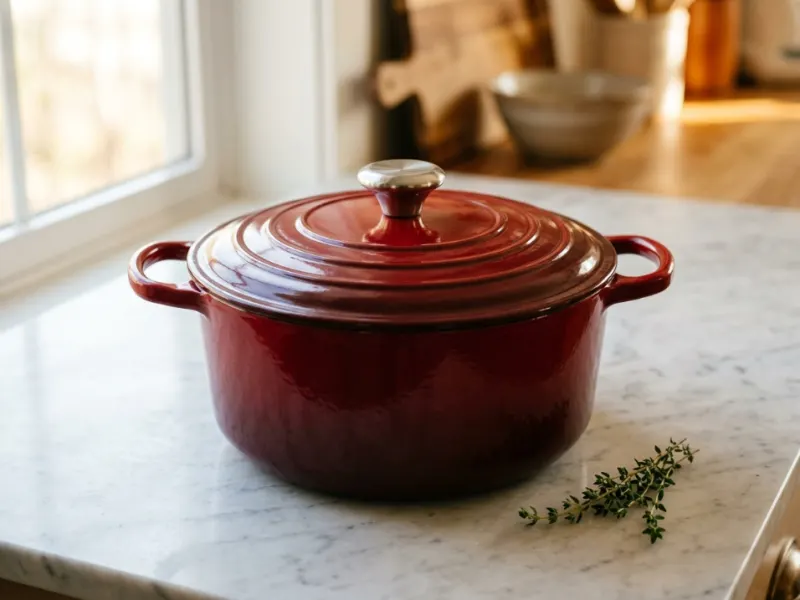
A Lodge enameled dutch oven has no moving parts. That is why it can outlast almost everything else in a kitchen. Hand wash, dry, done. Its enamel can chip on the rim over time, and the timing varies a lot by handling care, but the cast iron body underneath has nothing to wear out.
An electric pressure cooker relies on a silicone sealing ring. Instant Pot's own manual says to replace it every 12 to 18 months, sooner if it stretches or deforms. That is a scheduled, wearable part a dutch oven simply does not have.
On Amazon, two owners of Instant Pot electric multicookers separately reported saute and pressure-sensor issues at the 3 to 3.5 year mark of regular use. That is only two accounts from one platform, not a settled failure rate, but it is also the only sourced data point we could find. We could not locate a source behind the "5 to 10 years" lifespan figure that circulates online.
Instant Pot backs its cookers with a 1 year limited warranty. Lodge's enameled line carries a limited lifetime warranty against enamel defects from normal use.
If You Can Only Pick One#
For a kitchen built from scratch, the Lodge 6-quart enameled dutch oven is the stronger first pick. It handles more cooking methods: braising, baking, roasting, frying, searing. It builds fond directly in the same pot it braises in, without a separate unsealed step first, and it has no wearable seal to schedule a replacement for.
The pressure cooker is the better second tool. It is for someone who already owns a dutch oven and needs weeknight speed on beans, stock, or a tough cut that will not fit into a Tuesday. It does not replace what a dutch oven does well. It fills the gap where a dutch oven's time requirement makes a weeknight braise impractical.
If weeknight speed is genuinely the higher priority, and a slightly flatter braise is an acceptable trade, start with the pressure cooker. Just budget for a sealing ring every year or so. A dutch oven will make more sense the first time you try to build real fond in a thin-walled insert pot and hit that 250°F ceiling.
We wrote a full comparison of the dutch oven against the slow cooker for readers deciding between those two tools next. If you are shopping for your first dutch oven, what size to buy walks through the one number that fits most kitchens. Our roasting pan vs dutch oven breakdown covers the other common substitution question, and the glass top stove guide covers weight limits and heat distribution for anyone wondering whether a dutch oven fits their cooktop.