Philippe Richard cookware is made by Tabletops Unlimited, Inc., an American housewares company in Commerce, California. Its own corporate site says the company started in 1983.
Philippe Richard's own marketing tells a different story: founded in 1956, or 1968, or "over 60 years ago," depending on which page you land on. None of those dates work if Tabletops Unlimited is the real maker. The company didn't exist yet.
A brand's founding story is usually just marketing color. Even exaggerated, it's harmless.
Philippe Richard's version has a bigger problem. It can't agree with itself, and every version of it predates the company that makes the product.
Tabletops Unlimited, Inc. is the real manufacturer behind Philippe Richard, and its own "about" page states it started in 1983, after every founding date Philippe Richard's marketing claims for itself.
If you're deciding between Philippe Richard and a comparably priced set, Tramontina's Tri-Ply Clad line clears every check Philippe Richard fails. It has one named manufacturer, NSF certification, and tens of thousands of Amazon ratings instead of a handful.
The manufacturer question isn't the only gap here. Search "Philippe Richard cookware" and you'll land on articles that read like nobody involved has ever touched the product.
The 1983 Problem#
Two separate product liability lawsuits name Tabletops Unlimited, Inc. as the manufacturer of Philippe Richard pressure cookers. Its own corporate site confirms the connection isn't a stretch.
The site's live "Brands" menu names exactly four current brands: Tabletops Gallery, Denmark Tools For Cooks, Mason Craft & More, and Basic Essentials. Philippe Richard is not one of them, and a live search for "philippe richard" on that same site turns up nothing at all.
Here's the timing problem. Tabletops Unlimited's own "About Us" page says its founders started the business in 1983.
Philippe Richard's own homepage says the brand was founded in France "over 60 years ago." A separate page on the same brand domain says "it all started in 1968." A related blog post says 1956.
Pick any one of those three claims. Each one still lands before Tabletops Unlimited existed.
That's not a rounding error in a marketing bio. It's the difference between a vague heritage story and a company writing a history it can't have lived through.
What You Actually Get for the Money#
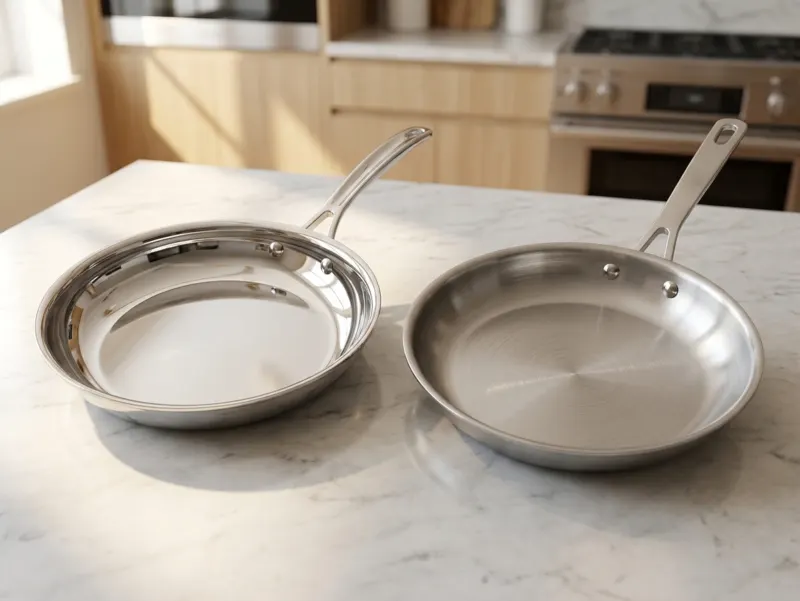
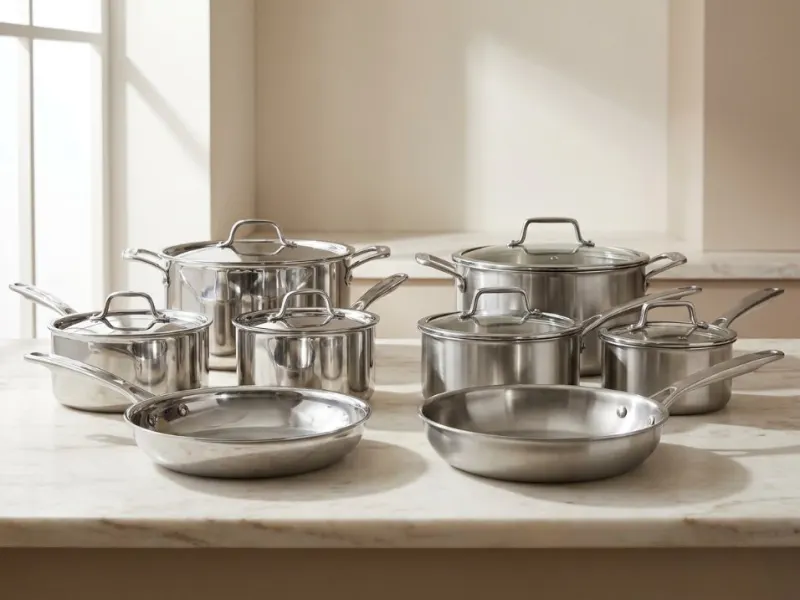
Strip away the heritage language and Philippe Richard's stainless steel sets use a basic aluminum core with a stainless steel exterior. The brand claims oven safety to 500°F and induction compatibility on the stainless line.
There's no published thickness measurement and no NSF certification. There's also no way to confirm the aluminum core runs up the sidewalls instead of stopping at the base.

That distinction matters more than it sounds. Cookware where the core only sits under the base tends to run cold at the sidewalls.
Sauces pooled near the edge cook slower than liquid in the center. Fully clad construction, where the core runs base to rim, avoids that problem entirely.
Without a published spec, there's no way to know which one you're getting in advance. Common to any brand that skips this disclosure: you're buying blind on one of the two things that decides how the pan actually cooks.
The non-stick line uses "Lite Cast Aluminum" with resin handles. That's standard budget non-stick construction, the kind sold under a dozen other house-brand names at any department store.
Philippe Richard Reviews Are Mostly Fiction#
The search results for "Philippe Richard cookware" are the brand's own worst advocate. One site's material list for the brand includes copper. Copper isn't part of Philippe Richard's product lineup in anything we found researching this brand.
Another site repeats the brand's "founded 1956" claim without noticing the same brand's own site says 1968 on one page and "over 60 years" on another.
None of the top-ranking pages identify Tabletops Unlimited. None of them notice the founding-date contradiction, let alone that it predates the manufacturer itself. That's the gap every competing article leaves open, and it's the reason this one exists.
The Pressure Cooker Lawsuits, Scoped Correctly#
Philippe Richard pressure cookers have real, documented litigation behind them. It's worth being precise about the scope.
Johnson Becker PLLC, the firm handling the cases, says it has represented more than 700 individuals injured by pressure cooker explosions. That figure spans every brand the firm has litigated against, not Philippe Richard specifically. Its own case page describes the Philippe Richard-specific portion only as "numerous clients."
Two named individual complaints are confirmed through court filings. One was filed in Los Angeles Superior Court in 2019, the other in federal court in 2022. Both name the same pressure cooker model.
Both allege the lid exploded off during normal use. That's a real, documented safety record on the pressure cooker line specifically.
It isn't the same as saying 700 people were hurt by this specific brand, and conflating the two overstates a genuine problem in a way that undercuts it.
The standard stainless steel sets haven't been part of that litigation. A pressure cooker and a stockpot are mechanically different products. Nothing here suggests the stainless line shares the same risk.
What We Would Buy Instead#
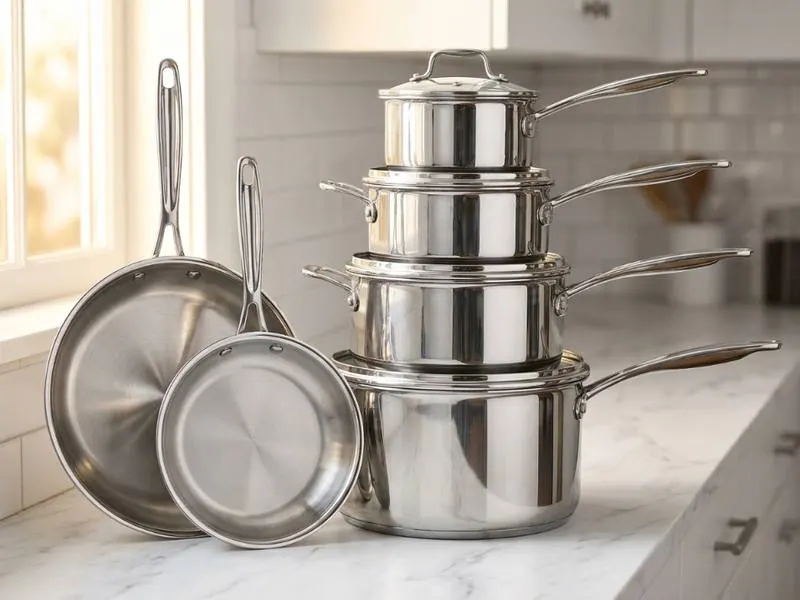
At the same price tier, the Tramontina Tri-Ply Clad 10-piece set clears every check Philippe Richard fails. Tramontina has manufactured cookware in its own factories in Brazil since 1911, so there's no manufacturer mystery to untangle.
The Tri-Ply Clad line is NSF-certified. Its aluminum core runs from base to rim rather than stopping at the bottom, exactly the spec Philippe Richard's own materials don't confirm either way.

Tramontina's construction claim isn't resting on its own word alone, either. Consumer Reports tested the Tri-Ply Clad frying pan in its own lab. It rated food release Excellent, cooking evenness Excellent, and handle temperature Excellent.
That's a nonprofit lab confirming the pan cooks the way full cladding is supposed to. It's not just Tramontina's own product page saying so.
The review-volume gap adds a second, independent data point on top of that. Tramontina's 10-piece set carries tens of thousands of Amazon ratings at a strong average. Philippe Richard's comparable listings sit in the single digits.
One brand has years of buyers willing to vouch for it in public, plus a nonprofit lab test backing the construction claim. The other is mostly sold on the strength of its name.
If you already own Philippe Richard cookware and it's working fine, there's no reason to replace it over this. Stainless steel pots and pans are mechanically simple and tend to outlast a lot of anxiety about brand pedigree. But if you're choosing between the two at the same shelf price, the decision isn't close.
How to Evaluate Any Unfamiliar Cookware Brand#
The pattern here repeats across dozens of brands at department stores and mass retailers. A heritage-sounding name. A vague founding story. Pricing that feels like a deal next to All-Clad.
Three checks before buying any brand you don't recognize:
- Search the brand name with "manufacturer" or "lawsuit." Court filings and product-liability case pages often name the real company behind the branding faster than the brand's own marketing will.
- Check Amazon review count, not just star rating. A 4.8-star product with three ratings tells you almost nothing. A 4.4-star product with tens of thousands of ratings gives you a real distribution of experiences.
- Look for a published construction spec: ply count, core placement, or a certification mark like NSF. A brand that won't say whether its aluminum core reaches the rim is selling a name, not an engineering claim.
For a closer look at whether to buy a set or individual pieces, see our cookware sets versus individual pieces guide.
Where This Leaves You#
Philippe Richard is functional budget cookware sold under a French-sounding name. Its own manufacturer can't settle on when the brand started, let alone confirm it existed before the company that makes it.
There's nothing broken about the basic stainless steel construction. There's also nothing here that survives the three checks above better than a brand that publishes its specs and lets its review count speak for itself.
If you're comparing a Philippe Richard set against a similarly priced Tramontina set, we'd put the money toward the Tramontina Tri-Ply Clad line. We generally prefer buying individual pieces over full sets, and we cover why sets often disappoint separately.
But set-for-set at the same price, the one with a named manufacturer and a real review history wins. The Cooks house brand at JCPenney sits in a similar category if you want another comparison point at the same shelf.