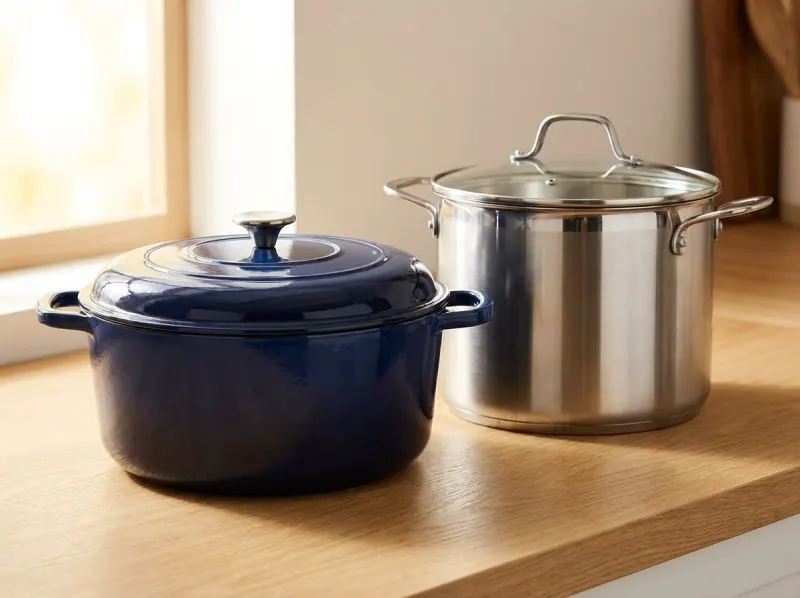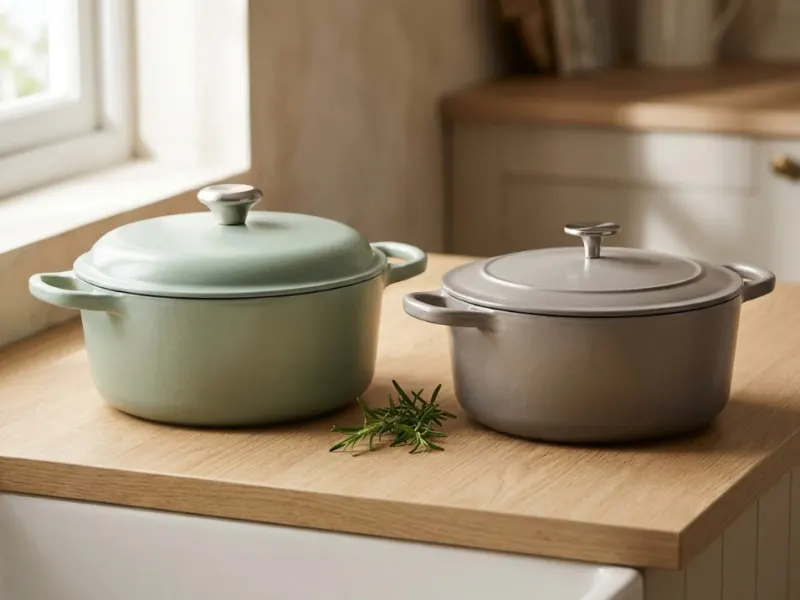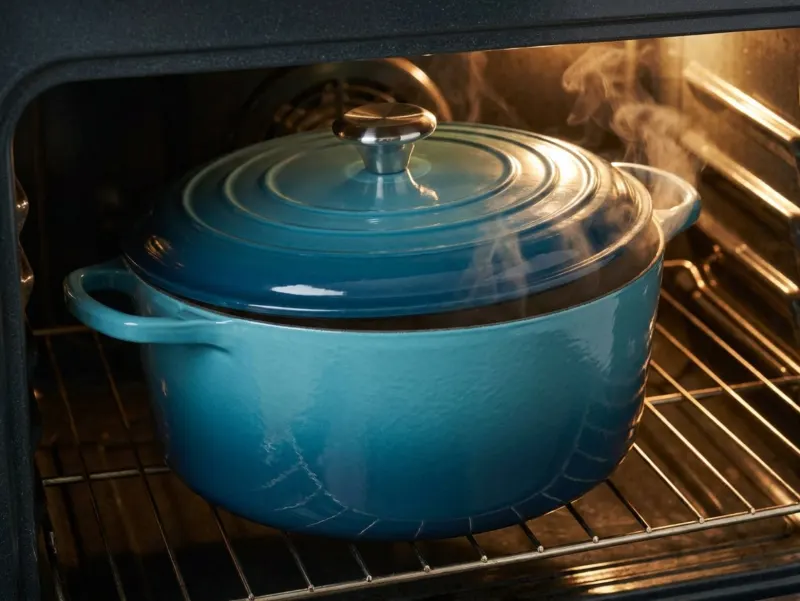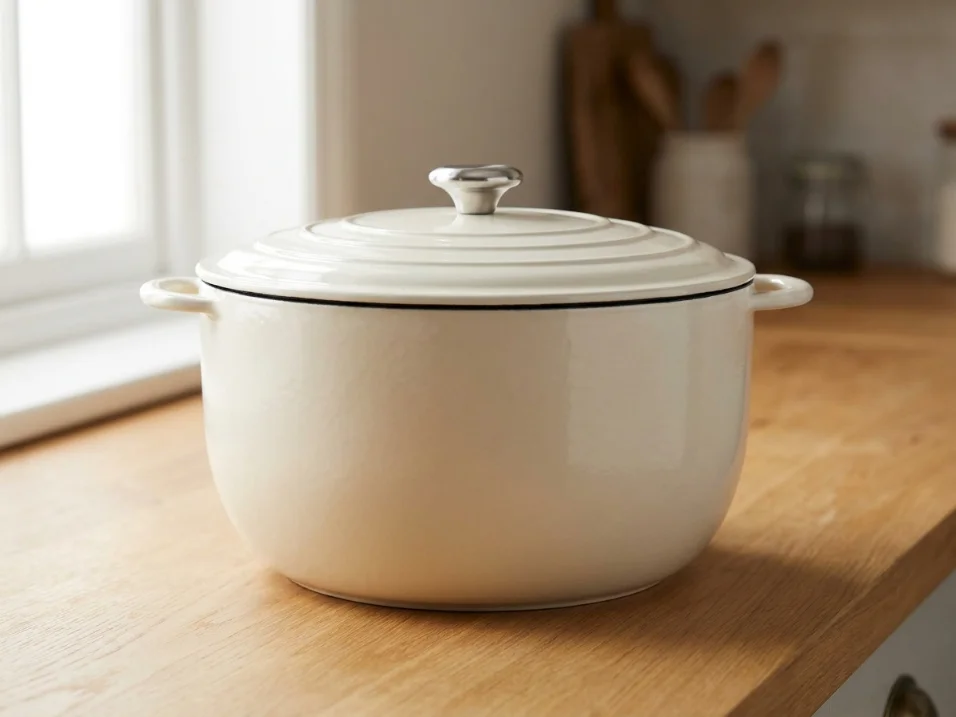
Six quarts of enameled cast iron sitting on a shelf, surrounded by pots that cost a lot more. You already suspect they all cook the same food the same way. You are right. But one detail about the Lodge has quietly changed, and almost nobody writing about dutch ovens has caught up.
The Lodge 6-quart enameled cast iron dutch oven braises, bakes, and simmers just as well as premium alternatives. Lodge now backs the enamel with a Limited Lifetime Warranty that covers chipping from normal use.
That warranty shifts the entire value calculation.
The old argument against Lodge was always "it chips sooner and you have no protection." One of those two problems no longer exists.
The remaining question is whether the chipping bothers you enough to matter, and the answer depends on something more specific than most reviews admit. We dug through years of owner reports across Amazon, Reddit, and YouTube. Here is what really separates a one-year chip from a six-year clean run.
Lodge Dutch Oven Durability: What Owners Actually Report#
The biggest mistake in lodge dutch oven review content is stating a single chipping timeline as though every unit behaves the same way. They do not. Owner reports span a truly wide range, and the difference comes down to handling habits rather than manufacturing variation.
One verified Amazon owner reported their Lodge chipped after about a year of what they described as careful use. Wood and silicone utensils only, hand-washed with a plastic scrubber, no thermal shock. Still chipped.
That report represents the low end of the range.
At the other extreme, an owner profiled in a published lifestyle piece reported six years of regular use with no visible signs of wear at all. Same product line.
A YouTube reviewer who has been using the Lodge 6-quart confirmed the pattern. The lid-to-base contact point is where chips happen. "You can chip it," they noted, adding that they are always very careful when placing the cover down. Owners who develop this habit push toward the longer end of the durability range.
The factors that accelerate chipping:
- Dropping the lid onto the rim instead of setting it gently
- Metal utensils scraping or resting against the enamel rim
- Stacking heavy items inside during storage
- Running cold water over a hot pot (thermal shock)
Avoiding those four habits is the difference between early chips and years of clean enamel. There is no magic timeline. Your Lodge will chip when you give it a reason to.

The Warranty That Changes the Math#
Here is the detail that most comparison content still gets wrong. Lodge now covers the Essential Enamel line under their Made Right Limited Lifetime Warranty. The warranty page states it directly: if you notice damage to your cookware during the normal course of cooking, Lodge will replace it free of charge.
This is not a defects-only warranty. It covers enamel damage from normal cooking. That distinction matters. A chip at the rim from a year of regular lid placement qualifies under this language.
The old Lodge argument was "it costs a fraction of Le Creuset, but you get no warranty protection." That framing is dead. Both brands now offer limited lifetime coverage on their enameled lines.
The remaining gap is observable durability and casting precision. Owner reports show Le Creuset enamel holding up longer under the same use patterns. Precision casting eliminates lid wobble. Warranty coverage is no longer a differentiator.
For the durability and price differences between Lodge and Le Creuset, see our Lodge versus Le Creuset comparison.
Weight and Handling: 13 Pounds Before You Add Food#
The Lodge 6-quart weighs 13 pounds empty, confirmed by independent lab testing. That is heavier than Le Creuset in the same size range, though the difference is smaller than many reviewers claim.
The 6 quart capacity fits a full batch of chili, a 3-pound roast with vegetables, or a sourdough loaf. Thirteen pounds empty, and noticeably heavier once you fill it with stew. That weight matters coming out of a low oven rack. The side handles transfer heat directly from the cast iron body, so you need protection every time you lift.
Silicone handle covers work better than fabric oven mitts here because they grip without adding bulk. Thick quilted mitts bunch around the handles and reduce your confidence. If you have wrist, grip, or shoulder concerns, factor the full-load weight into your decision. The dutch oven size guide walks through how smaller sizes reduce the weight problem without sacrificing what most households really cook.
Heat Distribution: Where the Physics Are Identical#
Cast iron's thermal mass is the reason enameled cast iron dutch ovens exist as a category. We confirmed what the physics predict: the Lodge performs identically to premium alternatives. Heat retention depends on mass and specific heat capacity. Those properties do not vary by brand or price.
When you sear meat at high temperature, the stored thermal energy compensates for the cold protein dropped onto the cooking surface. The pot recovers faster than stainless steel or aluminum because there is simply more mass holding heat. When you braise at a low oven temperature for 3 to 4 hours, the thick walls dampen temperature swings and keep the liquid at a steady simmer.
The stainless steel lid knob is oven-safe to 500°F per the manufacturer, which covers bread baking and high-heat roasting without needing an aftermarket replacement. If you are comparing oven limits across brands, the Oven-Safe Temperature Lookup shows ratings for every major line. For more on technique, the oven dutch oven guide covers temperature management and common mistakes.
Manufacturing: Sand Casting and What It Means#
Lodge has operated a foundry in South Pittsburg, Tennessee since 1896. Their bare cast iron (skillets, griddles, combo cookers) is made there. The Essential Enamel line, including the 6-quart reviewed here, is cast and enameled in China. Lodge also introduced a USA Enamel line cast and finished in Tennessee, positioned at a higher price point.
Sand casting is the method Lodge uses for all its cast iron. Molten iron poured into sand molds, cooled, then finished. This produces slight unit-to-unit variation in wall thickness and lid fit.
That variation is the source of the most common Lodge-specific complaint. Some owners get a lid that sits flush, while others get one that rocks a bit or shows a gap on one side.
This lid fit issue does not affect cooking performance. Steam still circulates for braising, and bread still rises under the dome.
But it bothers people who expect the precision of a machined competitor. If you buy in-store, check the lid fit before you leave. If you buy online and the gap is significant, exchange it.
Who Should Buy This (And Who Should Not)#
The Lodge 6-quart enameled dutch oven makes sense if you cook often, accept that enamel is cosmetic and chips do not affect food, and want warranty coverage backing you up when they appear. The Made Right warranty means you are not gambling on enamel longevity the way Lodge buyers were before the policy change.
It does not make sense if you want a dutch oven that will look pristine after a decade of daily use. That person should save for a Le Creuset, where owner reports consistently show enamel resisting chips much longer. The Lodge vs Le Creuset comparison covers the full tradeoff in detail.
If you are choosing between premium enameled brands specifically, the Le Creuset vs Staub breakdown narrows that decision.
Everyone who cooks in the budget tier and wants identical food from an identically-performing pot? The Lodge now comes with the warranty protection that was its one structural disadvantage. That changes our recommendation from "good enough" to "truly smart."