Two pots, same shelf, same general price tier. One ships ready for a 500°F bread bake out of the box. The other ships with a temperature ceiling you might not notice until you've already preheated.
For most home cooks who've decided to spend at this level, the Le Creuset Signature Dutch Oven is the easier daily pick.
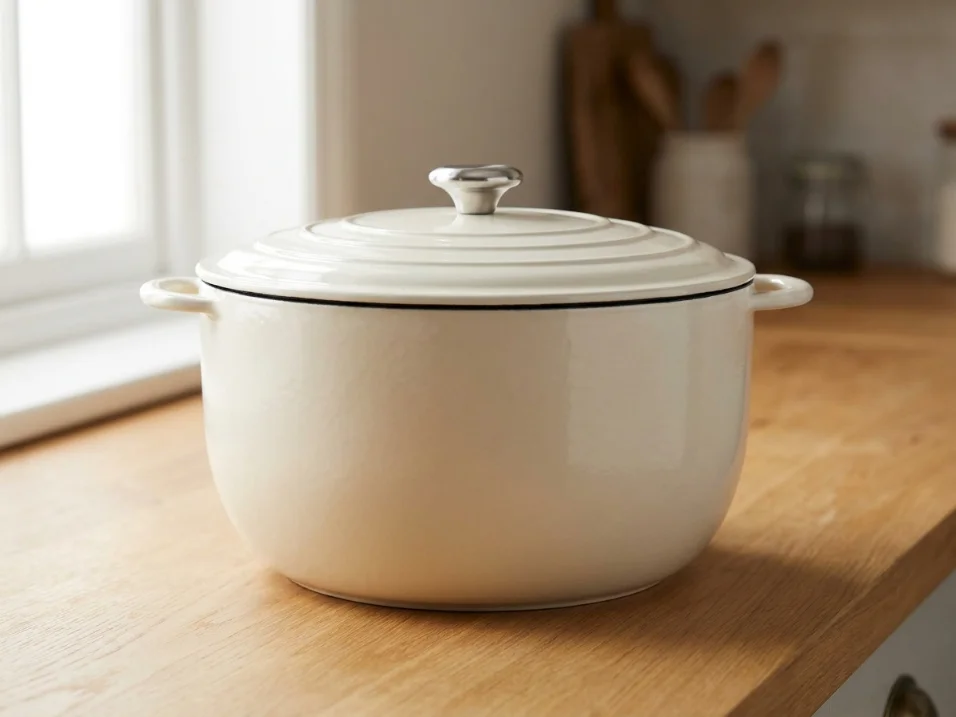
It weighs a full pound less than Staub at the same capacity, its sand interior lets you monitor browning visually, and its color range makes it double as serving ware.
The caveat is one configuration detail that changes whether you need to spend more before baking bread.
That detail is the lid knob. Le Creuset ships a tiered knob lineup where the default option caps your oven temperature. The Staub Round Cocotte ships steel-only, 500°F from the start.
If you braise low and slow and never think about oven ceilings, this won't matter. If you bake no-knead bread at high heat, it will.
We dug through official specs, owner communities, and the brands' own documentation to map exactly where these two pots diverge. See our review methodology for how we approach these comparisons.
The Knob Configuration Nobody Mentions at Checkout#
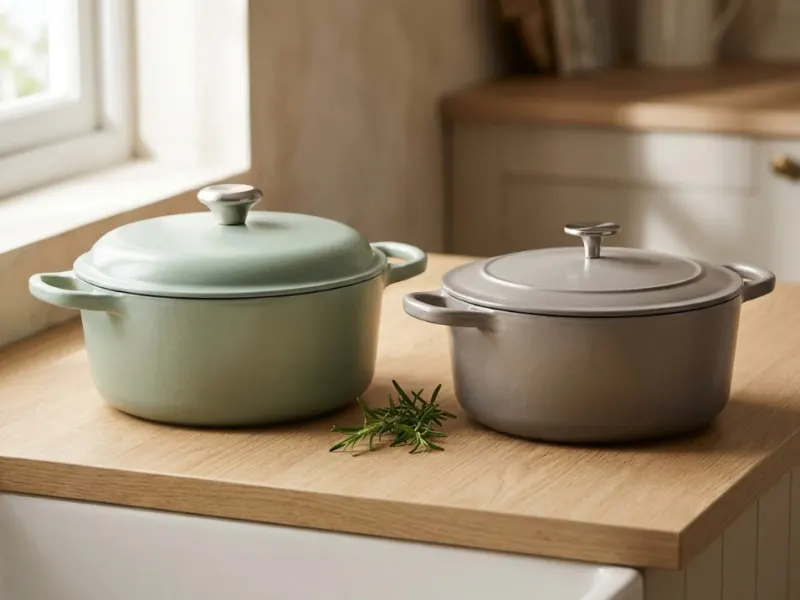
Le Creuset's Signature Dutch Oven ships with a phenolic knob rated to 480°F. Older Classic knobs run cooler, but Le Creuset doesn't list a rating for them on any current product page. If you have a Classic knob and are unsure, verify the stamp on the underside of the lid or replace it with a stainless steel knob upgrade, sold separately, that reaches the full 500°F ceiling.
Staub's Round Cocotte ships with a steel knob as standard equipment. Every configuration, every colorway, every size. There is no phenolic tier and no upgrade decision.
This means a Le Creuset buyer who takes the default Signature configuration owns a 480°F oven ceiling for bread baking and high-heat roasting. The workaround exists and is straightforward: knobs are user-replaceable (standard M6 screw), and an aftermarket stainless steel knob costs less than a cookbook. But you have to know that ceiling exists in the first place. A Staub buyer never faces this choice because the choice was made at the factory.
For someone who only braises at moderate heat, none of this registers. For someone who bakes sourdough or roasts chicken at high heat, it's the difference between the pot working out of the box and the pot needing a part swap before it can do the job. Our oven-safe temperature lookup lists the exact knob and body ratings for both brands across every product line.

Weight and What You Actually Feel Lifting a Full Pot#
The Le Creuset Signature 5.5-quart weighs 11.5 pounds according to retailer product listings. The Staub Round Cocotte in the same capacity weighs 12.5 pounds per product review testing.
One pound may not sound like much on a shelf, but that gap compounds once the pot is full and being carried from stove to oven to table. Over months of regular use, the lighter pot is noticeably less punishing on wrists and forearms.
Both pots have loop-style side handles. An owner who uses both (Uncle Scott's Kitchen, YouTube transcript) notes Staub's handles run slightly smaller but he could fit all four fingers through either one. The size difference is not dramatic enough to change how you grip the pot with an oven mitt.

Self-Basting Lid Design vs Smooth Dome#
Staub's flat lid has raised bumps on the underside, a feature the manufacturer documents as a self-basting design. The design intent is to capture condensed steam and redistribute it back over the food in an even pattern rather than letting it roll to the edges.
Le Creuset's domed lid has a smooth interior with no bumps. Condensation runs down the curved interior and collects near the rim rather than dripping evenly across the pot.
The design difference is real and manufacturer-documented. What we cannot verify from any independent source is a comparative measurement of how much extra moisture Staub's design actually retains versus Le Creuset's.
Owner communities on r/Cooking and r/castiron overwhelmingly report indistinguishable cooking results between the two brands. "You can't go wrong with either" is the consistent refrain from people who own both. The self-basting lid may matter more on a 6-hour pork shoulder than a 45-minute weeknight braise, but the difference does not appear to show up at the plate in a way owners consistently notice.
Interior Color: Visibility vs Low Maintenance#
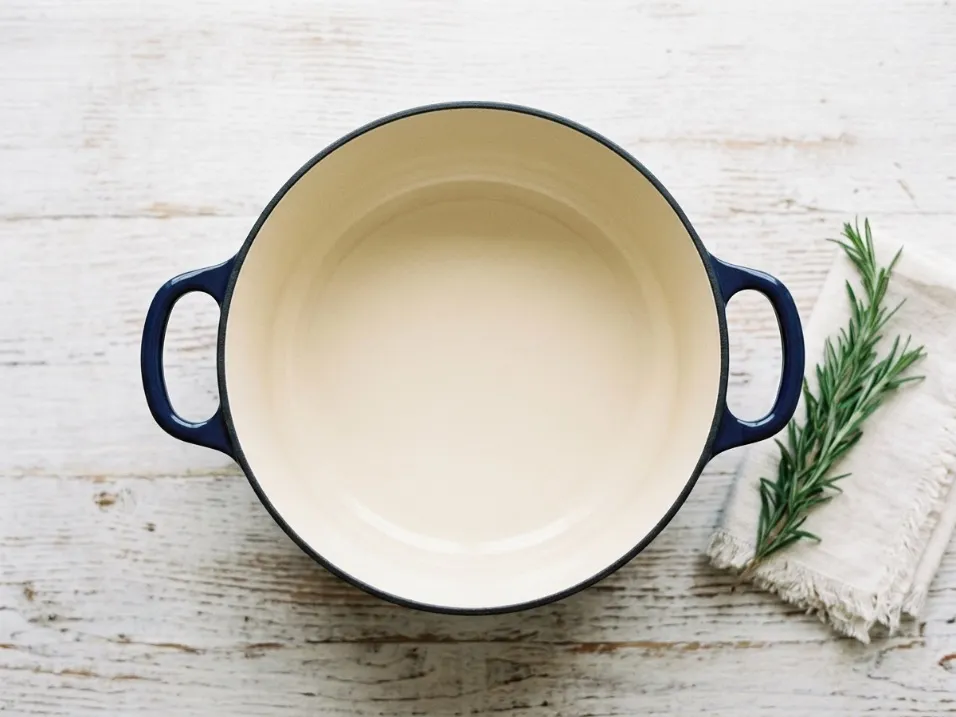
Le Creuset's sand-colored interior makes it easy to watch fond and browning develop while searing before a braise. You can see the color change happening in real time. The tradeoff is visible staining from tomato-heavy sauces, turmeric, and high-heat bread baking. The stains are cosmetic and don't affect performance, but they accumulate.
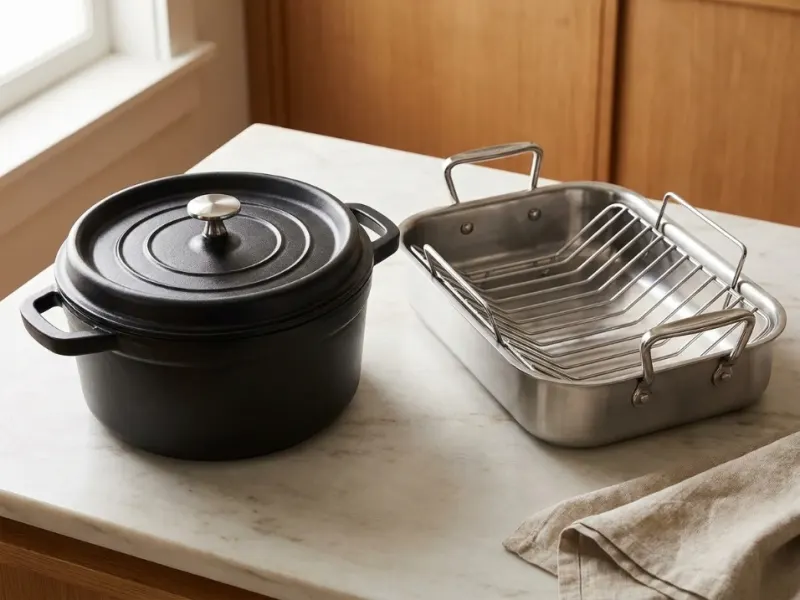
Staub's black matte interior hides that staining almost completely. A well-used Staub still looks the same inside from across the kitchen as it did on day one. The tradeoff: monitoring browning by eye alone is harder because the dark surface doesn't contrast against food color the way a light surface does.
Neither is a defect. Braising-forward cooks who sear less often may prefer Staub's hide-everything interior. Cooks who sear frequently and want to read the pan may prefer Le Creuset's lighter surface. Pick based on how you cook, not how it photographs.
Le Creuset vs Staub: The Decision That Actually Matters#
Forget "personal preference." Start with what you cook and how you handle the pot.
If you bake bread or roast at high heat and prefer to buy once without upgrading parts, the Staub Round Cocotte removes a purchase trap entirely. Steel knob, 500°F, no asterisk. You never have to verify which knob version you got or buy an upgrade after the fact.
If daily ergonomics matter more than oven ceiling, the Le Creuset Signature wins on three fronts: a full pound lighter at the same capacity, a sand interior that lets you actually see browning develop, and a 20+ color palette that makes it serving ware. The 480°F knob ceiling is a known tradeoff you can solve with a cheap aftermarket knob swap if you ever need to.
If the pot lives on the stovetop and rarely goes in the oven at all, neither knob limitation ever activates. The decision falls to weight, interior visibility, color options, and whether visible staining bothers you. Le Creuset wins on the first three for most buyers.
If you cook 4-5 meals a week and the premium pricing gives you pause, skip both. A Lodge enameled Dutch oven cooks food identically for a fraction of the cost, and the money saved buys better ingredients for months.
If you're questioning whether a Lodge Dutch oven holds its own at a fraction of the price, that comparison has a clear answer. For the broader case on enameled versus bare cast iron, see our enameled cast iron comparison.