You just sat through a bridal-show demo, or maybe an invitation for a "Dinner for Two" event landed in your inbox. The waterless cooking demo looked good. Then someone told you the price, and it stopped feeling like a kitchen upgrade.
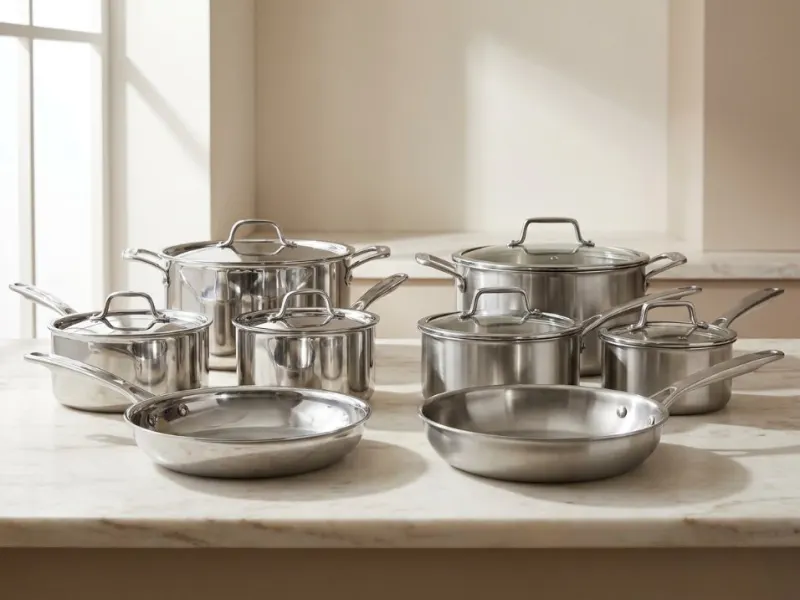
Kitchen Charm cookware is real T-304 stainless steel, sold at a steep markup through in-home and bridal-show demonstrations instead of retail stores.
Our stainless steel cookware guide covers what to check instead. Construction and induction compatibility both matter more than the pitch.
The vapor-seal lids and temperature valve are genuinely useful. The steel underneath them is the same alloy family nearly every cookware brand uses. The price mostly funds the distribution model built around getting you into that demo chair, not a superior metal.
Somewhere in that pitch, a distributor may have called it "surgical steel." We checked what that phrase is actually supposed to mean. The answer turned out to be more interesting than plain marketing fluff.
Kitchen Charm Uses Standard T-304 Steel#
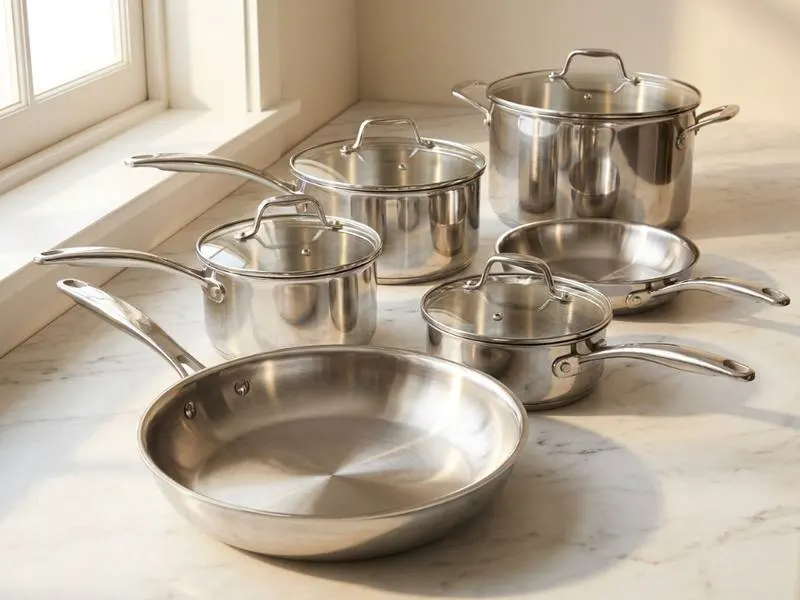
Kitchen Charm's own site names its cooking surface directly: T-304 stainless steel. The brand calls its construction "iCore," a multi-metal core bonded inside the steel shell for even heat.
T-304 is the workhorse alloy of the cookware industry. It's 18% chromium and 8% nickel. That's the same "18/8" composition stamped on the base of budget stainless sets and premium ones alike, according to a major steel manufacturer's own material datasheet.
The "surgical steel" language shows up at demos, not on the brand's own site. And it turns out the phrase doesn't cleanly describe any cookware in this comparison, including the pricier alternatives.
The actual ASTM standard for surgical-implant stainless, F138, specifies an alloy that's 18% chromium, 14% nickel, and 2.5% molybdenum. There's no titanium in that composition at all. That's a third, different alloy from both T-304 and the "316Ti" grade some premium brands use.
316Ti is real, and it's a genuine upgrade over T-304. It's governed by the general-purpose ASTM A240 plate-and-sheet standard. Titanium gets added specifically to resist a high-heat welding defect called carbide precipitation, not to make the steel surgical-implant grade.
A brand using 316Ti has a more corrosion-resistant alloy than Kitchen Charm's T-304. It still isn't the literal alloy the word "surgical" refers to on paper. Nobody in this comparison is, at any price point.
The Price Pays for Distribution, Not Materials#

Kitchen Charm sells only through its own distributors. You can't buy a set from a store shelf or check a price online before attending a demo. That setup is network marketing, a legal sales model. It's also why the sticker price sits so far from retail: every set sold carries commission for the distributor who ran the demo, their upline, and the company's event overhead.
Compare that to retail options built from the identical alloy family. The Tramontina Tri-Ply Clad uses the same T-304 (18/10) steel with a fully clad aluminum core, at a fraction of a demo-set price. All-Clad's D3 line uses the same alloy at a premium retail tier, still well under Kitchen Charm's demo pricing.
Even Heritage Steel's 316Ti Titanium Series, a real step up in rust resistance, prices below Kitchen Charm's own tier. We ran the same steel-grade-versus-price question across the category in our overpriced cookware brands piece.
Neither kitchencharmcookware.com nor its Canadian distributor lists pricing publicly. You only learn the number by sitting through the demo, which is itself a tell: a company confident its price matches its materials would not need to gate the number behind a sales pitch. The commission stack described above, distributor, upline, event overhead, is the honest explanation for why that gated number sits so far above what the identical alloy costs on a store shelf.
Waterless Cooking Is Real (and Not Proprietary)#
The demo's centerpiece, cooking vegetables or meat without added water, is a real technique. It's not a gimmick. Kitchen Charm's own materials describe it plainly: food cooks in its own moisture, and a Redi-Temp valve whistles once the pot hits the right temperature, so you know when to back off the heat.
The mechanism is straightforward. Low heat plus a well-sealed lid keeps steam from the food's own moisture inside the pot instead of boiling it away. That's a function of the lid fit and the heat setting, not a property of Kitchen Charm's specific steel or construction.
Nothing in the brand's own materials claims otherwise. They describe the shell metal and the core, never a moisture-retention treatment tied to either. Any heavy pot with a vapor-sealed lid that actually seals reproduces the same result.
The 50-Year Warranty Fine Print#
Kitchen Charm's warranty runs fifty years from the date of purchase. The brand's own document is explicit that this is a limited warranty, not a lifetime one, even if a distributor at your demo used the word "lifetime." Coverage requires shipping the piece prepaid to a single service center in Nashville, Tennessee. It only transfers to immediate family if you ever pass the cookware along.
That's a reasonable warranty on paper. The prepaid-shipping requirement is the catch: getting heavy stainless pieces to one Tennessee address is on you. Worth knowing before you sign anything: Kitchen Charm's own warranty documentation lives on a second branded site, The Kitchen Tradition, not on kitchencharmcookware.com itself.
Keep your receipt and the warranty document filed together, and check the company's current name and address once a year. If it changes, you'll want that paper trail.
What to Buy Instead#
If you liked what you saw at the demo, the cooking method and the construction principle behind it are both legitimate. The iCore core does spread heat evenly. The vapor-seal lids do seal. What isn't legitimate is the idea that any of that requires a demo-tier price for T-304 steel you can buy retail.
The Tramontina Tri-Ply Clad set is the closest match in construction at the widest price gap: same alloy family, same fully clad aluminum core, transparent retail pricing. You give up the Redi-Temp valve and the vapor-seal lid design specifically, not the underlying steel or heat performance. A full set is more pan than most kitchens need. Picking one skillet and one saucepan covers the waterless technique just fine.
Some owners report the Tramontina developing a slight wobble on glass-top stoves over time. It doesn't affect how the food cooks.
Our Calphalon stainless coverage walks through another mid-range retail option built the same way, if you want a second point of comparison.
For a broader look at how stainless holds up regardless of brand, see our breakdown of how long stainless steel cookware actually lasts.
If you specifically want the waterless method, any heavy tri-ply or five-ply stainless pot with a flat-bottomed lid gets you there. Heat on low. Wait for steam to appear at the rim, then back the heat off. You've replicated the Kitchen Charm demonstration for a fraction of the price per piece, with a warranty you can actually verify the terms of.