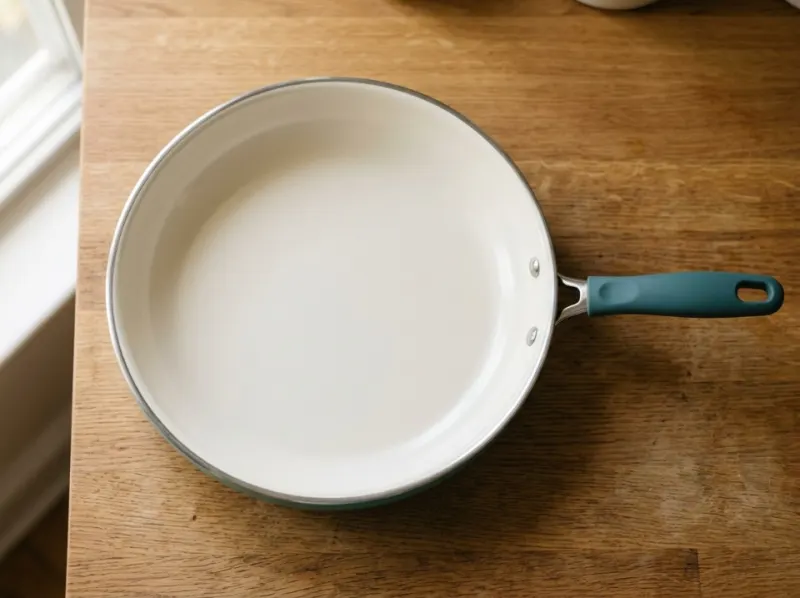
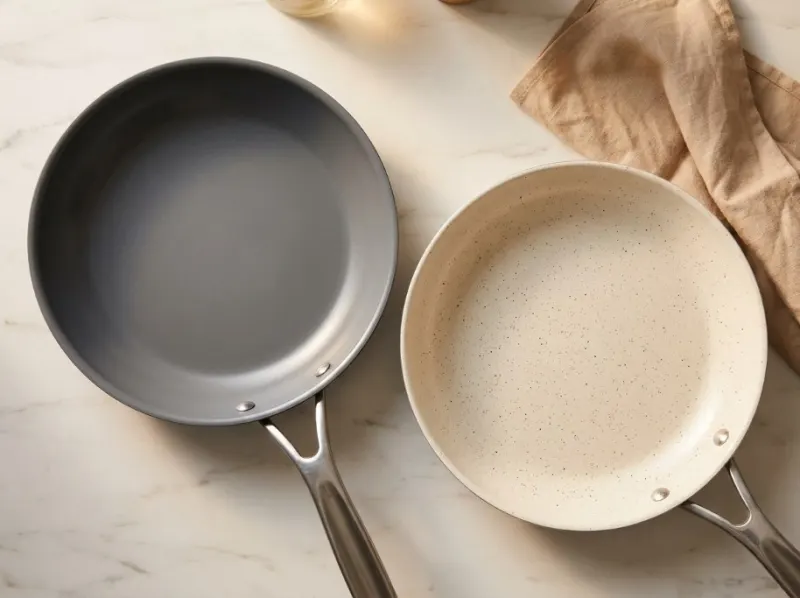
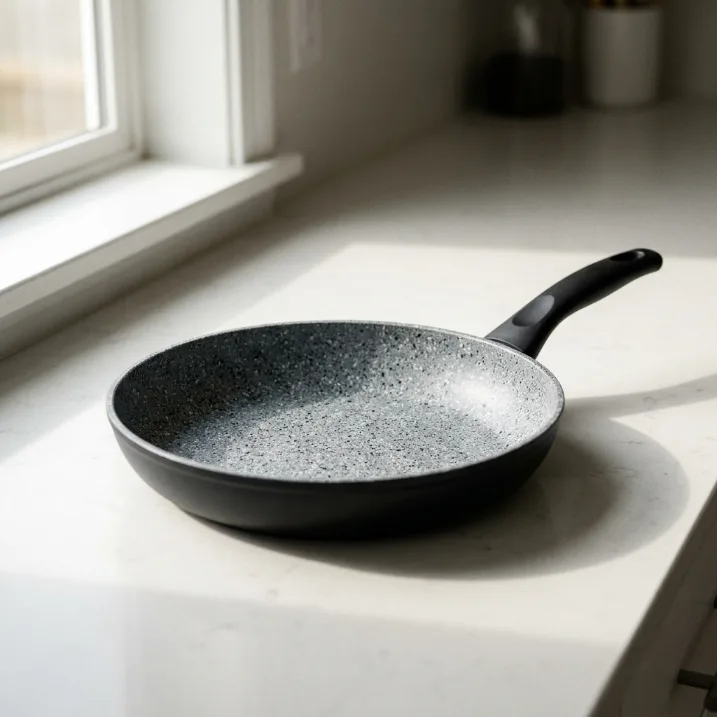
Most nonstick buyers see "T-fal Professional" and assume it means the same thing it does on other tools: premium build, a step above the budget entry. T-fal uses the word differently.
T-fal is good cookware, but only if you pick the right line.
Our nonstick cookware buying guide covers how T-fal's PTFE chemistry compares to other brands' coatings on durability and safety.
The Professional VX3, the pan most searches and reviews land on, is a recycled aluminum body with a Platinum PTFE coating. It is not hard anodized. That construction lives in the Ultimate line instead. If warp-resistance on a glass-top stove is why you want T-fal, buy the Ultimate, not the Professional.
We dug into T-fal's own product listings to find that distinction. It rarely shows up in T-fal reviews, and it changes which line you should buy.
What "T-fal Professional" Actually Gets You#
The T-fal Professional VX3 12-Inch has two real strengths. It carries NSF and CBA certification for restaurant-grade use, a credibility signal most budget nonstick skips. It also has the Thermo-Spot indicator, the heat-sensitive circle that turns solid when the pan is properly preheated.
That indicator sounds like marketing. We went through owner reports on T-fal's budget nonstick lines to check. Heat management accounts for most of the spread between a pan that fails in 10 months and one that lasts four years.
Owners who cook on medium heat with oil already in the pan report longer lifespans. Owners who preheat empty on high do not. The Thermo-Spot trains that habit without requiring any temperature knowledge.
The Professional VX3 has no hard anodized body. T-fal's own bullet copy reads "Durable Construction: 100% recycled aluminum body." That is standard aluminum with a surface treatment.
The Ultimate line is built with that layer instead, for the same anodizing reason. The Professional's spec table lists Electric Stovetop Compatible and Gas Stovetop Compatible, with no Induction Compatible entry.
T-fal labels induction capability right in the product title when a line has it. The Experience and ProGrade lines both do. The Professional never does, across any size variant we checked.
For eggs, fish, and delicate foods, the Professional does the job well. It is just not the warp-resistant, induction-ready pan the name implies.
Which T-fal Cookware Line to Actually Buy#
Most people searching for this pan want exactly what the Professional VX3 delivers: a light, affordable nonstick for eggs and fish on an electric or gas stovetop. It carries the Thermo-Spot benefit, and its replacement cycle costs very little over time with good heat habits.
Buy the Professional VX3 for this job. If you might switch to an uncoated pan, compare that one-time purchase with replacing nonstick at your own prices in the cookware cost calculator. Just do not expect anodized-grade body durability from it.
Upgrade to the Ultimate Hard Anodized instead if your stove is a flat glass-top or smooth electric coil where warp-resistance is the priority. Hard anodizing creates a harder aluminum oxide layer than standard aluminum, and anodized bodies are built on that basis to resist thermal warping. Whether that actually translates to less warping in daily use is not something T-fal's own spec language confirms, and we found no owner reports comparing the two lines side by side. The mechanism favors the Ultimate; nobody has measured it directly.
A warped pan rocks and heats unevenly. The Ultimate's own listing confirms it is oven safe up to 400°F, the same ceiling as the Professional.
Skip both lines if you cook on induction. T-fal makes induction-compatible pans in the Experience and ProGrade lines instead. The Professional VX3 lacks the magnetic base induction requires.
The Lifespan Range That Actually Matters#
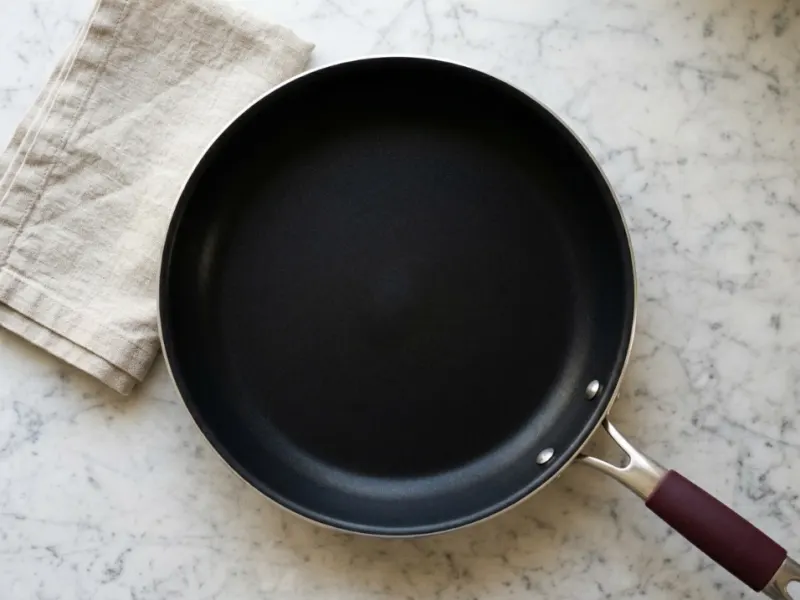
Owner reports on T-fal's budget nonstick lines show a spread wide enough to matter. At the short end, one Experience-line owner reported their replacement pan warped within its first month. A prior unit from the same owner (bought December 2024, replaced October 2025) had failed after roughly 10 months.
At the long end, a separate owner reported their pans lasting "about 4 to 5 years, then you replace it." A third independent owner account describes "about 3-4 years" with daily use.
These are not different brands. They are the same budget PTFE chemistry. The spread from 10 months to four or five years comes from heat habits, not brand investment.
PTFE is PTFE regardless of the marketing name attached to it. Whether a "reinforced" or "professional grade" coating meaningfully outlasts standard PTFE remains unproven. No independent test data compares them directly. What an expensive nonstick pan gets you is a different body material and handle feel, not a demonstrated longer coating lifespan.
The Thermo-Spot indicator addresses the primary variable directly. It removes the guesswork about when the pan is ready.

Is the PTFE Coating Safe?#
T-fal's nonstick uses PTFE, the same chemistry across the entire nonstick category. The coating has been made without PFOA since the EPA's phase-out program hit its target in 2015.
PTFE is FDA-authorized for food contact under 21 CFR 177.1550. It is inert at normal cooking temperatures.
PTFE does release fumes starting around 500°F. Human symptoms of polymer fume fever generally do not begin until 662°F.
Reaching that temperature means leaving an empty pan on high heat for an extended stretch. Normal cooking never gets there. If you keep birds in the kitchen, move them to another room; their respiratory systems are far more sensitive to PTFE degradation products than ours.
The Verdict#
We think T-fal is a good choice once you pick the right line and treat nonstick as what it is: a consumable coating whose lifespan tracks your heat habits more than your budget.
The T-fal Professional VX3 12-Inch works well for electric or gas stovetops. The Thermo-Spot indicator genuinely helps build the habits that extend coating life.
Do not buy it expecting hard anodized construction, though. That belongs to the Ultimate line.
If your stove is induction, or if warp-resistance on a glass surface is the priority, the Professional VX3 is the wrong line. T-fal sells the right pan for both needs, just not this one.
If you are weighing whether to move past nonstick entirely, the material selector quiz can frame that decision. For anyone considering switching to stainless steel to skip replacement cycles, that article covers the tradeoffs honestly.