Hard anodized cookware is safe for everyday cooking. A peer-reviewed study found raw aluminum can leach over 100 times the safe limit into acid, but anodizing exists to stop exactly that. It turns the surface into aluminum oxide, a layer Health Canada says cuts aluminum transfer into acidic foods like tomatoes and rhubarb.
Our nonstick cookware buying guide covers the coating side too. It compares how long PTFE and ceramic actually last.
The nonstick coating on top is a separate question. We'll walk through both below.
Is Hard Anodized Cookware Safe? The Short Version#
Most people typing that exact question are really asking two different things at once. Is the metal body safe? Is the coating on top of it safe?
Competing guides tend to blend both into one vague verdict. We think that blend is the actual problem. The body and the coating fail in different ways, on different timelines.
What Anodizing Actually Changes#
Standard aluminum is soft and reactive. Acidic food like tomato sauce or citrus can pull small amounts of it into your meal. That is a real reaction, not a myth.
Anodizing runs an electric current through the aluminum in a chemical bath. The surface oxidizes in a controlled way. The result is a layer of aluminum oxide fused into the metal itself, not sprayed on top of it.
Health Canada puts it plainly: this process "reduces the transfer of aluminum from cookware into foods, particularly acidic foods like tomatoes and rhubarb." That single line answers the body-safety half of the question. The oxide layer is the barrier between your marinara and the metal underneath.

The Leaching Number Nobody Puts in Context#
Here is the number that makes this concrete. A peer-reviewed migration study tested aluminum pans against oil, tap water, and an acid solution standing in for acidic food.
In oil and water, aluminum release stayed well under the 5.00 mg/L safety limit. That held true no matter how long the contact lasted.
In the acid solution, release hit 638 mg/L. That is more than 100 times the limit, from the same bare metal that stayed clean in the other two liquids.
This is not an argument against aluminum cookware in general. It is the reason anodizing targets acid specifically. The fear about "aluminum pans" almost always means bare, un-anodized aluminum touching something acidic, not a hard anodized pan doing its job. For the full migration data and a body-weight-scaled intake calculation, see our complete breakdown of whether aluminum leaches into food.
The Aluminum and Dementia Question#
The aluminum-brain-health fear traces back to research from the 1960s and 1970s. That research found aluminum deposits in the brains of Alzheimer's patients, and the fear stuck around even as the science moved on.
The Alzheimer's Society, an independent UK health charity, reviewed the evidence. It found "little evidence to suggest that the effect of copper, zinc, iron or aluminium on the brain is related to increased dementia risk." Health Canada is a bit more cautious, calling the current evidence "conflicting" rather than settled. Neither group treats a hard anodized pan as a health risk on this basis.
The Coating Question: PTFE and PFAS#
Now the second question. Most hard anodized pans carry a PTFE nonstick layer on top of the anodized body. PTFE runs on its own safety profile, one that has nothing to do with the aluminum underneath.
PTFE counts as a PFAS compound because its molecules contain fluorine. That label alarms people following "forever chemicals" news, and the manufacturing-side concern is real. But finished PTFE on a pan is a stable solid. It does not break down into food at normal cooking heat, and the FDA authorizes it for food contact under federal rule.
The manufacturing chemical that made headlines, PFOA, was phased out industry-wide by 2015 under the EPA's Stewardship Program. Its replacement, GenX, went through its own EPA human-health toxicity assessment, finalized in 2021. That assessment covers a manufacturing input washed off before the pan ships, not something left in your finished coating.
The one real PTFE risk has nothing to do with food. Published toxicology research puts fume release at around 500°F.
Human symptoms generally do not start until roughly 662°F, with pyrolysis at 752°F. The resulting polymer fume fever is mild and passes on its own in humans. Pet birds are far more sensitive and can suffer real harm at a lower threshold.
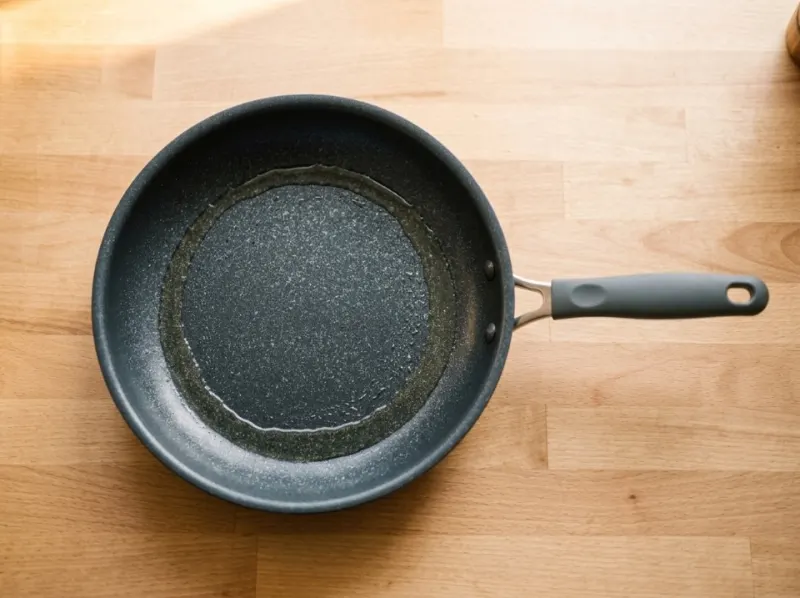
Never preheat an empty nonstick pan on high, and this risk stays theoretical. If a scratch has already worn through your coating, the scratched nonstick safety math works the same way here. What shows through underneath is inert oxide, not raw metal.
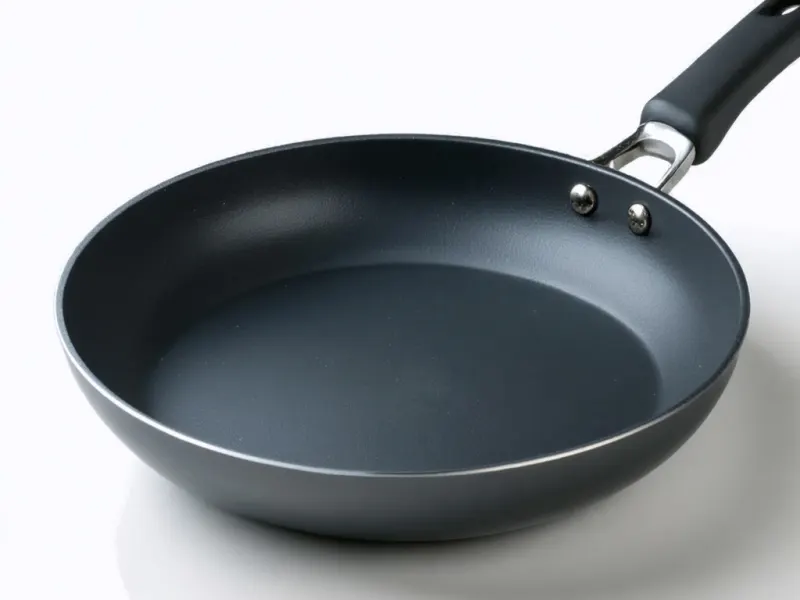
The Calphalon Hard-Anodized Skillet is a plain example of this done well. It pairs an anodized body with a PFOA-free PTFE coating, and its own care page backs up everything above.
The Other Kind of Risk: A Warning That Isn't About Your Pan#
There is a third safety story going around, and it has nothing to do with anodizing or PTFE. In December 2024, the FDA warned retailers about imported cookware sold under the alloy names Hindalium, Hindolium, Indalium, and Indolium. Testing showed it could leach lead into food.
One manufacturer, Rashko Baba Co. Ltd., was placed on an import alert as a result. No hard anodized brand you would recognize by name appears anywhere in that warning.
It targets a specific, unbranded import category. It is not "hard anodized aluminum" as sold by Calphalon, Anolon, Circulon, or All-Clad. Health Canada notes the same pattern on its own: some aluminum cookware made outside North America has been found to transfer lead into food.
The practical takeaway is simple. Know who made your pan. A named, identifiable brand is not what either warning describes.
When to Actually Replace the Pan#
Skip the anxiety and use three concrete signals instead. Replace when you see bare grey metal patches from deep scratching. Replace when food sticks despite proper oil and heat. Replace when coating flakes visibly into what you are cooking.
A worn nonstick surface on a hard anodized body is a performance problem, not a safety one. The coating's release ability fades with age. Owner reports on similar mid-range PTFE lines span roughly a year on the short end to four or five years with careful, hand-washed use. Your own timeline depends more on habits than on the pan itself.
Is Hard Anodized Cookware Safe to Buy Right Now?#
Yes. We keep landing on the same two-part answer. The anodized body turns reactive aluminum into an inert oxide layer, and that layer specifically blocks the acid reaction people worry about.
The PTFE coating on top, if the pan has one, is FDA-authorized for food contact and stable at cooking temperatures. Both halves of the question check out.
If you already own a hard anodized pan and are weighing it against plain nonstick or ceramic, this safety picture will not change that decision. Cost and durability will.
And if ceramic's PFAS-free marketing pulled you into this research in the first place, the honest version of that comparison is that both are safe. They just wear out on different schedules. If you are still deciding between materials altogether, our material selector quiz walks through the tradeoffs in a couple of minutes.
Want to check a pan's PFAS status before you buy it? Run it through our cookware safety checker first. The Calphalon Hard-Anodized Skillet remains a reasonable pick here. It has a heavy-gauge body and a two-layer PFOA-free coating backed by a lifetime warranty, and nothing in its own care page contradicts anything covered above.