Bar Keeper's Friend is not toxic in normal use. Only 5 to 10% of the powder is actually oxalic acid, the ingredient behind most "is this toxic" searches, and the real risk comes down to four specific habits.
Missouri Poison Center documents exactly two health risks for this product: skin irritation, and eye irritation or injury with prolonged contact. Both trace back to the oxalic acid in the formula, and the manufacturer's own safety data sheet confirms eye damage as the one hazard category it triggers, nothing more.
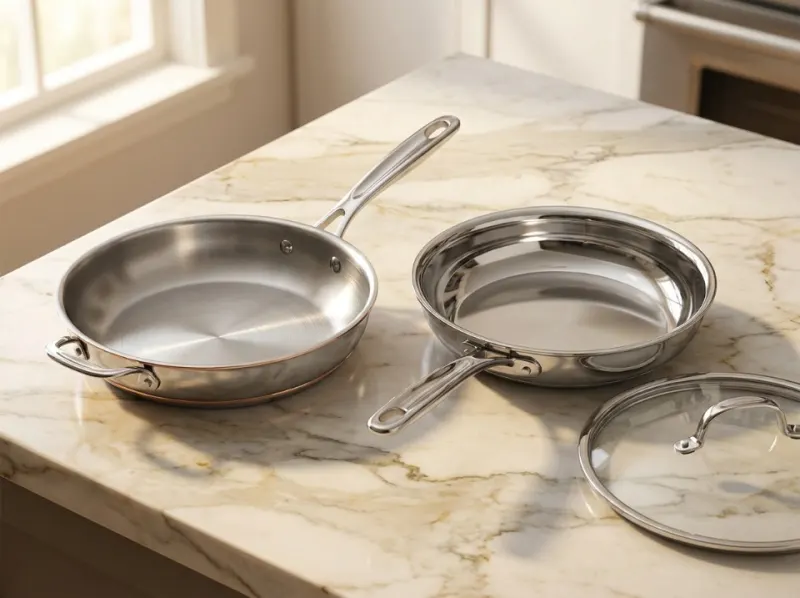
For the pan underneath the cleanser, our stainless steel cookware guide covers construction, induction compatibility, and value.
The documented risks, from the poison center page, the CDC chlorine gas report and two forum posts, trace back to four specific, avoidable habits. Skip those four, and the documented complaints stop applying to you.
That's not a reassurance we're offering without checking. It comes from lining up the ingredient breakdown, the manufacturer's own instructions, and the real complaints people post after something goes wrong.
What's Actually in the Bottle#
Most of the powder, roughly 85 to 94% by weight, is a glass oxide abrasive. Another 5 to 10% is oxalic acid, the ingredient that actually dissolves mineral buildup and heat tint. The safety data sheet lists the last 1 to 5% as benzene sulfonic acid, mono C10-16 derivatives, sodium salt. That's the manufacturer's own composition breakdown for the cleanser, not a rough guess.
The reaction product is water-soluble. A thorough rinse clears it completely, with no residue left behind to scrub out separately.
The cookware version of the powder also carries an NSF Nonfood Compounds Program registration, and we confirmed it directly against NSF's own public registry (listing 146405). NSF's approval letter for that listing covers use as a general cleaner on surfaces in and around food processing areas, not for direct food contact.
The Mistake That Actually Causes Problems#
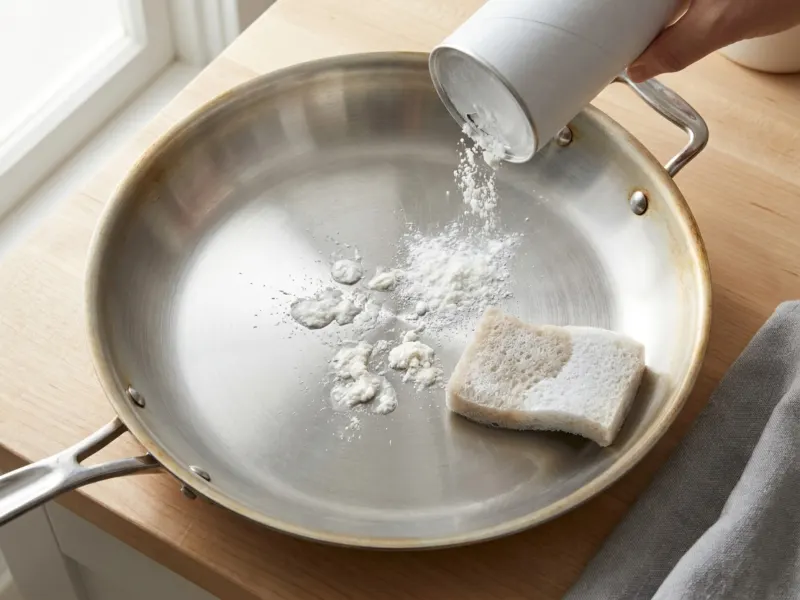
Dry application creates the first problem, and this one is true of any acidic powder cleaner, not just this product. Shaking the powder onto a dry surface kicks up dust you can inhale while leaning over the sink. Wetting the surface first solves this immediately, since the powder clumps into a paste instead of drifting into the air.
Dwell time is where this specific product's one documented damage report comes from. Bar Keeper's Friend's own label caps contact at about a minute. Oxalic acid doesn't know when to stop once the staining is gone.
One home cook on the Hungry Onion forum described exactly this: a layer of the cleanser left on a stainless pot too long, during their first-ever use, left the surface pitted.
Wrong surface is the third mistake. The product is built for stainless steel, glass, porcelain, chrome, and enameled cast iron. It's not built for anything with a seasoning layer or a coating to protect.
On Cooking Stack Exchange, one poster described using it on an unseasoned carbon steel wok. They worried afterward that they'd stripped it and would end up with rust.
Oxalic acid reacts with the oxide layer on bare metal the same way it reacts with discoloration on stainless steel. A wok fresh out of the box has no seasoning yet to stand between the acid and the metal underneath.

Mixing with other cleaners is the fourth mistake, and the only one that's an acute hazard rather than a cosmetic one. Oxalic acid is an acid, and bleach is built around sodium hypochlorite. According to the CDC's Chlorine Gas Toxicity from Mixture of Bleach with Other Cleaning Products report, combining an acid cleaner with bleach produces chlorine gas. The same report documents five separate incidents among janitorial and nursing staff, with toxicity to at least 14 people.
This isn't specific to this brand. The lesson applies to any acidic cleaner near bleach, and this product sits on the acid side of that rule.
Nothing exotic here. None of these four mistakes require bad luck.
What Surfaces to Skip Entirely#
Beyond what's already built for, think enameled Dutch ovens alongside the stainless-glass-porcelain-chrome list above. The Cookware Cleanser & Polish label also lists copper, brass and hard-anodized aluminum as safe. The full skip list runs longer than the Mistakes section covered: uncoated cast iron, carbon steel, nonstick coatings of any kind, marble, granite, silver, gold, wood, and painted or enamel exteriors.
On any of those surfaces, the acid either strips a layer you actually need or reacts with a metal it was never designed to touch. If you're still working out which material fits how you cook, start with the material selector quiz. It walks through those tradeoffs from the buying side.
If a stainless pan looks discolored rather than genuinely dirty, the fix is usually gentler than a full scrub. We've covered the different causes of stainless steel pan discoloration and which ones actually call for this product versus a plain vinegar rinse. The same caution about dwell time and surface applies to copper too, covered in how to clean copper pans.
One More Practical Note#
The exterior of a pot tends to collect the kind of baked-on grime where reaching for the fastest tool available makes sense. That's a question we get almost as often as the interior. Our full method for the outside surfaces specifically is in how to clean the outside of pots and pans. It covers where this product fits and where it doesn't.
Is Bar Keeper's Friend Toxic? The Actual Takeaway#
Bar Keeper's Friend earns its reputation as a fast fix for stainless steel because the chemistry genuinely works.
Both forum reports, one on Hungry Onion and one on Cooking Stack Exchange, involved breaking one of those four rules. The toxicity worry that sends people to a search bar is aimed at the wrong target. The actual problem is timing and surface selection, and both are fully within your control the next time you reach for the container.