You have a skillet already. Maybe a Dutch oven too. So is a wok worth adding to a kitchen that already covers searing and frying, or a pan you store after two uses?
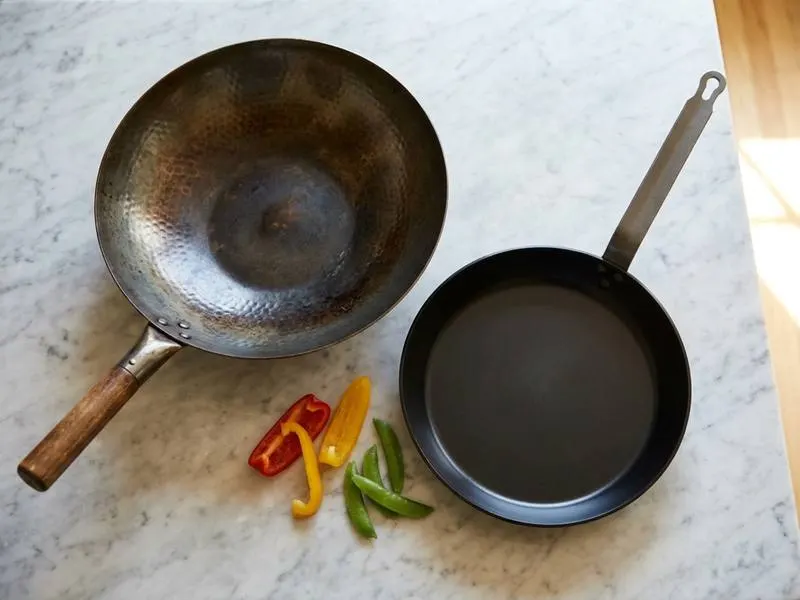
A wok is not a better skillet. It is a different shape, and that shape only pays off if your cooking actually uses it.
Its sloped, high walls exist for capacity, tossing room, and containing spatter. They are not there to cook food better than a flat pan does. If your repertoire never uses those walls, a wok is a second bare-metal pan that needs seasoning and hand-washing for a marginal gain at best.
We compared this site's findings to the two most-cited guides on this exact question. Both either sell the wok as a near-universal upgrade, or hand you shopping tips without asking whether you would use it. Neither gives you a real test. Here is one.
A Wok Is a Shape, Not a Better Pan#
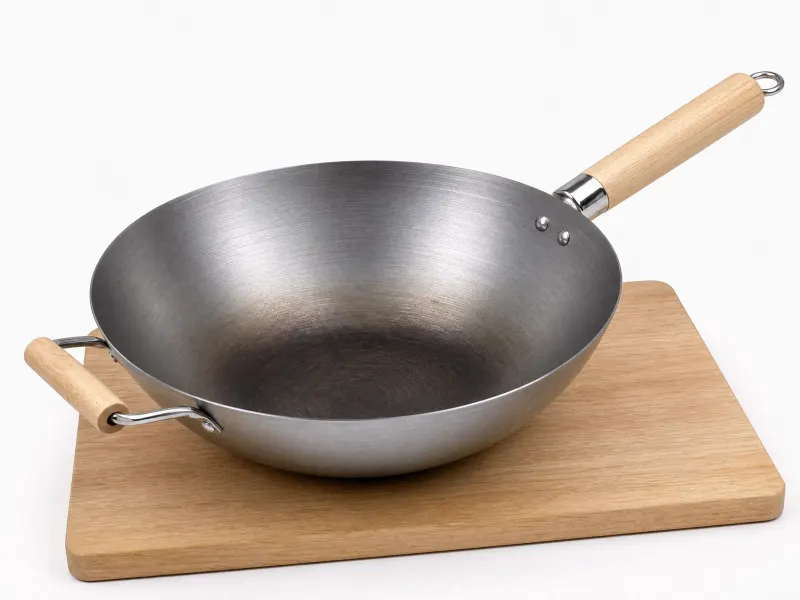
When we looked at the numbers on a spec sheet, the difference from a skillet was obvious. The Joyce Chen Classic Series wok measures 5.5 inches high across a 14-inch diameter. That is a proportionally tall profile, and it is the whole reason a wok exists. A 12-inch skillet is a shallow dish by comparison.
That height buys you capacity, tossing room, and walls tall enough to contain oil spatter during a hard sear. None of that makes the food taste different. It changes what you can physically do in the pan at once.
We think this matters for the buying decision more than anything else. If you already sear, sauté, and pan-fry well in a flat skillet, a wok will not out-cook that skillet. What it adds is room, and the only question worth asking is whether you need it.
Flat-Bottom Only: The Electric and Glass-Top Reality#
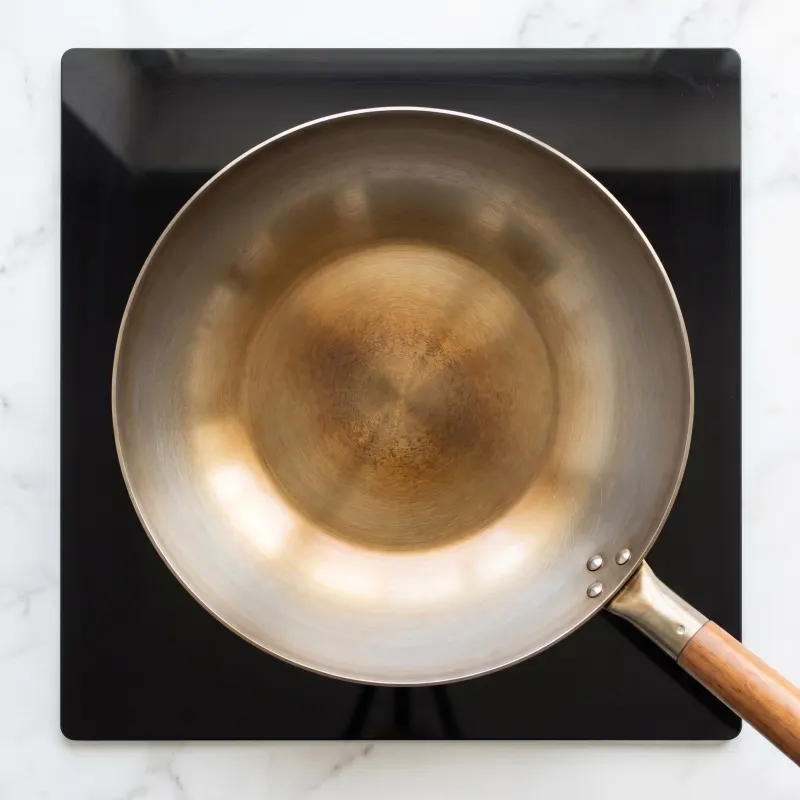
If you cook on electric, induction, or a glass-top range, one requirement is not optional. Whirlpool's own maintenance guidance for ceramic-glass and induction cooktops puts it plainly: "Use flat-bottomed cookware for best heat conduction and energy efficiency. Cookware with rounded, warped, ribbed or dented bottoms could cause uneven heating and poor cooking results." A round-bottom wok does not make contact with a flat element or an induction coil at all.
That single requirement rules out the traditional round-bottom wok for anyone off gas. A flat-bottom wok built for electric is the only version worth shopping for. Our pick for electric stoves covers the specific models that hold up.
Be honest about what you are giving up, too. Wok hei, the smoky char a screaming-hot restaurant burner produces, comes from heat output a home electric or induction element cannot match.

That gap does not close with a better pan. It is not a reason to skip a wok if the walls and capacity are what you actually want, and it is not a reason to buy one chasing restaurant flavor you will not get at home either way.
Who Should Skip a Wok#
If stir fry is the only draw, and you only cook it occasionally, think hard before adding a second pan. A flat skillet already handles occasional stir fry fine. Seasoning a bare pan and hand-washing it forever is a real commitment for a job your existing cookware already covers adequately.
The math changes with volume. If your stir fry, fried rice, or other high-batch cooking regularly crowds or overflows the skillet you already own, the walls stop being optional. Tossing room and spatter containment are exactly what a skillet cannot give you.
When the Walls Actually Earn Their Space#
Stir fry is not the only reason to want the walls. A wok's sloped sides need less oil to reach usable frying depth than a wide pot. That makes it a workable option for small-batch home deep frying when you do not want to commit a full pot of oil. Steaming with a bamboo basket balanced on the sloped sides is another use a flat skillet cannot replicate at all.
We would not call any of that a replacement for a dedicated fryer or a stockpot at real volume. It replaces the moments where you would otherwise skip a dish because setting up a separate tool felt like too much for one meal. If two or three of these uses sound like your actual week, the case for a wok gets stronger, even at moderate stir-fry frequency.
The Seasoning Commitment#
The Joyce Chen Classic Series 14-Inch Carbon Steel Wok ships bare. You are seasoning a raw pan before you cook a single meal in it. After that, you are hand-washing it for as long as you own it, no dishwasher, ever.
That step is not always smooth. At least one verified owner review on this exact wok reports the seasoning step failing on the first attempt, titled "Three hours to 'season' and food still sticks." Treat the session as a real task that can take more than one try, not a five-minute formality.
A coated nonstick wok looks like a way to skip seasoning entirely, but it is the wrong trade. PTFE coatings release fumes starting as low as 500°F according to NCBI/StatPearls, well below the heat a wok needs to sear and stir fry properly. A nonstick coating and genuine wok cooking are not compatible at the temperatures that make a wok worth using in the first place. Our PFAS safety checker tracks which coated lines are genuinely PFAS-free by brand, if coating safety is part of your decision beyond just woks.
Carbon steel is the material that can actually take that heat. That is exactly why it dominates every serious wok recommendation, including our own carbon steel buying breakdown. If you are still deciding what material fits your cooking style beyond woks specifically, the cookware material selector walks through the tradeoffs.
We would also weigh the gauge. Joyce Chen's own listing states a 1.5mm gauge, while Craft Wok and Yosukata each state 15-gauge, about 1.8mm, on their own product pages. That makes the Joyce Chen the more warp-prone of the three if you leave it empty on high heat. Add oil before cranking the burner, not after.
So, Is a Wok Worth It?#
Buy a wok because your cooking uses the walls, not because you are hoping it makes your stir fry taste like a restaurant's. If you stir fry, fry, or steam in volume, a budget flat-bottom carbon steel wok is a low-risk way to find out, and the Joyce Chen Classic Series is exactly that. If your skillet already covers your cooking, and you will not season a bare pan for it, skip it and keep the cabinet space.