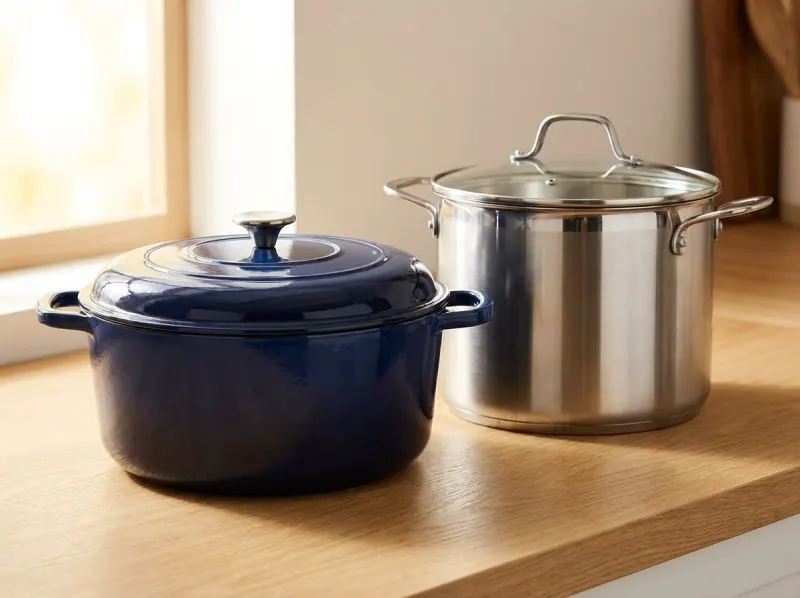
Lodge's own spec sheet lists its 10.5-inch square grill pan at 7.33 pounds. The flat 10.25-inch skillet from the same company, covering almost the same footprint, weighs 5.7 pounds.
A grill pan is not really a taste question, it's a weight question. That extra 1.63 pounds is about 29% more cast iron than an equivalent flat skillet, and it buys a cooking surface where only the ridge tops actually touch your food. For most cooks who already own a flat pan, that math doesn't clear the bar. For a specific kind of cook, it does.
The spec sheet settles the weight question outright. What we still had to dig through owner reports to settle is whether that extra iron ever earns its keep.
What Ridges Actually Do to Your Food#
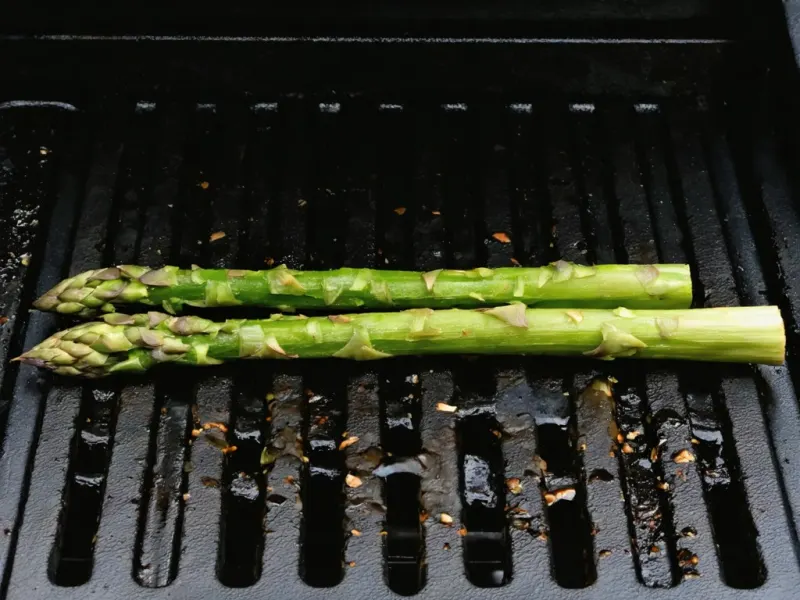
A grill pan is a heavy cast iron pan with raised ridges across the cooking surface. Only the ridge tops touch whatever you're cooking. Fat drains into the channels between them instead of pooling under the food.
That design makes the grill marks everyone associates with restaurant steaks. It also means most of the food's surface never touches hot metal.
One practitioner's answer on cooking.stackexchange.com puts the tradeoff plainly. On a flat pan or under a broiler, a marinade "could char and burn large parts of your marinade, especially if you use herbs." On a ridged pan, "it will only burn (char) the lines, and steam in between."
The rest of the marinade's flavor stays intact. That's a real upside, specific to marinated or herb-coated food, not to steak searing.
Fat drainage is the other genuine benefit, and it's simple geometry rather than anything that needs a citation: since the ridges physically lift food above the channels, rendered fat runs down and away instead of pooling under a burger or a chicken thigh. The exterior cooks drier and crisper as a direct result.
The same lift applies to vegetables. Zucchini and bell pepper strips that would otherwise steam in their own released moisture on a flat pan char at the ridge line instead, because the moisture has somewhere to drain to.
The Weight Math Nobody Runs#
The weight gap from the opening is the actual decision test for whether a grill pan belongs in your kitchen, not taste. Those ridges add 1.63 pounds of extra iron to Lodge's own flat skillet weight, for a surface that touches less food, not more.
That's not a taste tradeoff. It's a cabinet-space tradeoff. A single-purpose, 7+ pound tool has to earn permanent shelf space against a pan you'd use for eggs, sauces, or a weeknight sear.
If cabinet space is tight, our guide to how many pans you need helps decide whether a grill pan earns a spot.
You can test this on your own kitchen right now. Weigh a flat skillet you already own. Check the spec sheet of any grill pan you're considering.
A gap of a pound and a half or more, for a similar diameter, is weight you're storing on every day you don't reach for it.
Prefer the enameled route over raw cast iron? Staub's 10-inch enameled square grill pan costs many times more than Lodge's bare-iron version. That premium buys easier cleanup and no seasoning upkeep.
The Smoke Question, Settled#
Owner reports split into two camps here, and both sides get independent corroboration. One cooking.stackexchange answer describes a ridged cast iron pan giving off large amounts of smoke and steam for an inside pan, enough to need an extraction fan on high and a window open.
A household forum thread tells a matching story from a different angle: a Calphalon grill pan owner reports the smoke alarm going off on the second batch of cutlets, every time. Other posters confirm the fix: turn off the flame between batches, let the pan cool, wipe it out before starting again.
Not everyone gets the same result, though. One respondent in that same thread reports no smoke problem at all. Their issue was different: fat pools, and the second batch loses its grill lines entirely.
Both experiences trace to the same cause. Multi-batch, high-fat cooking pushes rendered grease past what the channels can hold.
Cast Iron vs Nonstick Grill Pans#
Nonstick grill pans solve the cleanup problem. They run into a different one at high heat.
PTFE coatings begin releasing fumes at 500°F, and human symptoms don't start until 662°F, per the StatPearls clinical reference "Polymer Fume Fever" by Correia and Horowitz. Reaching that range means leaving an empty pan on high heat well past any normal cooking use. Food and oil in the pan never let it get that hot. If you're weighing a specific nonstick grill pan against a PTFE or ceramic alternative, the PFAS safety checker breaks down what each coating type actually means for normal cooking use.
A nonstick grill pan carries that fume ceiling if it's ever pushed that hard; a bare cast iron one has no PTFE coating to reach it in the first place.
Coating wear is a separate issue from the fume threshold, and nonstick pans in general degrade faster under repeated high heat, ridged or flat, independent of the safety question above. If you mostly cook thinner cuts, fish, or vegetables at moderate heat rather than searing, the nonstick version is lighter, easier to clean, and skips the seasoning upkeep cast iron demands.
Who Should Actually Buy One#
Run this test before buying:
- You regularly cook herb-marinated meats, panini, or thin cuts that would burn under a broiler, and you want the char contained to the ridge lines.
- You don't have outdoor grill access, and you'd genuinely use it more than a couple times a month, not just for one cookout-nostalgia dinner.
- You've weighed the tradeoff above and you have the cabinet space to spare.
None of that apply, and you already own a flat cast iron or carbon steel skillet? Skip it. A flat pan already gives you better, more even sear coverage than a ridged surface, at a fraction of the weight commitment.
For the cook who does fit the profile, the Lodge Cast Iron Square Grill Pan is the L8SGP3 model this whole article is built around. It's pre-seasoned from the factory, and it works on induction along with every other stovetop. If you cook on induction, check the specific line in our induction compatibility checker before you buy.
It's the budget pick relative to the enameled alternative covered above. One verified-purchase Amazon owner who reported the ridges interfering with ground meat patty integrity is worth keeping in mind if burgers are a big part of what you'd cook on it.

So, Is a Grill Pan Worth It?#
Most kitchens that already have a flat skillet don't need one, in our read of the evidence. The marks are cosmetic, since most of the surface never touches the ridges, so it isn't browning more evenly than a flat pan, just at fewer points, and the weight is real.
The channels that make cleanup a chore are the same channels doing the fat drainage you're paying for.
The exception is narrow but genuine: cooks who land inside the checklist above, not outdoor grill access alone. Weight is the real cost, and it's only worth paying if you actually fit one of those conditions. If that's you, Lodge's square grill pan is worth the 7.33 pounds. If it's not, keep the flat skillet you already own, and put the cabinet space toward something you'll use every week instead of once a month.