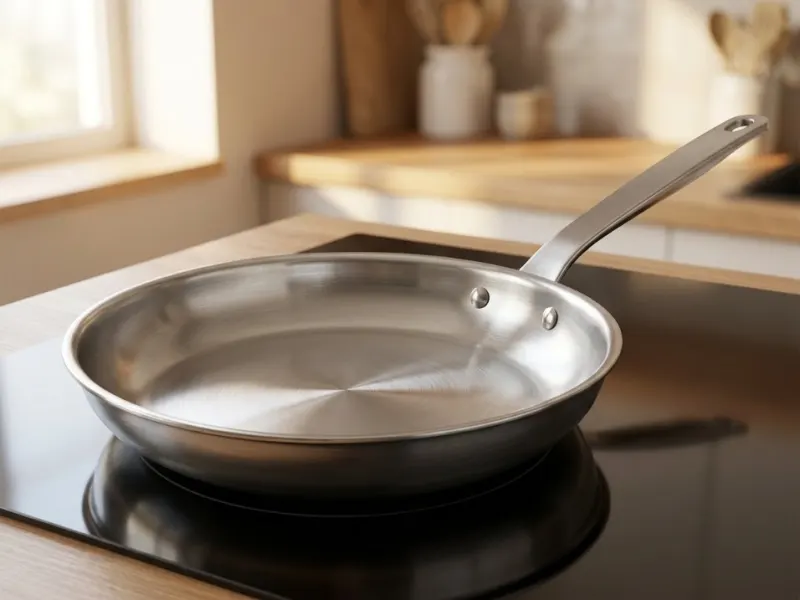
Induction cooktops run up to three times more efficient than gas, according to the U.S. Department of Energy. They're also up to 10% more efficient than a conventional electric smooth-top. That number has nothing to do with whether the "induction ready" pan you just bought will actually cook evenly.
Induction ready cookware only has to clear one bar. A magnet has to grip the base. That single pass/fail test covers a thin bonded disc stamped onto a budget nonstick pan and a fully clad tri-ply set with a magnetic layer built into every wall.
The label tells you the pan will heat. It doesn't tell you how evenly, or whether the sidewalls get any heat at all.
Two pans can carry the identical sticker while one gives you a hot ring with a cold center and the other doesn't. Here's what comparing Duxtop's own product pages against Whirlpool's and Electrolux's cooktop guidance turned up about why.
How Induction Ready Cookware Actually Works#
An induction cooktop hides a coil under the glass. Run electricity through it and the coil throws off a magnetic field that flips direction many times a second.
Set a ferromagnetic pan on top and that field induces small electrical currents, called eddy currents, directly inside the pan's base. Those currents generate the heat. The glass stays comparatively cool because the heat starts in the metal, not in a burner underneath it.
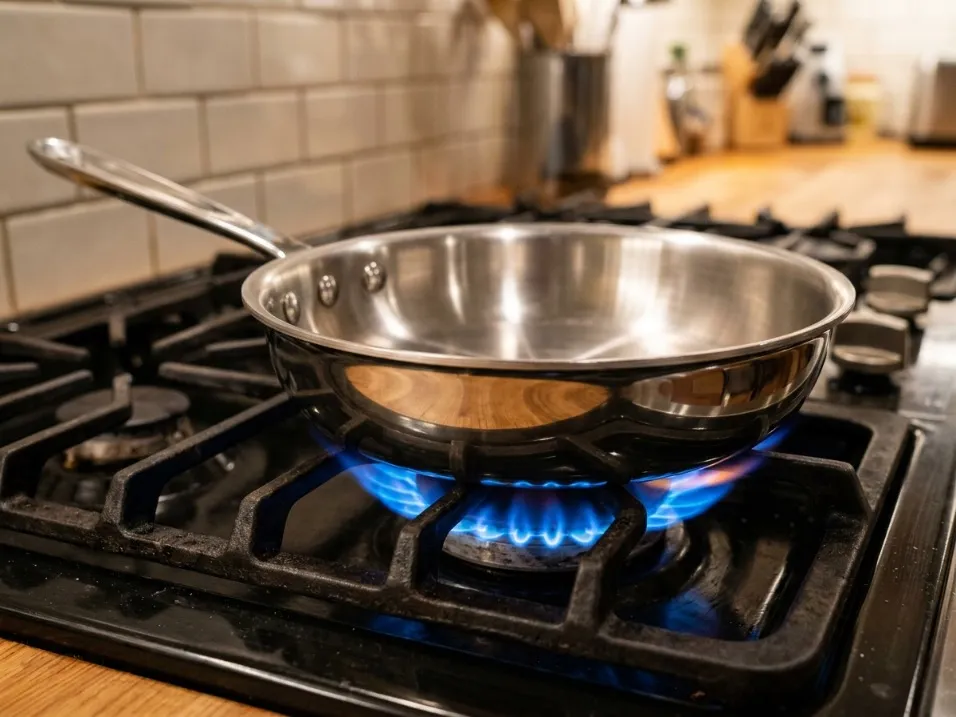
That mechanism is also why induction beats gas and standard electric on efficiency, the number from the opening. Almost none of the energy goes into heating air or a glass surface the food never touches, unlike a flame or a radiant coil.
None of that happens without a ferromagnetic base. Cast iron, carbon steel, and most stainless steel alloys qualify. Pure aluminum, copper, and glass do not, unless a manufacturer bonds a magnetic layer into the base.
Why Passing the Magnet Test Isn't the Whole Story#
The standard test is simple. Hold a magnet to the cold base and drag it from the rim to the center. A hard, even grip the whole way across means the pan is fully induction ready.

Where it gets interesting is what happens when the grip isn't even. Whirlpool's own cooktop guidance warns that some pans have only a part of the bottom in a ferromagnetic material, with the rest in something unsuitable for induction cooking.
Electrolux's guidance adds the downstream effect. A base smaller than the cooktop's minimum size receives only a part of the power the cooking zone generates, which reduces efficiency. Put those two together and you get the real explanation for the hot-ring, cold-center complaint that shows up in induction reviews.
A base that's only partially magnetic, or undersized for its zone, doesn't get the same power delivery across the whole surface. None of that shows up in the "induction ready" label itself. A pan with a small magnetic patch covering half its base, and a pan with a magnetic layer running the entire footprint, can both pass the same magnet test and get sold under the same two words.
Disc-Bottom vs. Fully-Clad Construction#
Coverage area is one half of the story. What happens above the base is the other half, and it's where the "induction ready" label goes completely silent.
Duxtop sells two induction cookware lines, and the brand's own product copy describes them differently on purpose. The Professional line is built around a heavy-bottomed impact-bonded aluminum encapsulated bottom, meaning the conductive aluminum core sits at the base only, the disc-bottom approach.
The Whole-Clad Tri-Ply line runs, in Duxtop's own words, "a core of premium aluminum encased in layers of high-quality stainless steel" from base to rim. Same brand, two product lines, two different construction methods, and both pass the identical magnet test.
The difference matters because stainless steel is a poor heat conductor on its own. At room temperature, 304 stainless conducts heat at roughly 14.9 W/(m·K), against about 237 W/(m·K) for aluminum, a ratio of nearly 16 to 1, per NIST reference data.
In a disc-bottom pan, that aluminum core stops at the base. Everything above it is plain stainless with none of that conductivity, so the sidewalls stay noticeably cooler than the floor of the pan. In a fully clad pan, the aluminum runs the full height, and the sidewalls heat close to what the base does.
That's the exact mechanism behind the disc-bottom vs. fully-clad split, and it's checkable before you buy, not just after.
Materials That Are Induction Ready by Nature#
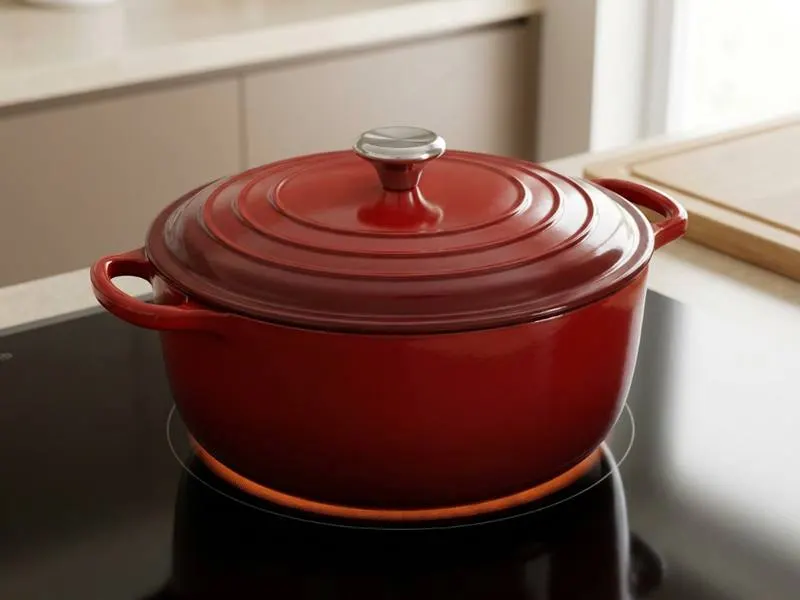
Some materials never need an engineered fix. Cast iron and carbon steel are almost entirely iron, so every cast iron skillet and every carbon steel pan passes the magnet test without any bonded layer at all. If you already own either one and want the specific hot-spot behavior it creates on a coil, the cast iron on induction guide covers that separately.
Stainless steel is where the label gets confusing. Whether a given stainless pan is magnetic depends on the specific alloy, not the words "stainless steel" printed on the box. Clad stainless with a magnetic outer layer works fine on induction.
High-nickel stainless in the 18/10 range can end up non-magnetic depending on how it's processed. The full magnet-test procedure is the only reliable way to check.
Aluminum, copper, and glass are never induction ready by themselves. None of the three is ferromagnetic, so the field passes straight through and nothing heats. The only way any of them end up on an induction-ready listing is a magnetic steel disc or plate bonded into the base, which puts them right back into the disc-bottom category above.
What to Look for When Shopping#
We start with the minimum. Does a magnet grip the base rim to center? If not, skip it, no matter what the listing says. The induction compatibility checker walks through that test against specific brands and models if you'd rather look one up than test it yourself.
If it passes, the real shopping question is what's happening above the base. Read the listing language before you read the price. "Impact-bonded," "encapsulated bottom," or "heavy bottom" point to disc-bottom construction, even heat at the base with cold sidewalls.
"Tri-ply," "whole-clad," or "fully clad" point to the sidewalls-included version, the one that actually delivers what the construction section above explains.
Whether that distinction matters to you depends on what you cook. Boiling pasta, simmering a sauce, or steaming vegetables barely touches the sidewalls, so disc-bottom construction does the job.
Reducing a pan sauce against the walls, or searing something that climbs the sides of a saute pan, is exactly where a disc-bottom pan runs cold at the moment you need heat.
The Set We Point Shoppers To#
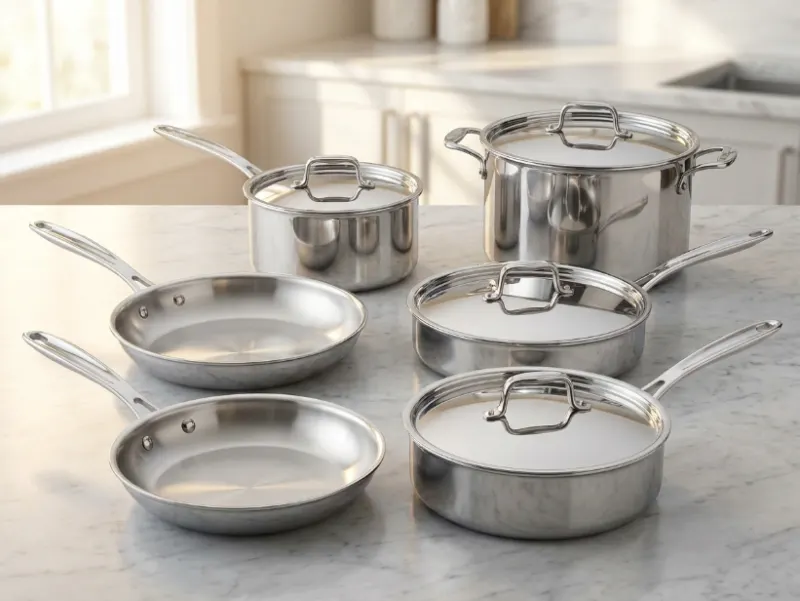
For a kitchen built around induction from scratch, the Duxtop Whole-Clad Tri-Ply Stainless Steel 10-Piece Set is where we land. It clears the fully-clad bar: 18/10 stainless with an aluminum core running base to rim.
The set includes an 8-inch and 10-inch fry pan, plus a lidded 3-quart saute pan, 1.6-quart and 3-quart saucepans, and a 6.5-quart stockpot.
Duxtop also builds induction cooktops, which is a real reason to take the Whole-Clad line's induction focus seriously. The company engineers cookware and cooktops as a pair rather than retrofitting an existing stainless line with a magnetic patch.
The double-riveted handles are designed, per Duxtop's own listing, to stay cool during use. One owner of the same Whole-Clad Tri-Ply line reported the handle "stays cool while the liquid in the pot is boiling," which lines up with that design claim, though it's one account and not a verdict on its own.
It isn't without limits. The Duxtop set is oven-safe only to 500°F, lower than Duxtop's own Professional line rated to 550°F. That's well short of a self-cleaning oven cycle, which GE Appliances says runs about 880°F, so the set can't stay in the oven through one. The oven-safe temperature lookup tool covers this same ceiling across other brands if you're comparing sets.
The 10 pieces also skip a dedicated stir-fry pan or wok, so if that curved high-heat shape is part of your routine, you're adding it separately. Neither limitation touches the fully-clad construction itself.
The label on the box was never going to test any of that for you. Read the construction wording instead of the sticker, and confirm it with a magnet before the price.
That two-second habit tells a shopper more about how a pan actually cooks than either word on the box ever will.