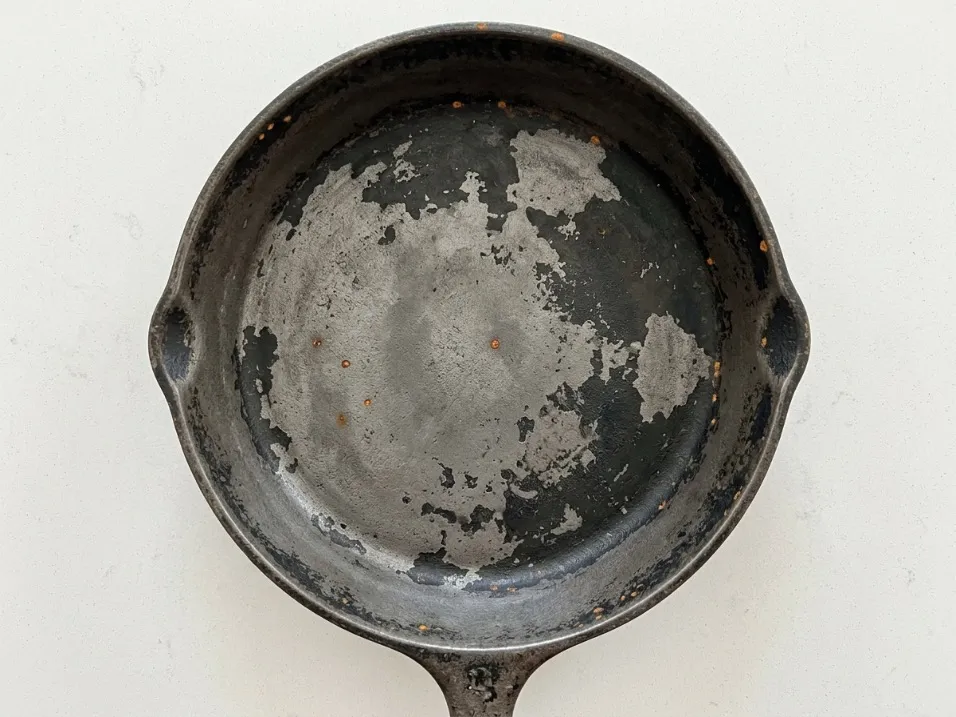
Why did the cast iron skillet you oiled and put away come back with rust spots under seasoning that looked perfectly intact?
The oil-and-forget method that works fine in a dry climate actively backfires in a humid one.
Our cast iron cookware guide covers the rest of the ownership habit, seasoning and rust included, beyond how you store it.
A warm pan sealed inside a cabinet creates its own condensation as it cools. Oil that never gets hot enough to polymerize just sits there going rancid instead of protecting anything. Your kitchen's humidity, not a universal rule, decides which storage method actually keeps rust out.
That is the pattern we kept finding once we started digging through cast iron forums and owner threads: a pan comes out of a coastal or humid-apartment cabinet with orange spots blooming under seasoning that looked untouched. Here's what we found changes the outcome once storage gets treated as climate-dependent instead of one-size-fits-all.
How to Store a Cast Iron Skillet: The Protocol Before Anything Goes Away#
Seasoning is a layer of polymerized oil bonded to the iron, but that layer has microscopic pores, and given enough time in humid air, water works through those pores and triggers rust from underneath. Every storage method below depends on getting this part right first.
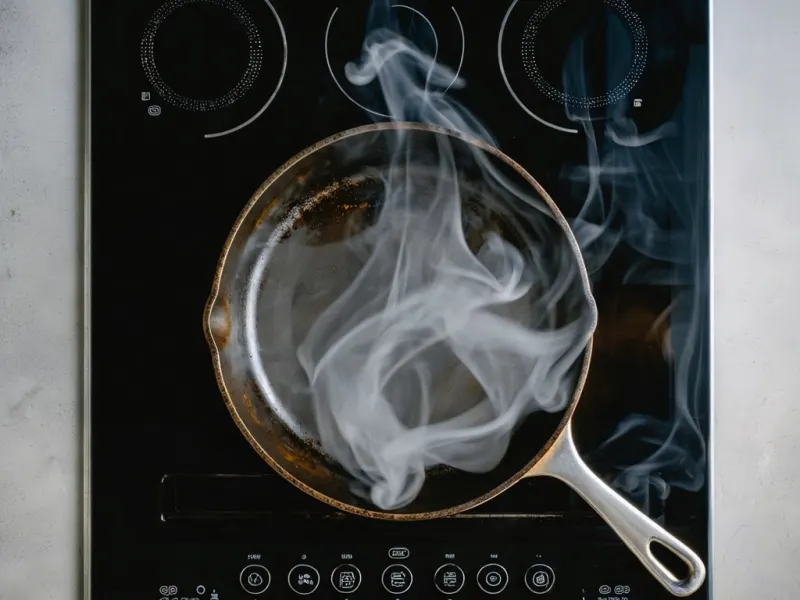
Clean the pan completely with hot water and a stiff brush. Modern dish soap will not strip seasoning, despite the old warning against it. Dry it on a hot burner for a brief spell.
That drives out moisture a towel cannot reach. While the pan is still warm, wipe on the thinnest layer of oil you can manage. We use grapeseed oil because it polymerizes cleanly, though any cooking oil works here.
Then let the pan cool completely before closing it into anything. That last step is the one people skip.
It is also the one that undoes the drying step above the fastest in a humid kitchen.
Your Kitchen's Humidity Decides the Method#
We found no universal storage method survives contact with real kitchens, because humidity changes what the pan is fighting. A dry, well-ventilated kitchen and a humid coastal one need different answers to the same question.
In a dry climate, almost any enclosed storage works once the protocol above is done. Cabinet stacking with a protector between pans is the most space-efficient option, and standing the skillet on its pour spout works too, since it exposes more surface to air.
In a humid climate, ambient moisture keeps creeping into seasoning pores even on a pan that was clean and dry when it went away. This calls for active moisture management, not a one-time protocol. A small packet of silica gel tucked next to a stack absorbs ambient humidity between uses.
For Dutch ovens, a folded paper towel between the lid and the body lets air circulate instead of trapping moisture in a sealed pocket. A thin layer of dry rice in the bottom of a stored Dutch oven absorbs condensation over weeks. It is an old trick that still works, because rice is just a cheap, replaceable desiccant.
Limited cabinet space changes the calculation again. Hanging from a wall-mounted rack or ceiling pot hanger gives better ventilation than any enclosed option. That matters more in humid kitchens than dry ones.
Lodge's own 12-inch cast iron skillet runs about 7.9 lbs per its Amazon listing, and a small multi-pan set adds up fast. Wall hardware needs to be rated for real weight, not just hung on a decorative hook.

Why Pan Protectors Solve the Universal Problem#
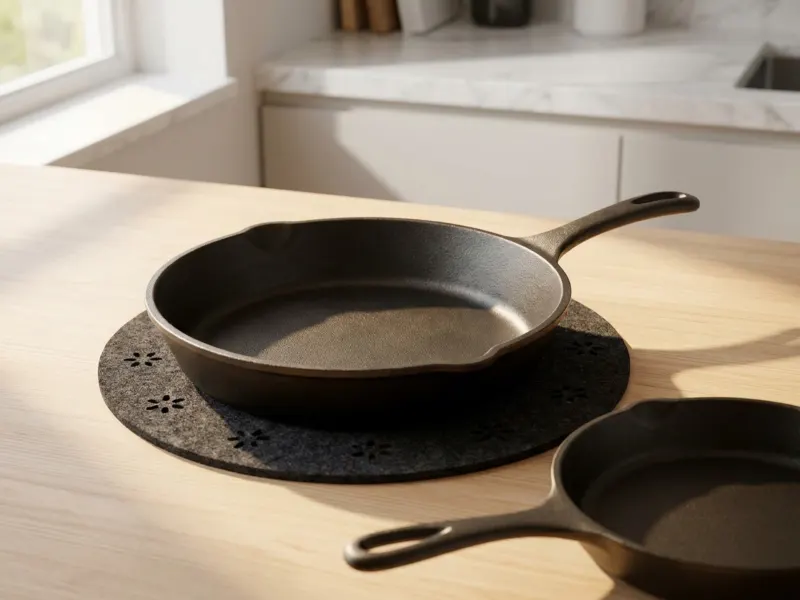
Across the owner reports and forum threads we reviewed, stacking cast iron without a barrier causes two problems regardless of climate. The weight compresses the polymerized layer at contact points, creating thin spots where rust starts first. Iron-on-iron contact scratches both surfaces too.
Pan protectors sit between stacked pans, cushion the weight, and keep surfaces apart. The BYKITCHEN Pan Protectors come in three sizes: 12, 14, and 16 inch. That covers most stacked skillets and pots without trimming or buying multiple sets.
Common to felt-based protectors generally, not specific to this set: felt is absorbent. It holds moisture against the pan in humid climates if the skillet is not bone-dry before stacking.
That is not a flaw unique to this product. It is a property of felt itself, and the fix is the same drying step from the protocol above, applied more strictly.
The sizing tradeoff runs the other way. Three fixed sizes cover the common skillet diameters without trimming. A genuinely odd-sized pan will not get a custom fit the way a cut-to-size sheet would.
For fewer than three stacked pieces, a folded paper towel between pans works in a pinch and costs nothing, though it compresses flat over time and needs replacing more often than a dedicated protector.
Long-Term Storage Changes the Oil#
Putting cast iron away for a season calls for a different oil than the everyday wipe, whether the reason is moving, travel, or just rotating cookware. Swap to food-grade mineral oil.
Mineral oil stays shelf-stable indefinitely and does not go rancid the way cooking oil does. Ordinary cooking oil breaks down without the applied heat that would otherwise let it polymerize.
Apply a slightly thicker layer than the normal post-cook wipe. Wrap the pan in a breathable material like brown paper or a cotton flour-sack towel. Never plastic wrap or a sealed bag, since trapped moisture then has nowhere to go.
Store indoors where possible. Garages and sheds see temperature swings that cause condensation directly on the metal.
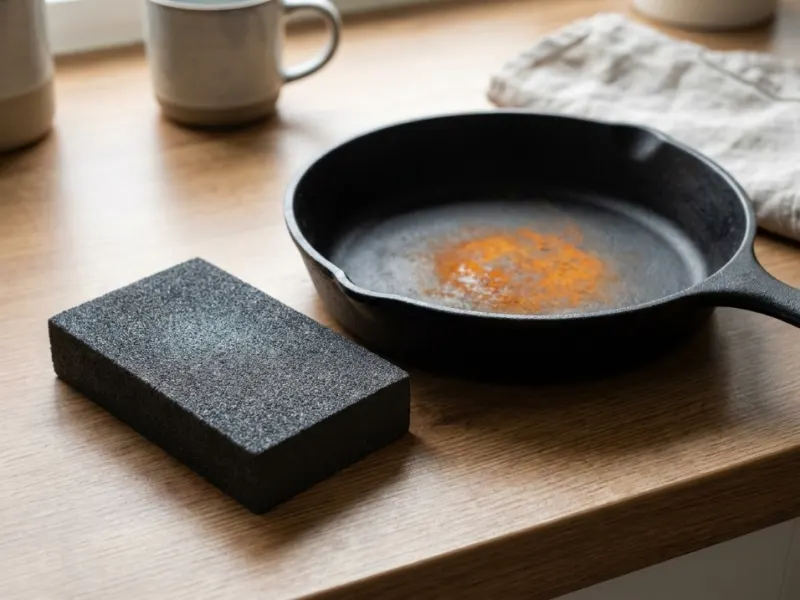
Check periodically in a humid climate. Orange means the seal was not enough.
The rust recovery process fixes it. The reseasoning step that follows means an oven at 450–500°F for 1 hour, per Lodge's own instructions.
The Mistake That Undoes Everything Else#
The error we see most often is applying too much oil before storing. A visible puddle of oil sitting on cast iron for weeks never gets hot enough to polymerize.
Instead of sealing the pores, it goes rancid. The pan comes out of storage tacky and off-smelling, needing a full seasoning reset before it is usable again.
The fix already sits inside the protocol above: wipe until the pan looks completely dry, not until it looks oiled. It feels wrong the first time, like you have removed everything you just applied.
That is the point. Every drop beyond what the towel leaves behind works against the pan during storage rather than for it.
The Verdict#
Skip the idea that cast iron storage has one correct answer. It has one correct protocol: clean, dry, thin oil, cool completely.
Then add a climate-specific choice on top of it. Dry kitchens get the easy version. Humid kitchens need silica gel, rice, and stricter attention to bone-dry surfaces before anything gets stacked or enclosed.
If you stack more than two skillets regularly, the BYKITCHEN protectors earn their place. They replace the paper-towel shuffle with something that actually holds up. If you store one or two pieces, paper towels are a perfectly honest, zero-cost answer.