Why does a wok that looked perfectly seasoned turn sticky the moment you start cooking with it?
Most sticky seasoning has nothing to do with which oil you used. It comes down to how much oil was left on the surface before the heat went on. A layer that's too thick hardens on the outside while the oil underneath stays liquid, and that trapped liquid is what causes the tacky mess people usually blame on the wrong oil.
The fix isn't switching oils. It's changing how little oil you use, and there's a specific test for knowing when you've wiped off enough.
We compared how to season a new wok across manufacturer instructions, owner reports on r/carbonsteel, and two of the most-followed wok guides online. Almost all of them explain what to do. Few explain why it works, and almost none adjust the method for an electric or glass-top stove.
This guide covers carbon steel woks specifically, since that's what most new wok buyers are seasoning. Cast iron woks follow a different maintenance path and aren't the focus here.
Strip the Factory Coating First#
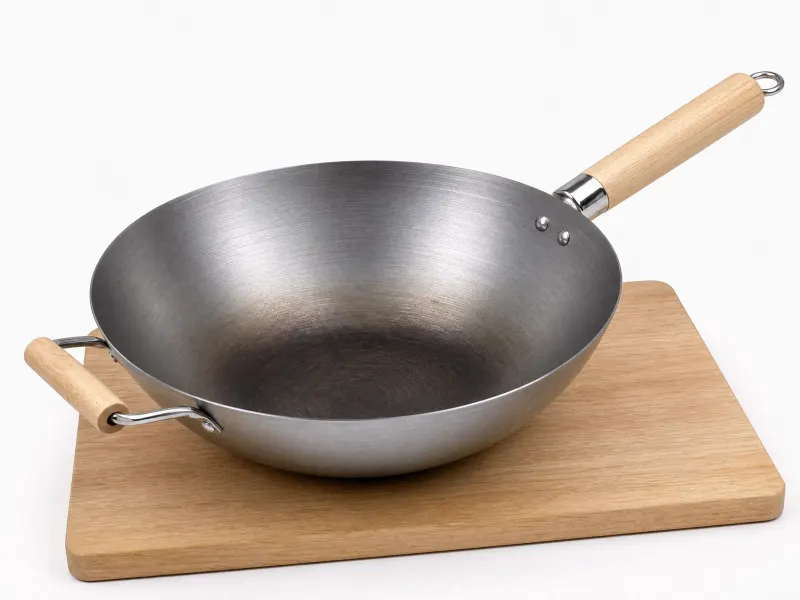
New carbon steel woks ship with a protective layer to prevent rust in storage. Some brands use a thin machine oil, others a lacquer or wax. Yosukata's own line uses a blue carbon steel pre-treatment that helps seasoning bond faster. Most budget woks arrive coated in something you need to remove first.
Scrub the entire wok, inside and out, with hot water, dish soap, and a rough sponge until the coating is gone.
You're aiming for bare metal that feels slightly rough to the touch. Dry it quickly on the hot burner. Any leftover water will make the oil spatter and leave gaps in the first layer.
How to Season a New Wok in Two to Three Stovetop Rounds#
This method works on electric and glass-top stoves as well as gas. Oven seasoning suits flat pans like skillets, but a wok's curved walls sit above the oven rack and get uneven radiant heat. The stovetop approach concentrates heat through the flat base instead, then lets the walls build seasoning gradually through weeks of cooking.
Place the dry wok on your largest burner and heat it on medium until warm all the way through. Add a small amount of a neutral, high-smoke-point oil and spread it with a folded paper towel. Then wipe again with a clean towel until the surface looks completely dry.
This step decides whether the round works. If you can still see a wet sheen, wipe again. What's left after wiping should look like nothing is there, and that invisible film is exactly the right amount.
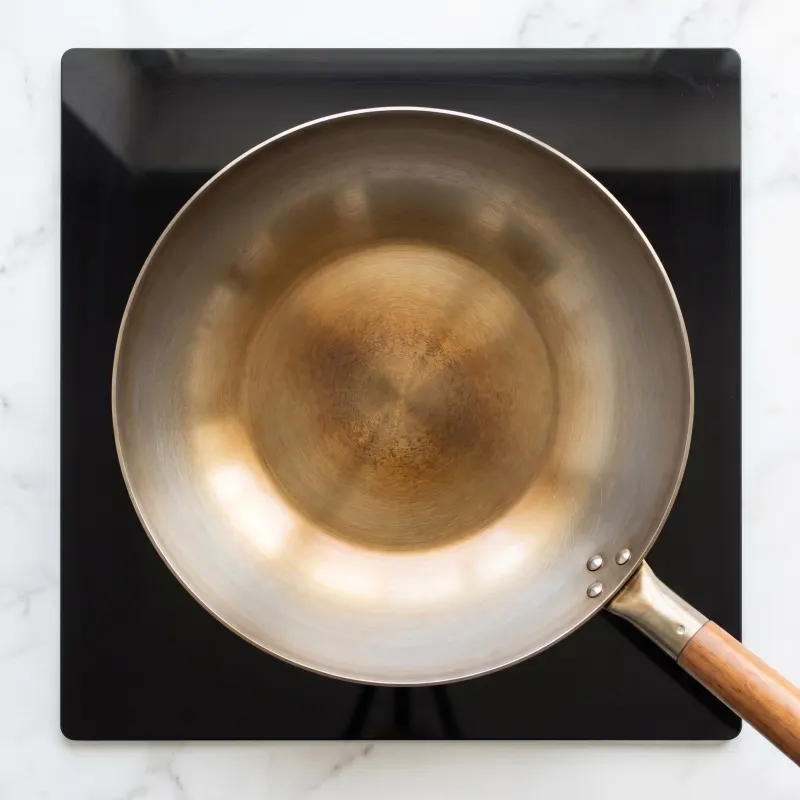
Turn the heat to medium-high. Wait until the oil reaches its smoke point and the metal darkens from silver toward gold or bronze. Once the smoking fully stops, the round is done. Remove the wok from the heat and let it cool before starting the next one.
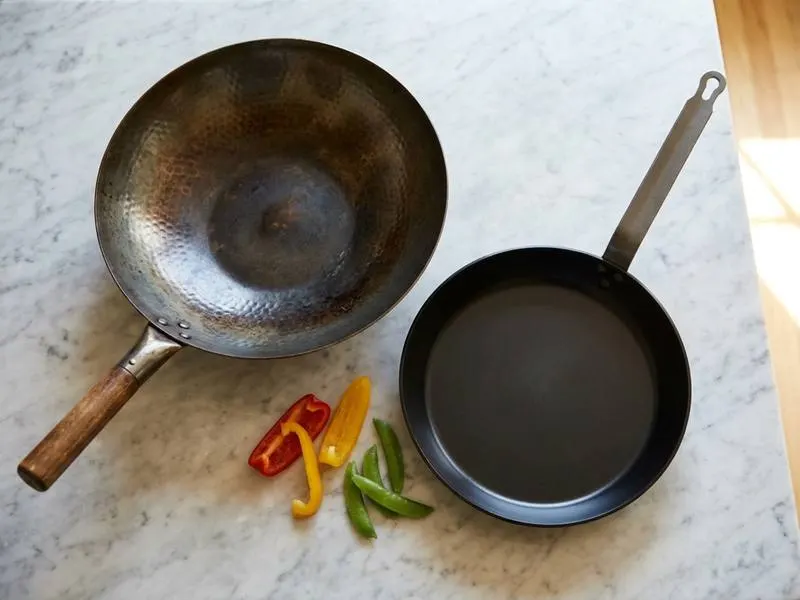
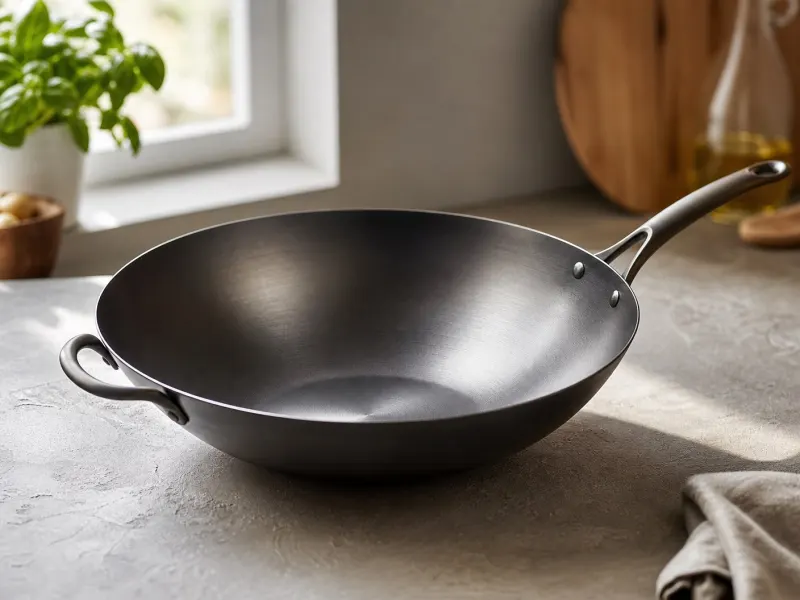
Repeat the same cycle once or twice more, two to three rounds total. Each round tends to go a little faster, since the layer underneath has already reduced the steel's reactivity. By the last round, the interior should show an even bronze-to-dark-brown tint, not the glossy black of a wok that's seen months of cooking.
Two to three rounds gets you a functional surface that releases food and protects the steel from rust, cooling breaks between rounds included.
If a round comes out tacky instead of dry, that's the wet-sheen problem showing up. Scrub the sticky patch with coarse salt and a paper towel, wipe the wok bare, and redo the round with less oil.
Why Thin Layers Matter More Than Oil Choice#

Grapeseed oil gets recommended more than any other oil for seasoning, and it works well. It's just not uniquely correct. De Buyer's own seasoning instructions for its Mineral B carbon steel pans name grapeseed, avocado, canola, or sunflower oil as acceptable choices.
Lodge's own cast iron seasoning guide names a different, overlapping list: vegetable oil, melted shortening, or canola. Two manufacturers, two separate lists. The overlap tells you what actually matters: any neutral oil with a high smoke point works, because they share the same underlying chemistry.
That chemistry is polymerization. Heat oxidizes the oil past its smoke point, and the fat molecules link into a hard polymer bonded to the steel. Grapeseed's linoleic acid content, 66.0% to 75.3% of its total fat according to peer-reviewed lipid research, makes it especially good at forming dense, flexible cross-links. Canola and sunflower get most of the way there too.
The one popular recommendation we don't repeat is flaxseed. Its very high polyunsaturated fat content builds an even denser polymer than grapeseed, and denser turns out to mean more rigid, not more durable. A rigid coating can't flex with the metal's expansion and contraction, so it cracks under that stress.
One owner on a seasoning forum reported losing most of a fresh flaxseed layer the first time they cleaned the pan after cooking with it. That pattern shows up often enough in seasoning discussions to treat as a real risk, not a fluke.
What actually decides whether your seasoning turns out sticky or smooth is thin layers, not the bottle you reach for. Apply oil too thick, and the surface hardens into a skin while the liquid underneath never fully polymerizes. That trapped, uncured oil is what stays tacky and eventually peels, and it happens with any oil if you use too much of it.
Seasoning a Wok on an Electric or Glass-Top Stove#
On a gas stove, you can rotate the wok over an open flame to season the curved sides directly. Electric stoves don't give you that option. The entire process happens through the flat bottom, the one part of the wok actually touching the element.
That's not a disadvantage for the base itself. A flat-bottomed wok on a burner close to its own diameter gets even, direct heat, exactly what the stovetop method needs. The walls above the element line build seasoning more slowly, through steam, splatter, and cooking contact over the following weeks.
The real adjustment is patience. A gas flame recovers its heat almost instantly. An electric element recovers more slowly, so rushing into the oil step before the base is evenly warm produces hot spots, where one area darkens fast while the rest stays raw-looking. Give the base its full preheat time first, and the electric method works just as reliably as gas.
First Cook After Seasoning#
Choose something oily for your first cook, like a high-heat vegetable stir fry finished with sesame oil. The goal is to lay down another cooked-on layer while you make actual food. Skip eggs, fish, or anything else that tests a nonstick surface until you have at least a week of regular cooking behind the wok.
Rinse the wok under hot water after cooking and scrub with a stiff brush. Ordinary dish soap is fine here. The old advice against soap traces to a real mechanism: a dedicated corrosive cleaner built around sodium hydroxide (lye) as its primary active ingredient will strip a cured polymer coating, the same way it strips paint.
Ordinary dish soap works through synthetic surfactants rather than concentrated lye, which is why normal washing doesn't touch a cured seasoning layer. Dry the wok quickly on the hot burner, then wipe on a barely visible layer of oil for storage.
When the Seasoning Looks Uneven (And Why That's Normal)#
After a few weeks of cooking, your wok will start looking patchy. The center, where food makes the most contact, darkens first. The walls stay lighter with streaks for longer. None of that affects performance; the dark center is simply where the seasoning is thickest and food releases best.
If you notice actual flaking, or food sticking somewhere that used to release fine, the usual cause is one layer buried in the stack that went on too thick. Our carbon steel seasoning troubleshooting guide covers fixing that without stripping the whole wok back to bare metal.
The Wok We'd Recommend for This Method#
If you're shopping for a wok to run through this exact process, the Yosukata 13.5-Inch Carbon Steel Wok is the one we'd point to. Its steel is 15-gauge per Yosukata's own product page, about 1.8mm using Craft Wok's own gauge-to-mm conversion (Yosukata's page states the gauge number only), thicker than budget woks that often publish no gauge at all. That's a measured spec, not an aggregated-review verdict; the inference we'd draw from it (more metal mass resists the warping that thinner sheet steel is more prone to under sustained high heat) is ours, not a claim we're attributing to owners.
The blue carbon steel pre-treatment is a genuine head start. It bonds seasoning faster than the raw steel most budget woks ship with, one of the reasons two rounds are often enough here rather than needing extra passes.
It costs more than an entry-level wok like Babish's 14-inch, and Amazon reviewers report it takes about a minute longer to preheat than those thinner alternatives too. That's the honest tradeoff: slower to heat, priced above entry-level, for steel that's measurably thicker than most budget alternatives publish.
Even with the blue-steel head start, the Yosukata still needs its own initial seasoning, like any bare carbon steel wok. Run it through the three stovetop rounds above and cook with it regularly. Food releasing cleanly without oil is one of the milestones owners consistently report reaching with time, not something the initial rounds alone deliver.
If you're still deciding whether a wok fits your routine at all, our wok buying guide and our electric stove wok guide cover that groundwork. Our oil for seasoning guide goes deeper on the oil chemistry for cast iron specifically, if you're seasoning both.