Two cast iron skillets can look identical sitting in their boxes. One is ready to cook on tonight; the other needs an hour in your oven first.
Check the box and the brand before you check anything else: Lodge and Victoria both ship every skillet pre-seasoned and ready to use, while a bare or stripped pan needs a full wash, dry, thin oil, and bake cycle at 450°F, repeated 3 to 5 times, before it should go near food.
Our cast iron cookware guide covers the rest of the ownership habit once seasoning is sorted, from rust to storage.
Run the oven process on a pre-seasoned pan and you have wasted an afternoon for nothing. Skip it on a bare one and your food will stick to everything.
The part almost no guide spells out is how to tell which pan you actually have. Wiping oil on it every night without ever adding heat will never get you there on its own. For a quick personalized recommendation, try the material selector quiz.
We compared four widely read seasoning guides against the actual chemistry of what makes seasoning work. All four jump straight into the oven procedure. None of them ask the question that should come first: does your pan need this at all.
Do You Actually Need to Season It?#
There are four situations, and the right move is different for each one.
- A new Lodge or Victoria skillet. Both brands state on their own product pages that every skillet ships pre-seasoned at the factory. Cook on it tonight.
- A bare or unfinished skillet, the kind that arrives gray and dry, sometimes with a machining-oil smell right out of the box. This one needs the full oven process below.
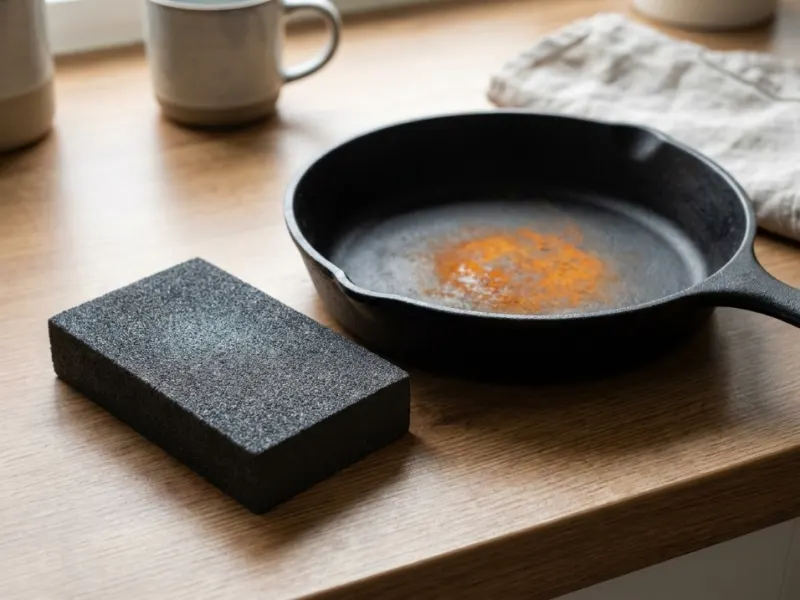
- A pan stripped down to bare metal, whether from rust removal, a lye bath, or an oven self-clean cycle. Treat it exactly like a bare skillet and start from zero.
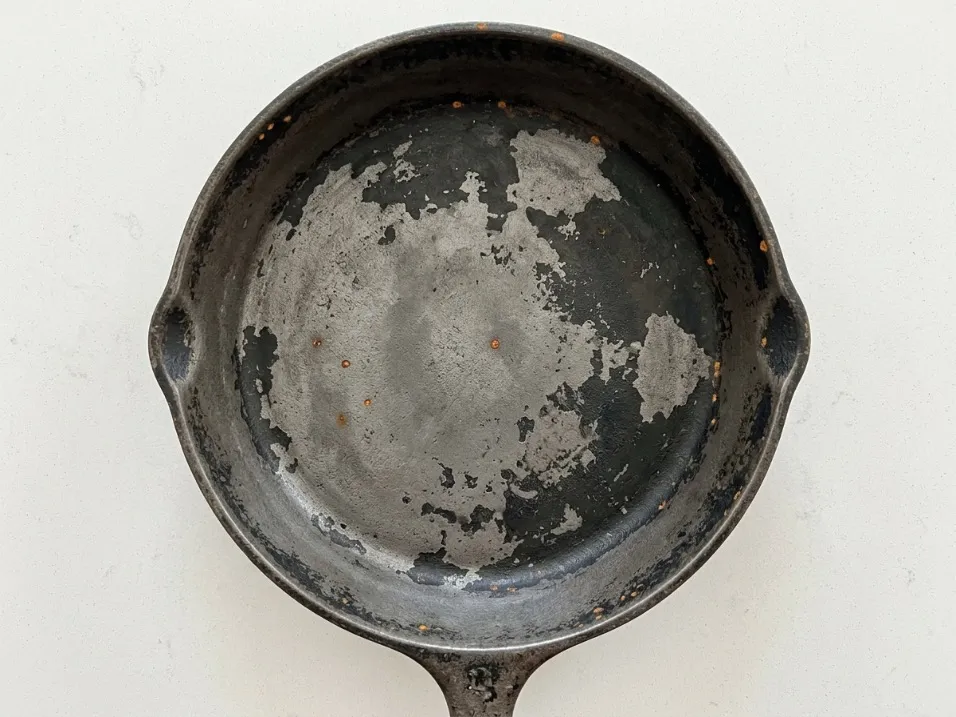
- A pan you already cook on that looks patchy or uneven. Leave the oven alone. Field Company's own cast iron care guide is direct about this: blotchy color on a lightly used skillet is "totally normal" and evens out with continued cooking.
Seasoning vs. Maintenance: The Distinction Guides Keep Skipping#
Here is the a-ha that explains everything else in this article. Maintenance is wiping a little oil onto your pan after you wash it, so it does not rust in the cabinet overnight. One is a cold habit.
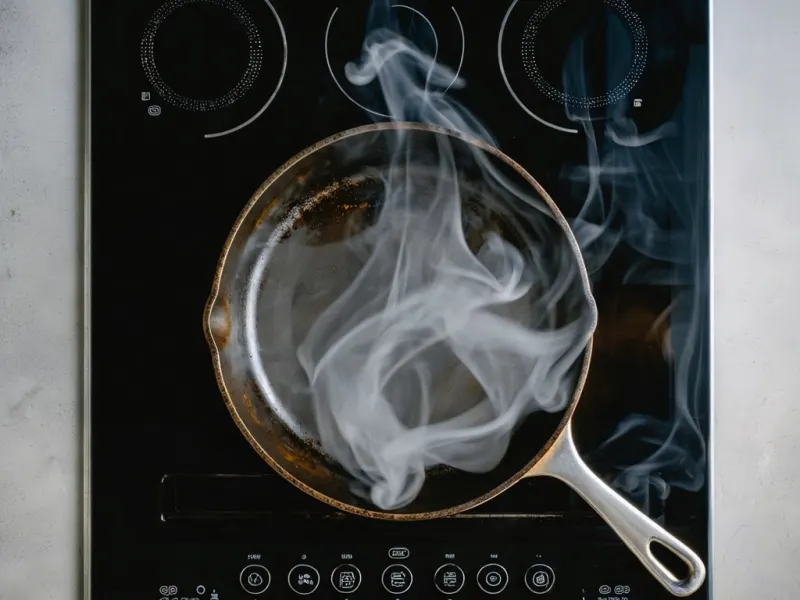
Seasoning is different. It means heating that oil past its smoke point so the fat molecules break apart and reconnect into a hard polymer bonded to the iron, the same reaction that turns liquid epoxy into solid plastic. The other only happens with real heat.
That distinction is why a factory pre-seasoning "counts" once and never needs repeating every meal. It is also why oiling a cold pan every single night for a year will never substitute for it. Oil that never crosses its smoke point just sits on bare metal as liquid fat. The heat converts it, not the frequency.
How to Season a Cast Iron Pan From Bare Metal#
This is the process for a raw or stripped pan only. Skip it entirely if yours is already pre-seasoned.
- Wash the pan in hot, soapy water, scrubbing off any packing wax or rust. Modern dish soap will not touch a good layer of seasoning.
- Dry it completely with a towel. Even a towel-dried pan holds invisible moisture in its pores, and that moisture pushes oil back off the surface before it can bond.
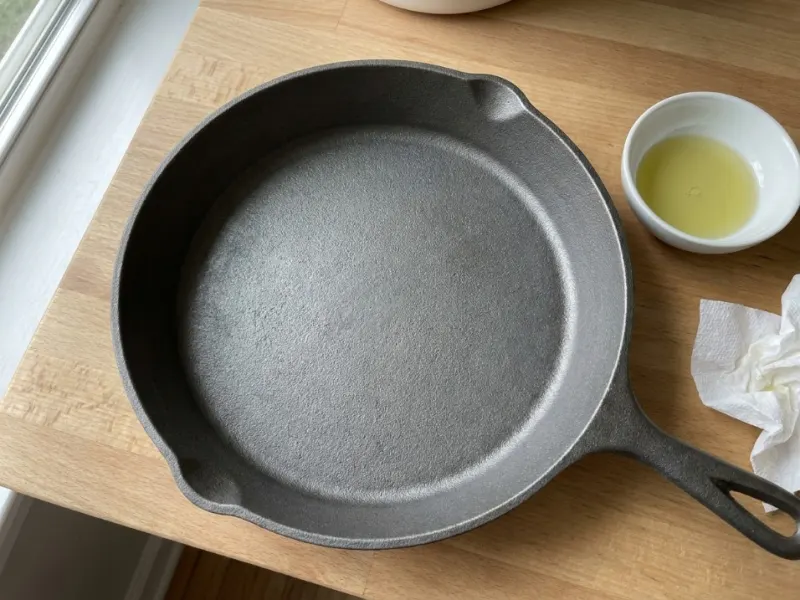
- Rub a thin coat of oil over the entire pan, inside, outside, and the handle. Wipe it with a fresh paper towel as though you are trying to take the oil back off. What remains, invisible to the eye, is the correct amount.
- Set the pan upside down on the middle rack and preheat the oven to 450°F. Let it bake for a full hour once it reaches temperature.
- Shut the oven off afterward and leave the pan inside, door closed, until it has cooled all the way down.
- Run through the same oil-and-bake cycle again. University of Maine Cooperative Extension states most pans need 3 to 5 total rounds to form a solid seasoning coat.
That range gets you a dark, mostly nonstick baseline. It will not be glossy yet, and that is normal. The deep shine on an old family skillet comes from months of cooking with fat, not another oven cycle.

Choosing an Oil#
Grapeseed oil is our starting recommendation. The reason comes down to fat chemistry, not tradition. Our starting pick is a refined grapeseed oil, the plain kind that shows up in most grocery aisles.
Cold-pressed grapeseed oil runs 66 to 75.3% linoleic acid, a polyunsaturated fat, and that high content drives dense cross-linking during polymerization. Its smoke point sits below the oven's temperature, so it converts fully instead of stalling out partway through.
Lodge's own guidance names melted shortening as an acceptable, more forgiving alternative. Canola and refined avocado oil both work too.
Two oils to skip, for different reasons. Refined or light olive oil works fine; extra virgin does not, producing a noticeably softer finish.
Flaxseed is the other one to avoid, and the mechanism is the real reason: its high concentration of linolenic acid creates the most rigid, densely cross-linked polymer of the group, and that rigidity is what makes it fail abruptly rather than gradually. As one illustration of that mechanism playing out, not the reason to avoid it on its own, one owner reported losing roughly 70% of a fresh flaxseed layer on the very first cleaning, right after cooking on it just once. We go deeper on the full comparison, including why flaxseed underperforms despite its reputation, in our best oil for seasoning cast iron breakdown.
The oil matters far less than one habit: keeping every layer thin.
The Mistake That Undoes Most Seasoning Jobs#
Too much oil. A thick application can't fully polymerize. The top skins over while liquid fat is still trapped beneath it.
That trapped layer goes sticky, then peels off the first time real heat hits it. More seasoning failures trace back to this single habit than to any oil choice.
The fix is the wipe-until-it-looks-dry step in the process above. If you can see a sheen or feel any tackiness before the pan goes in the oven, wipe again. We cover the full recovery process, including how to tell which mistake caused a sticky or flaking surface, in our sticky cast iron after seasoning guide.
Underbaking is another common mistake. If your oven runs cool or you pull the pan out early, the oil never fully crosses its smoke point. A full, uninterrupted hour matters more than hitting an exact temperature number.
Once It's Seasoned, Cooking Does the Rest#
Every meal you cook with fat adds a microscopic layer. Bacon, pan-fried potatoes, a steak finished in butter, all of it does more for your seasoning than another oven cycle ever will. Give it a few months of regular use and the surface stops looking like a fresh baseline.
Maintenance after each cook stays simple: rinse with hot water, scrub if needed, dry on the burner for a minute, and wipe on a barely visible layer of oil before it goes back in the cabinet.
Nothing here is permanent damage. Rust responds to steel wool and a re-season. Flaking responds to a full strip, whether that is a lye bath or an oven self-clean cycle, followed by the same 3-to-5-round process above.
Patchy color on a pan you already cook on is not damage at all, per Field Company's guidance above. It is just uneven buildup that keeps evening out.
If your seasoning ever fails outright, we walk through diagnosing exactly what went wrong in our how to fix cast iron seasoning guide.
If you are shopping for seasoning oil after reading this, Spectrum Naturals refined grapeseed oil is the one we would reach for. A single bottle covers years of occasional seasoning cycles, provided you store it somewhere cool and dark and do not let it sit unused too long.