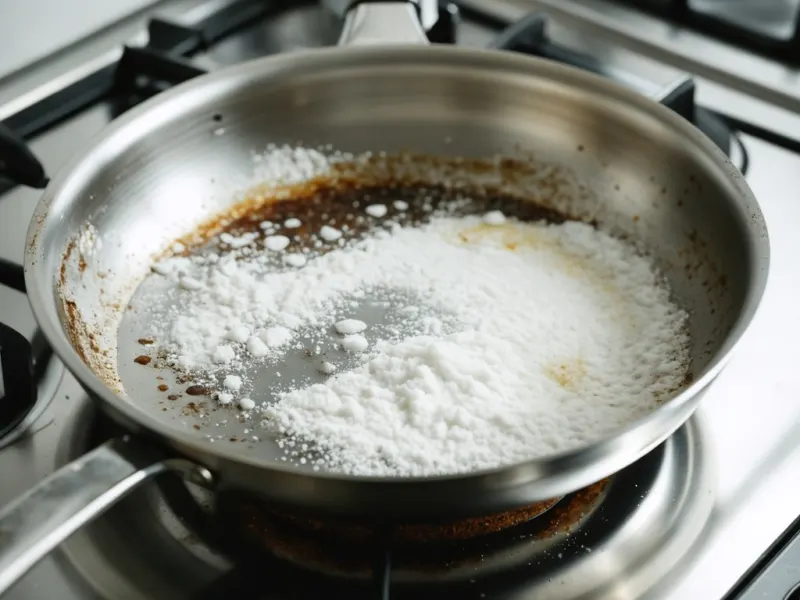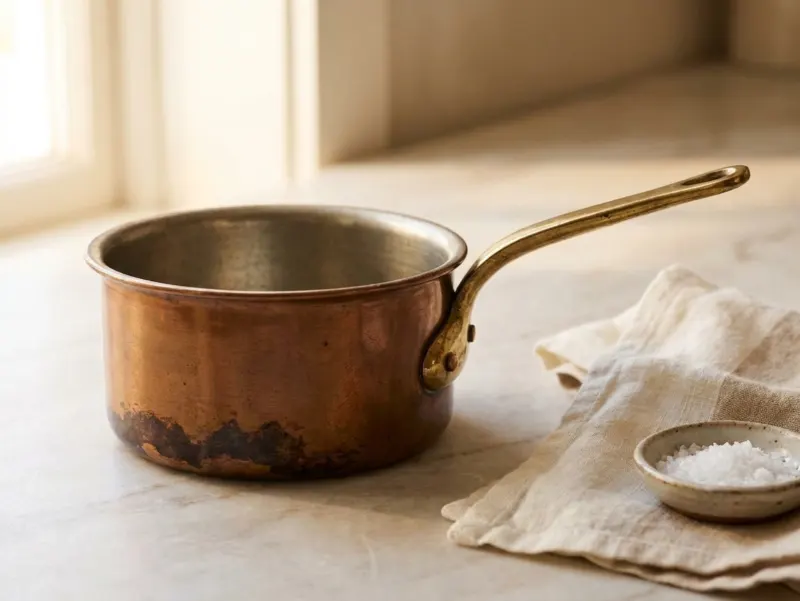
Most guides tell you the safety test for a tarnished copper pan is color. Brown means fine. Green means trouble.
That test is wrong. Cleaning copper pans comes down to vinegar and fine table salt, rubbed in small circles for a few seconds to a couple of minutes depending on how dark the tarnish is.
Rinse, dry immediately, and the exterior is done in under a minute for light tarnish, longer for heavier buildup. Bar Keepers Friend works faster on heavier tarnish. Either way, the exterior is the easy half of this job. The harder question, the one we found most guides get backwards, is what actually makes the interior safe.
Two Surfaces, Two Different Questions#
A copper pan is really two problems wearing one shape. We think of it as one job, but it isn't.
The outside is solid copper that darkens with age. The inside, where food actually touches the metal, is either tin or stainless steel. Confusing the two is where most cleaning advice goes wrong.
Exterior tarnish is cosmetic, full stop, because your food never touches the outside of the pan. Whatever happens on the cooking surface is a different category entirely. That side has a real food-safety dimension, and it has nothing to do with how the outside looks.
Why Vinegar and Salt Actually Works#
Most cleaning guides describe the vinegar-and-salt method without explaining why it works. We went looking for the mechanism instead of just repeating the trick.
It turns out the reaction isn't a secret at all. It is the same one the United States Mint's own coin-care materials describe on pennies: vinegar and salt set off a reaction that dissolves the copper oxide layer sitting on the surface. The Mint's own demonstration shows pennies start to shine within about 30 seconds once the salt hits the vinegar. That is why a dull pan can come clean fast, no elbow grease required once the reaction gets going.
Lemon and salt work on the same principle with a different acid. Bar Keepers Friend uses oxalic acid instead, per its own printed ingredient list.
Use fine table salt for this, the same rule we apply to cleaning the outside of pots and pans generally.

How to Clean Copper Pans: The Safety Line That Actually Matters#
Here is the reframe that changes how you should think about this. Michigan State University Extension's own guidance on kitchenware contamination does not talk about color at all.
It says a copper-bottom pan, where the copper sits on the outside, is perfectly safe, because the food never touches the copper. The chemicals that can cause a problem only become a risk through direct contact with the metal.
That single distinction rewrites the usual "green is dangerous, brown is fine" shorthand into something more useful. The real test is whether bare copper is exposed on your cooking surface, not what color it happens to be.
Brown oxide on the exterior: harmless. Green verdigris on the exterior: still cosmetic, still harmless, because it is still on the outside, not touching food. Bare copper of any color showing through on the interior cooking surface, where food actually sits, is the moment to stop and act.
Mauviel's own copper care guide backs the same conclusion from the maker's side. Never dishwasher copper cookware, since the harsh detergent chemicals shorten its life. Never use a bleach-based cleaner either, which the guide states will pit the surface.
Neither warning is about color. Both are about what actually touches the metal, and for how long it sits there.
Interior Care Depends on What's Underneath#

Stainless steel lining is the practical, low-maintenance choice. Bar Keepers Friend is fine here too, working through stuck food and heat discoloration the same way it works on the exterior. We covered stainless-specific technique in how to clean a burnt stainless steel pan.
Tin lining needs real care. Tin is soft, and hard scrubbing wears it away layer by layer. Loosen stuck food with a warm water and dish soap simmer instead of scouring, then wipe with a soft cloth.
Tin also melts around 449°F, per Los Alamos National Laboratory's own materials data. That is a real risk if you ever preheat an empty tin-lined pan on high heat with nothing in it.
Once you can see any bare copper on that cooking surface, in any color or amount, that is the retinning trigger, not a specific stain size. A specialist retinner like East Coast Tinning prices this work by the measured inch of the pan, and it comes back with a fresh, food-safe surface built to last years of normal use.
When Not Cleaning Is the Right Call#
Nobody requires you to polish a copper pan. Exterior patina, brown or otherwise, does not change how the pan cooks, and a lot of copper owners leave it alone on purpose.
French kitchens have made a whole aesthetic out of visibly aged copper hanging over the stove. If you like that look, the only real maintenance obligation left is the interior, and the interior obligation is about safety, not appearance.
The Verdict#
For everyday tarnish, vinegar and salt costs nothing and works in under a minute. For heavier buildup or a faster result, Bar Keepers Friend Cookware Cleanser & Polish earns its keep. The 12 oz can uses an oxalic-acid formula built specifically for cookware, and is safe on both the copper shell and a stainless interior.
Save it for the exterior and for stainless linings only. If any part of your copper is lacquered, or the interior is tin, skip this cleaner on those surfaces and follow the gentler routine above instead.
The rule that matters more than any specific method: judge your pan by contact, not by color. If bare copper never touches your food, tarnish is just a look you get to choose. The moment it does touch your food, that is the only signal that counts, and it has nothing to do with brown or green.
If you are still deciding whether copper is worth buying at all, we weighed that question in is copper cookware good for an electric stove.