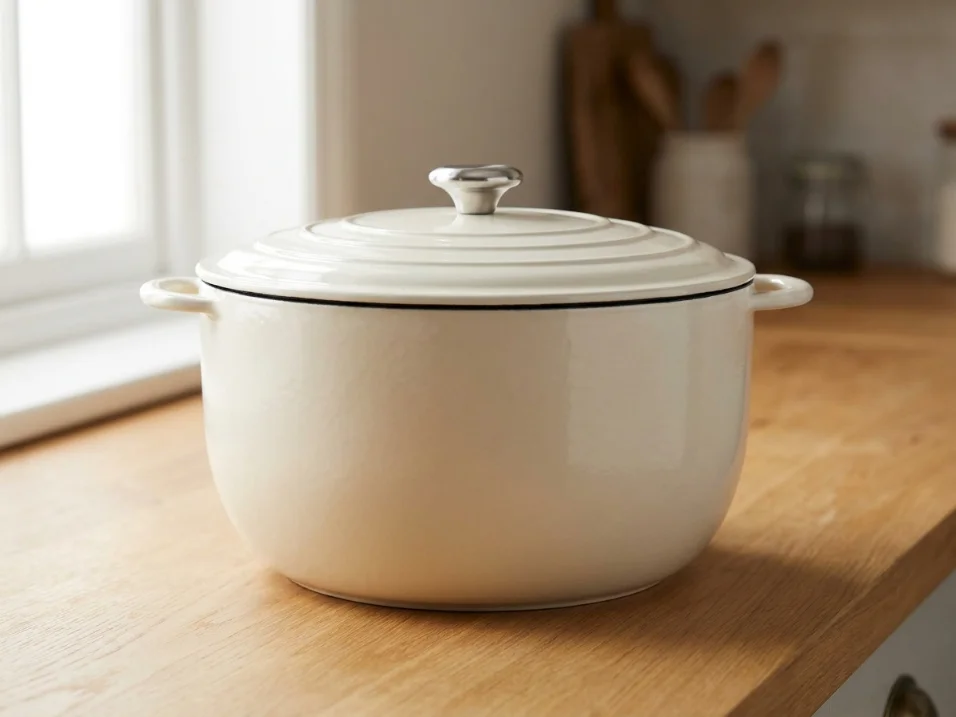
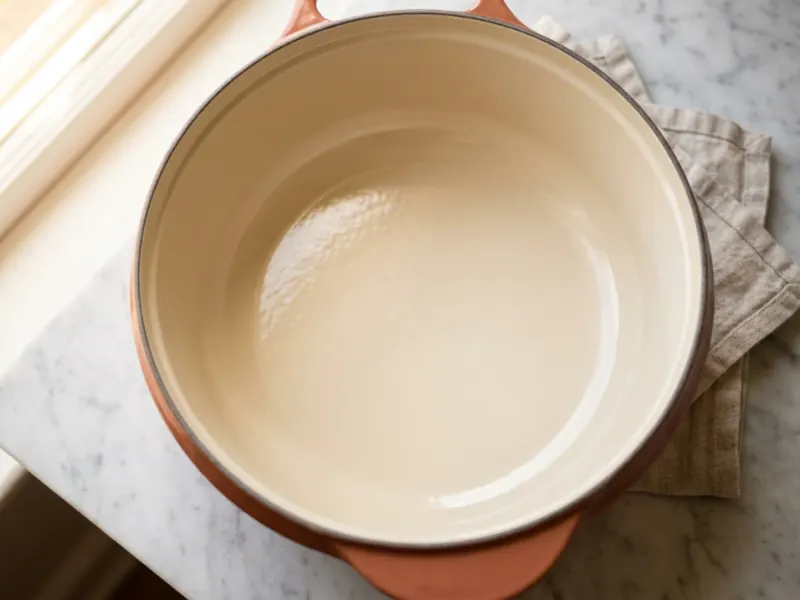
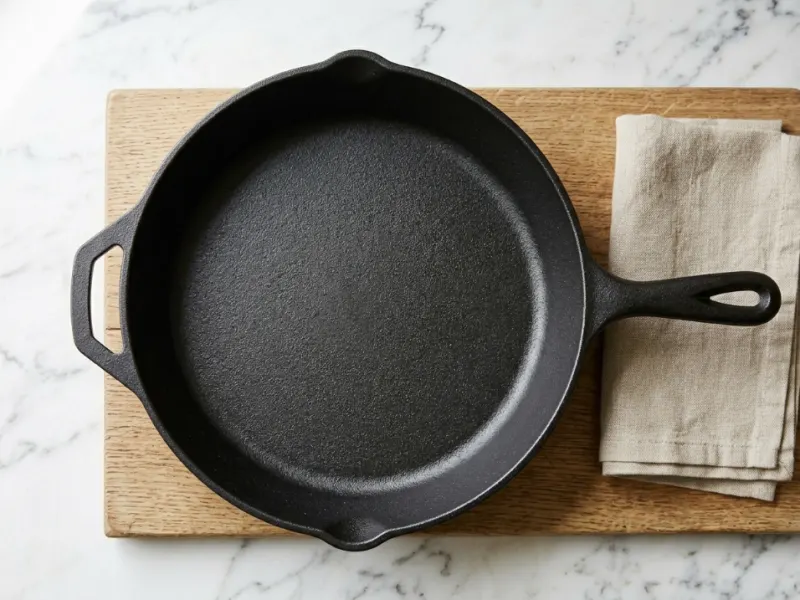
Why does one of these pans need a coat of oil after every use, and the other doesn't, even though they're both made from the exact same metal?
A layer of glass is the entire answer. Enameled cast iron is bare cast iron with a porcelain coating fired onto it, and that coating does the one job seasoning does on a bare pan: it keeps food from reacting with the iron.
Our cast iron cookware guide walks through the rest of the decision between the two, from searing to the seasoning habit bare iron asks for.
Lodge's own manual puts that firing step at 1200 to 1400°F. Once the glass cools and sets, though, the two pans stop behaving like the same material. The limited side-by-side accounts we could find suggest cooking results between a budget enameled pot and a premium one come out nearly identical. The gap that actually matters is somewhere else entirely.
We looked at how a bare Lodge skillet and Lodge's own enameled Dutch oven perform, based on what owners of both report over years of use. Not what the marketing copy promises on day one.
The Question That Isn't Really About Price#
Enameled cast iron costs more than bare cast iron. That much is obvious from any shelf at a kitchen store.
The two accounts we found, an r/Cooking owner and the Frenchtastic Food Channel's side-by-side video, reported no cooking difference between a Lodge enameled pot and a Le Creuset. Heat retention, browning, final taste, all landed the same in both accounts.
The premium buys a lighter pot and a finish that resists chipping longer. Both Lodge and Le Creuset back their lines with a limited lifetime warranty. That part isn't a premium exclusive either.
What actually decides the purchase has nothing to do with brand tier. It comes down to one specific thing the enamel can't do that bare iron does by default.
What The Enamel Can't Do That Bare Iron Does By Default#
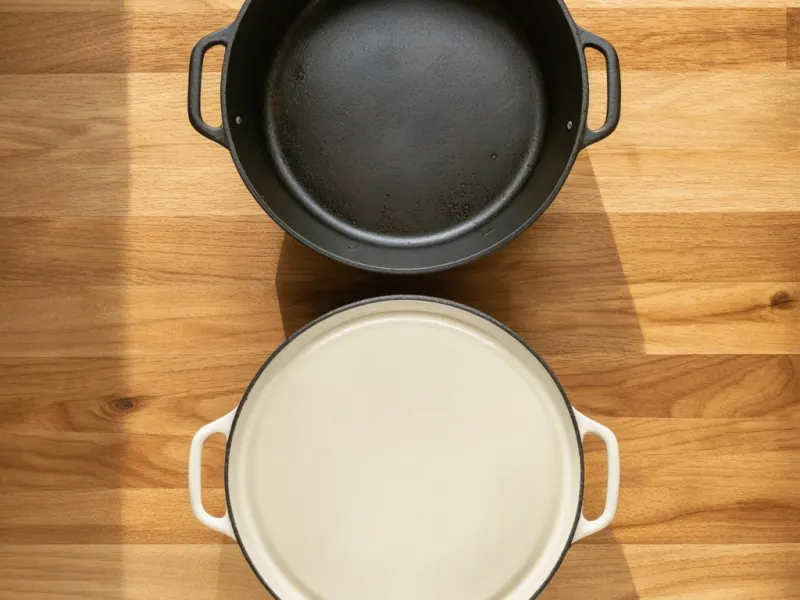
A hard sear needs direct, dry heat contact before anything wet touches the pan. That's exactly the condition Lodge's own care manual tells owners to avoid with an enameled pot: "Do not heat an empty enameled Dutch oven or covered casserole." Bare cast iron carries no such warning.
You can run a Lodge skillet bone-dry over high heat until it's smoking, drop in a cold steak, and the pan just does its job. The enamel isn't fragile in the sense of being weak.
It's rated to handle stovetop and oven cooking at 500°F. That's an enamel limit, not an iron one; the bare cast iron underneath it could handle far more on its own. You can check any specific pan's rating against its material with the oven-safe temperature lookup.
What it can't tolerate is the specific combination of empty, dry, and hot that a proper sear depends on. That's a manufacturer instruction, not a rumor from a forum thread. It's the actual reason a braising pot and a searing skillet aren't interchangeable, even though both started as the same cast iron.
That's the real fork in the road. Not price, not brand tier. Whether your cooking ever needs that dry, empty-pan step.
Where Bare Cast Iron Wins#
A 10.25-inch Lodge skillet weighs about 5.7 pounds and comes pre-seasoned, ready to cook out of the box. It handles steak sears, cornbread, and anything that needs a hot, dry surface. It's oven-safe to whatever temperature your oven or grill can hit, since there's no coating to protect.
Drop it, leave it outside in the rain, let it rust solid. A scrub with steel wool and a re-season in the oven brings it back. Rust recovery on a bare pan is a non-event, not a repair bill.
The rough, pebbly surface that comes standard on Lodge's cast cookware is the tradeoff for that price and durability. Eggs stick more on a new pan than they will after months of cooking, as the seasoning layer builds up and smooths the surface's effective texture. Machined-smooth premium skillets skip that break-in period; budget cast cookware doesn't.

Where Enameled Cast Iron Wins#
Braises, stews, and anything simmered in wine or tomatoes are where the glass coating earns its keep. There's no seasoning layer to protect from acid, so a three-hour braise in Lodge's own 6-quart enameled Dutch oven at 325°F runs exactly like any other recipe in it.
No metallic aftertaste, no bare spots to worry about afterward. Cleanup is soap and water, no oil-wipe ritual required. Lodge's own care page lists the pot as dishwasher safe, though hand washing is recommended to preserve the finish over time.
Bare cast iron can't say the same. Consumer Reports lists cast iron among the cookware that should skip the dishwasher entirely, warning that a cycle risks stripping the seasoning and causing the pan to rust.
The reason is chemistry, not water. Allen Clauss, a University of Wisconsin-Madison chemistry lecturer, describes dishwasher detergent as a high-pH, chlorine-bleach formulation, harsh enough to break down the polymerized oil seasoning that keeps a bare pan food-safe and rust-free. An enameled pot never has that seasoning to lose in the first place.
The Chip Timeline Nobody Puts A Number On#
Enamel chips. That much shows up in every comparison. What most comparisons skip is how much the timing actually varies, and why.
Amazon owner reviews of Lodge's Essential Enamel line show a wide range: a chip within about a year of regular use for some, six years with no wear at all for others. There's no single explanation for the spread.
A YouTube review from the channel TRF sums up the general caution simply: you can chip it if you're not careful. That story doesn't fit every account, though.
The earliest chip report we found in those Amazon reviews came from an owner who did everything by the book. Wood and silicone utensils only, hand-washed with a plastic scrubber, no thermal shock. It still chipped within a year.
A chip exposes the same food-safe cast iron that sits under every bare skillet. It's cosmetic, not a safety problem, though a chipped rim left wet can develop surface rust the same way a neglected bare pan does.
The Weight Gap Nobody Mentions Until It's In Your Hands#
The comparison table above covers the spec-sheet differences. The weight gap matters more in practice than any chart suggests.
A 13-pound Dutch oven full of stew is a two-handed lift for most people, while a 5.7-pound skillet is light enough to lift and plate from with one hand. Neither number is a flaw. They're built for different jobs, and the enamel's extra weight comes from the same thick walls that give it even heat during a long braise.
A 10-inch skillet is easier to control one-handed than a 12-inch for the same reason a Dutch oven that size is a full commitment to lift with both hands.
So Which One Do You Actually Need?#
For most readers, a beginner cast iron skillet is the one to buy first. It's cheaper and handles more use cases on its own: day-to-day searing, cornbread, anything that needs a hot, dry surface. It also survives the kind of abuse that would end an enameled pot outright.
The enameled Dutch oven earns its place as a second purchase, not a replacement. Add it once braising, stews, or acidic sauces show up often enough in your week to justify the extra shelf space. A hard sear, cornbread, or bread baked in a hot Dutch oven still needs bare iron's tolerance for dry, high heat, and no amount of non-reactive coating changes that.
A chip-prone budget enamel pot replaced once can still cost less over a decade than skipping it and eating worse braised chicken the whole time.