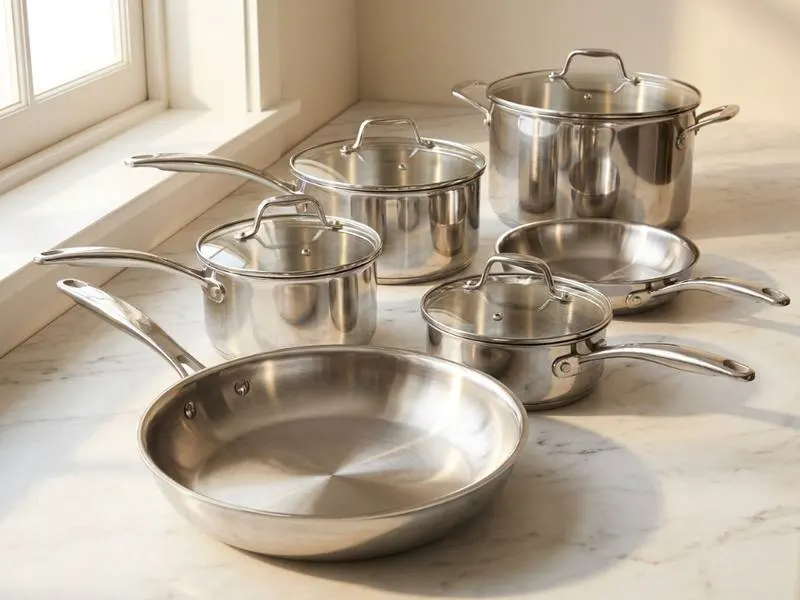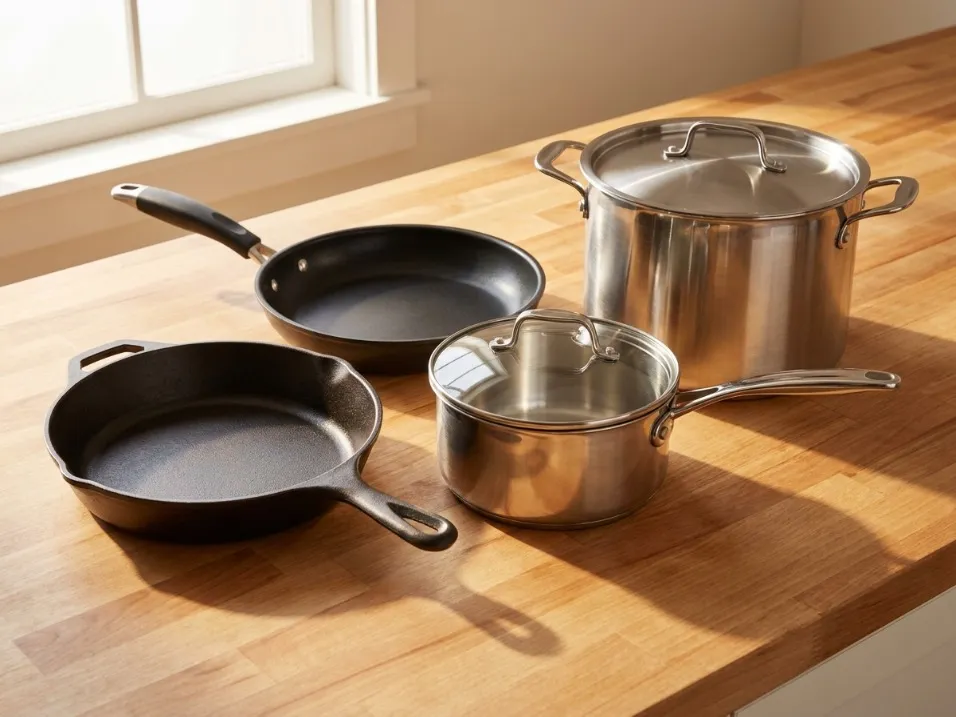
A 12-piece set and four hand-picked pans can cost about the same. One kitchen ends up using every piece it owns. The other stores nine of them behind the three that actually get reached for.
Most home cooks need three to six pieces in daily rotation, not the eight to fifteen a boxed set includes.
Price those pieces by what they cost per year instead of by sticker price, and individual pieces usually win. The two real exceptions are specific enough to name, not a vague "it depends."
Every set ad frames the math the same way. Buy this box, save against buying each piece at full retail. We think that framing skips the number that actually decides the outcome: cost per year for the pieces you keep using once the novelty wears off.
The Cookware Sets vs Individual Pieces Math That Actually Matters#
Sticker price comparisons favor sets on purpose. Spread one total across 12 pieces and the per-piece number looks small on paper.
Cost per year tells a different story, and it depends on the material, not the box. Coated non-stick pans are consumables, so the smart buy is mid-range, never the cheapest or the most expensive option.
Lifetime materials flip the logic entirely. Stainless steel, cast iron, and carbon steel last for decades with basic care. A budget option in these materials wins outright.
There is exactly one documented exception worth knowing. All-Clad runs recurring factory-seconds sales on cosmetic-flaw stock (scratches, dents, or a missing engraving, not used goods) at roughly half off retail or more. A 12-inch fry pan with lid bought that way and used for 15 years costs meaningfully less per year of ownership than a full-price budget pan replaced twice over that same span. That is a specific, real exception, not a general "sometimes premium is worth it."
A 12-piece set mixes both material types under one price tag, and that is exactly what breaks the math. You pay non-stick-tier replacement costs for pieces that never needed to be non-stick, bundled with lifetime-tier pieces you are now locked into replacing as a group instead of one at a time.
When a Cookware Set Actually Makes Sense#
Sets are not always the wrong call. We'd point to three situations where a set is the smarter buy.
Starting a kitchen from zero. Moving into a first apartment with nothing, needing to cook that same week, is the clearest case for a smaller set: 5 to 7 pieces, not a 12-piece bundle padded with lids and gadgets. Our first apartment cookware guide breaks down which 3 pieces earn their spot if you would rather skip the set entirely.
Repeated, same-material batch cooking. Households that genuinely use 6 or more pieces weekly, all the same material, think regular soup-and-sauce batches with matching pot sizes, get real value from a coordinated set with matching lids.
A documented factory-seconds discount. When a premium set goes on sale near individual-piece pricing (the All-Clad pattern above, occasionally on full sets too), the math that normally favors buying piece by piece stops applying.
Why Individual Pieces Win for Most Kitchens#
Outside those three cases, building a kitchen piece by piece beats a set for reasons that go beyond cost per year.
You Only Buy What Earns Cabinet Space#
A set arrives all at once. Every piece looks justified simply by being in the box.
Buying individually, sometimes called open stock, forces a real question before each purchase: will this size get used more than once a month? The recurring complaint pattern across cookware communities is consistent. The smallest saucepan in a set never gets touched because the medium one covers the same jobs, and the largest stockpot sits unused because big batches happen less often than the set assumed.
Material Mixing Covers What One Set Cannot#
A set locks you into one material for every job. All-nonstick means no real searing. All-stainless means fighting eggs every morning.
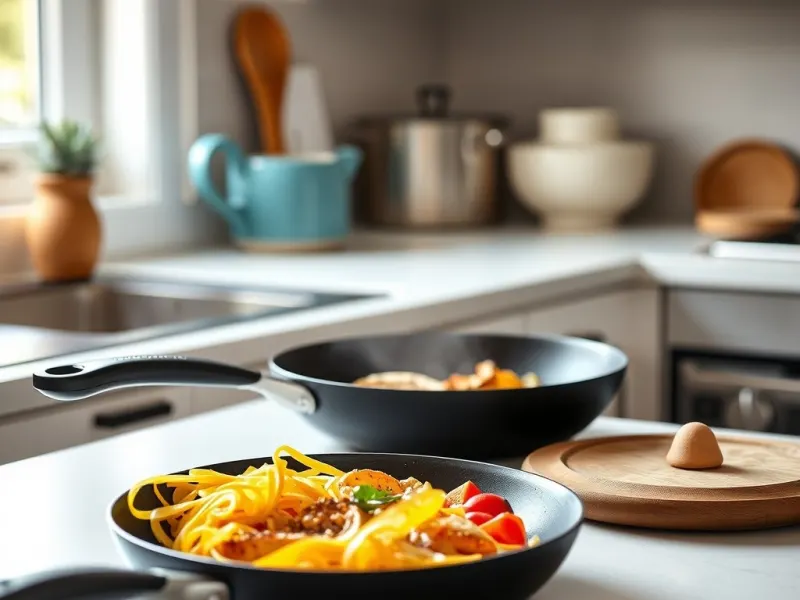
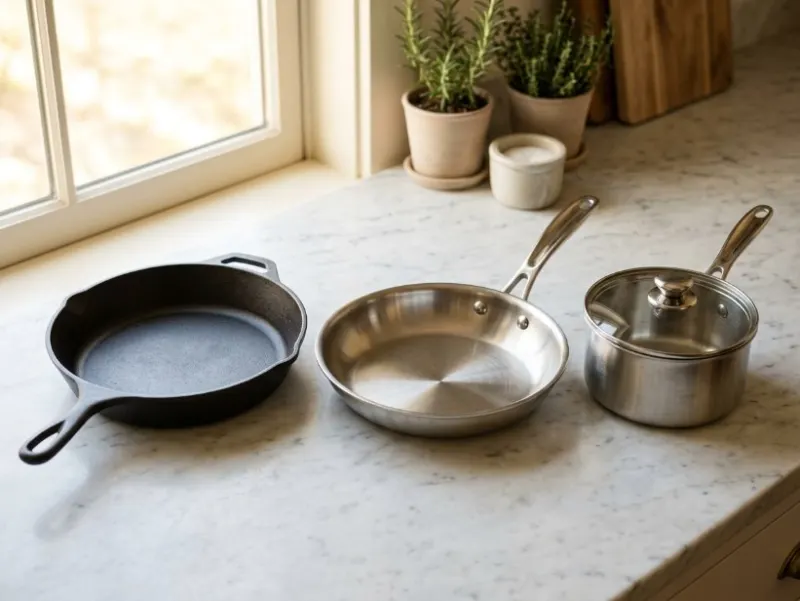
Buying individually means matching the material to the task. Non-stick for eggs, stainless or cast iron for searing, carbon steel for a hot wok stir-fry. The cast iron vs stainless steel comparison covers that split in more detail if a glass-top stove is part of the equation.
One smaller point worth a mention. A full set is more exposed if your stovetop ever changes, since a move to induction can strand an entire bundled set at once. In practice, this risk is limited. Most cookware bought in the last decade already passes an induction magnet test, so it is real but secondary, not the main reason to buy individually.
Replacement Stays Surgical#
Non-stick coatings wear out in a couple of years regardless of price. Lifetime materials do not wear out at all. Buying individually means only the piece that actually failed gets replaced.
A set nudges you toward replacing the whole collection once a few pieces look mismatched next to newer ones. That is exactly the kind of hidden cost a cost-per-year calculation catches.
The Individual-Piece Nonstick Worth Recommending#

For the non-stick slot in an individually built kitchen, we'd point to the Misen Carbon Nonstick Skillet over a basic PTFE pan. It skips coatings entirely: nitrided carbon steel, oven-safe to 1,100°F, backed by a lifetime warranty against defects, not the one-year window that even Caraway's ceramic coating warranty caps out at.
The honest tradeoff: eggs can start sticking after a few weeks of heavy, high-heat use. Owners trace that to overheating and seasoning buildup, not a manufacturing flaw, since there is no coating underneath to fail. It also costs more upfront than a basic PTFE skillet, so it only pays off if you keep it long enough to skip a couple of PTFE replacement cycles.
The Real Test: How Many Pieces Will You Actually Use?#
Skip "set or individual" as the first question. Ask this instead: are the 3 to 6 pieces you will actually reach for weekly available individually at a fair cost per year, or only bundled inside a set?
If your honest answer clears the same-material batch-cooking threshold above, a set can genuinely save shopping time. Our how many pans do you actually need breakdown walks through that count if you are not sure yet.
If the answer is 3 to 5 pieces across different materials and tasks, buying individually wins on cost per year and cabinet space both. The material selector quiz below helps if picking the right material per task feels like the harder part of that decision.
If You Still Want a Set#

The Caraway Ceramic Non-Stick Fry Pan Set, three fry pans with glass lids, is a reasonable pick if you want ceramic non-stick across multiple sizes without shopping piece by piece. Owner reports across Amazon and Reddit are consistent for light use, a few times a week with hand-washing and silicone utensils: the coating holds up 2 to 3 years.
Skip it on a tight budget. At this price per pan, you're still buying a coating that wears out, and a budget PTFE pan bought individually costs less even after a couple of replacement cycles. We track which of these are genuinely PFAS-free in our cookware safety checker, with the evidence behind each verdict.
The honest tradeoffs run the other way. The exterior coating can chip within weeks on gas grates or with careless stacking, cosmetic only but visible fast. The interior coating's warranty explicitly excludes normal wear, which typically starts showing as sticking around month 8 to 12 for heavy daily users.
For the owner reports behind ceramic coating replacement, see our ceramic coating lifespan guide.
What This Actually Means for Your Kitchen#
Skip the sticker-price comparison. Price the 3 to 6 pieces you will actually use by cost per year: mid-range for anything with a coating, budget for anything that lasts decades, and watch for a factory-seconds sale if a premium name matters to you.
Outside starting from zero, heavy same-material batch cooking, or an actual documented discount, that math favors buying individually almost every time. It leaves you with pans that do their jobs, not pans that just looked complete in a box.