You're comparing two pans. Both boxes say PFAS-free.
One pan earned that sticker by showing its work. The other might be claiming a certification it doesn't hold.
Ceramic vs stainless steel cookware comes down to two different questions people treat as one.
If stainless steel is the direction you're leaning, our stainless steel cookware guide covers construction, technique, and induction compatibility next.
Stainless steel has no coating, so there's no PFAS claim to make or break. Ceramic nonstick coatings are typically free of PTFE and PFOA by chemistry.
But whether a specific brand's "PFAS-free" claim is actually checked varies a lot. In one documented case, a brand's own certification claim fails a check against the certifying body's own records.
That last part is the piece most buying guides skip entirely. We went looking for it anyway, working through brand disclosure pages, owner reports, and the certifying body's own public records directly.
The Stainless Steel Answer Nobody Has to Check#
Bare stainless steel, cast iron, carbon steel, and enameled cast iron have nothing on the cooking surface. Food touches metal or a fired enamel glaze directly.
There's no polymer layer. No sol-gel spray. Nothing that could contain fluorine chemistry at all.
We checked the site's 48-line cookware database for this review. Every line with a coating value of "none" gets an automatic safe rating on the PFAS question. There's nothing to test, so nothing gets flagged.
That's a narrow finding. It's worth being clear about what it does and doesn't mean. Stainless steel's PFAS-free status says nothing about heat retention, weight, or acidic tomato sauce.
It closes off exactly one question. Buyers who read "no coating, no PFAS worry" as "safest material overall" are stretching one narrow finding into a blanket endorsement it was never meant to carry.
Same Coating Claim, Four Different Levels of Proof#
Every ceramic nonstick brand we checked claims to be PFAS-free. Every single one. That claim is plausible on its face.
Sol-gel ceramic coatings use silicon-based chemistry, chemically unrelated to PTFE. But "plausible" and "verified" sit on different rungs of the same ladder. There are four rungs, not two.
The bottom rung is a bare assertion. "PFAS-free" printed on a product page with nothing behind it.
Cuisinart's PURELYCERAMIC line, HexClad's TerraBond coating, and Zwilling's own Spirit Ceramic and Energy Plus lines (both distinct from the bare stainless Spirit 3-Ply recommended below) sit here. None link to an outside lab test. None says what's actually in the coating beyond the word "ceramic."
The next rung up is composition disclosure. GreenPan states outright that its Thermolon coating is derived from silicon dioxide, essentially processed sand, applied through a sol-gel process, with no PTFE, PFOA, or PFAS in the formula. That's specific enough to check.
The third rung is published third-party testing. Caraway takes this route. It publishes test reports on its own site describing the same PFAS-free result.
The top rung is independent certification. Almost nobody actually clears it. It's also where the gap between claim and reality is widest.
The Certification Claim That Wasn't#
NSF launched the NSF 537 certification standard during September 2025, a real, legitimate standard for PFAS-free nonfood products. An outside lab reviews the formula and retests every year for total organic fluorine. A brand disclosing its own recipe isn't enough on its own.
Per NSF's own announcement, the first company to actually earn NSF 537 certification was ROCOL, a food-grade lubricant maker. No cookware brand is confirmed by NSF's own records to hold it.
GreenPan's own product page for its Reserve Pro frypan set tells a different story. It states the Thermolon 9G coating is "the first NSF Certified ceramic nonstick," tied directly to its PFAS-free status.
NSF's own Public Notices page contradicts that directly. A notice dated March 13, 2026 states GreenPan "does not have a NSF certification at this time and is not authorized to claim NSF Certification or use the NSF Certification Mark."
Sit with that for a second. GreenPan is one of the brands that clears the composition-disclosure rung honestly. Thermolon's sol-gel silica makeup is real and checkable.
That's exactly what makes the Reserve Pro claim worth flagging. A brand can be genuinely ahead on one rung of the ladder while overstating a different one. The only way to catch it is checking the specific claim against the certifying body itself, not trusting that a brand which got one thing right got everything right.
What the Warranty Fine Print Already Admits#
Ceramic coatings degrade faster than PTFE. Owners across multiple independent reports describe losing nonstick release anywhere from about 1 month to about 18 months, well short of the 4 to 5 years a well-cared-for PTFE pan commonly delivers.
GreenPan's own warranty terms make this concrete. Most brands never state it this plainly. GreenPan's US warranty page caps coverage on the Thermolon coating at 2 years.
The pan's body and handles carry a full lifetime warranty. The company's own paperwork draws a line around how long it expects the coating to last, apart from the parts that don't wear out.
That 2-year window doesn't always hold up in practice, either. Two independent Amazon owners report the coating warranty being denied when they tried to use it. One case involved a chipping claim filed about 4 months after purchase.
Both quote the same company reply. An internal expert review makes the final call, and it went against them. One owner's takeaway, in their own words, was blunt. Don't count on the 2-year coating warranty actually paying out.
How to Check a Claim in Under Five Minutes#
The difference between a real disclosure and a bare claim is usually one click away. Go to the brand's own materials or FAQ page, not the Amazon listing, and search for what the coating is made of.
A brand confident in its claim will do one of three things. Describe the chemistry (sol-gel, silicon dioxide, sand-derived). Link to a test report.
Or name a specific certification you can verify independently. A brand that only repeats "PFAS-free" as a bullet point, with no composition and no link, is asking you to take its word for it.
If a brand names a specific certification, that's the moment to slow down rather than relax. Search the certifying body's own site directly, the way NSF's own Public Notices page exposed the Reserve Pro claim. A certification claim you can't check yourself is worth less than a brand plainly admitting it hasn't been tested.
We use this same checklist outside ceramic entirely. Any PFAS-free claim on any coated cookware benefits from the same question: is this specific claim backed by something you can check, or does checking it stop at the brand's own marketing copy? We keep a running, sourced verdict by brand and product line in our PFAS safety checker, built from exactly this kind of source-by-source verification.
When Ceramic Cookware Still Makes Sense#
None of this means skip ceramic entirely. Maybe you specifically want the natural food release ceramic gives you, and stainless genuinely doesn't offer that without technique.
If so, buy from a brand that clears the composition-disclosure or third-party-test rung, and whose certification claims, if any, check out against the certifying body. That gets you the nonstick convenience alongside a claim you've actually confirmed rather than just trusted.
The problem isn't the ceramic category. It's shoppers assuming any brand's version of "PFAS-free" carries equal weight. The specific brand's evidence, checked against its own paperwork, decides that.

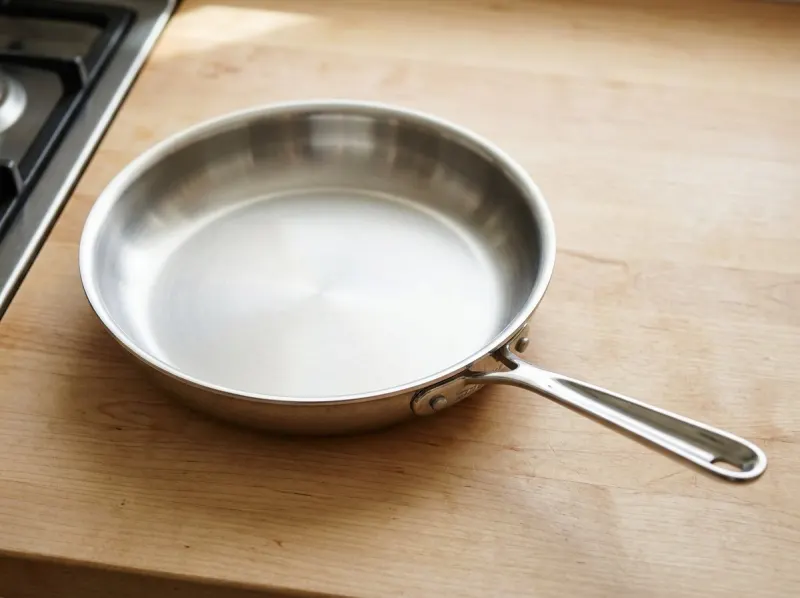
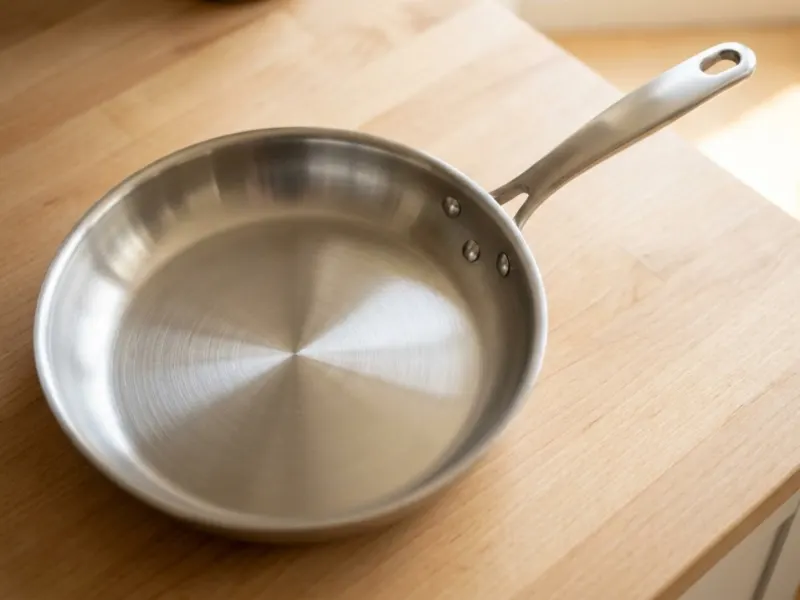
If your priority is removing the PFAS question entirely, rather than checking it brand by brand, stainless steel does that by design. A fully-clad pan like the Zwilling Spirit 3-Ply, rated on Zwilling's own spec page, has no coating to verify, no certification to look up, and no warranty fine print to read on the coating specifically, because there's no coating.
It's also worth checking induction compatibility separately if that matters for your stovetop. Our induction compatibility checker confirms whether a given pan's magnetic layer covers the full base or just a partial disc, since that detail varies even among fully-clad stainless lines.
Ceramic asks you to keep re-checking a claim on a schedule the coating itself sets. Stainless asks you to check once, at purchase, and never again.
Bare stainless costs more upfront than a starter ceramic pan and demands real preheating discipline, since it offers no natural release. But you're trading a recurring verification question, and a coating with a documented replacement cycle, for an upfront cooking-technique learning curve.
Our Verdict#
If PFAS verification specifically is what's driving your decision, don't let the coating category answer the question for you. Don't let a certification badge answer it either, without checking where that badge actually came from.
That makes the Zwilling Spirit 3-Ply, or any comparably built fully-clad pan, the default pick for a reader who wants this specific worry gone rather than managed, with no brand paperwork to evaluate at all.
If you want to stay in ceramic, spend five minutes on the brand's own materials page before you buy. Look for a disclosed sol-gel composition or a linked lab test.
If a certification is named, verify it against the certifying body directly rather than the product page repeating it. The coating category was never the safety guarantee. Whether the specific claim survives a check is.
Material choice affects more than this one question. Heat control, weight, and maintenance trade-offs matter alongside the safety picture once PFAS verification is settled. For a deeper look at how stainless steel cookware holds up over decades once you've made the switch, fully-clad construction can survive decades of daily use in a way a disc-bottom pan never will.