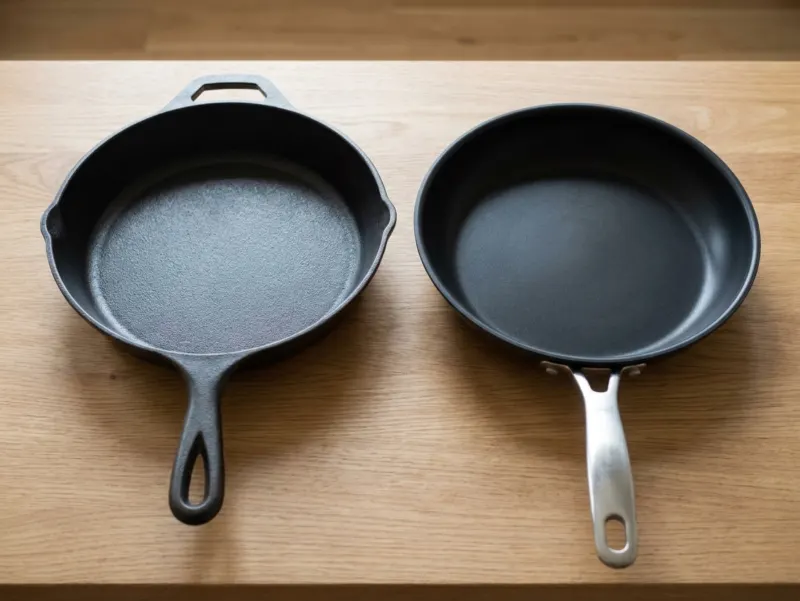
Two pans, same 12-inch diameter, same rough price. Add three inches of diameter and one of them nearly climbs to 11.5 pounds. The other barely reaches 5.
Cast iron and stainless steel split the work by size as much as by task. At 12 inches and under, cast iron wins searing and stainless wins sauces and quick cleanup. Past 12 inches, cast iron's weight climbs so fast that most cooks switch to stainless regardless of the task, because a heavier pan stops being liftable one-handed.
That size threshold is the part most buying guides skip.
The two camps online rarely mention it. Cast iron people on Reddit call stainless overpriced. Stainless fans call cast iron a maintenance trap. Neither argument accounts for what happens once the pan gets bigger than a standard skillet.
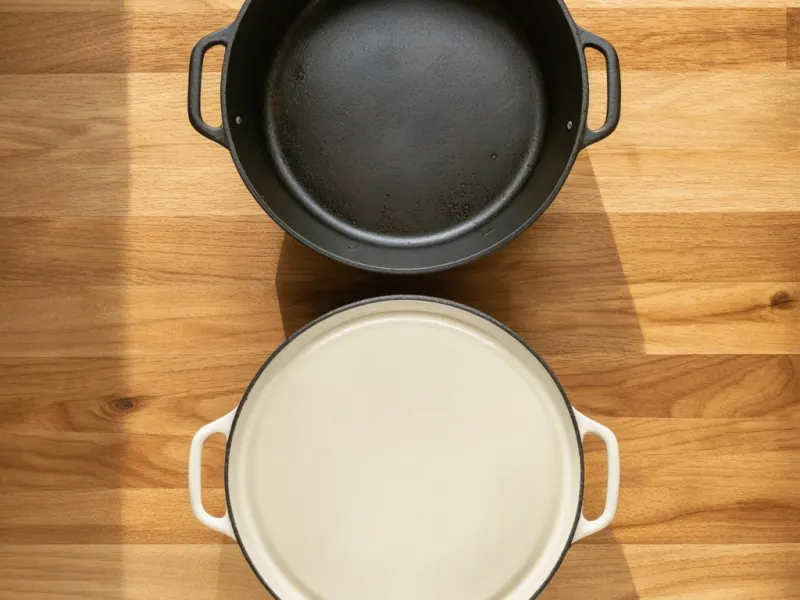
A Quick Note on Enameled Cast Iron#
Le Creuset and enameled Lodge solve the reactivity problem but cost several times more than bare cast iron. Most kitchens use enameled cast iron as a Dutch oven, not a daily skillet, so this comparison sticks to bare cast iron, which is what actually competes with stainless steel at the skillet price point.
The Weight Gap Nobody Sizes For#
A 12-inch cast iron skillet runs about 8 pounds (Lodge's listing confirms 7.9). A comparable 12-inch tri-ply stainless skillet is considerably lighter. Every buying guide repeats that gap and stops there.
What changes the math is size. Cast iron is cast in a mold, so more diameter means proportionally more metal at the same thickness. Lodge's 15-inch-class skillet weighs 11.5 pounds, a jump of roughly 45 percent over its own 12-inch size. Stainless scales the opposite way: a 14-inch 5-ply skillet from Made In weighs 4.7 pounds, barely more than the 12-inch version.
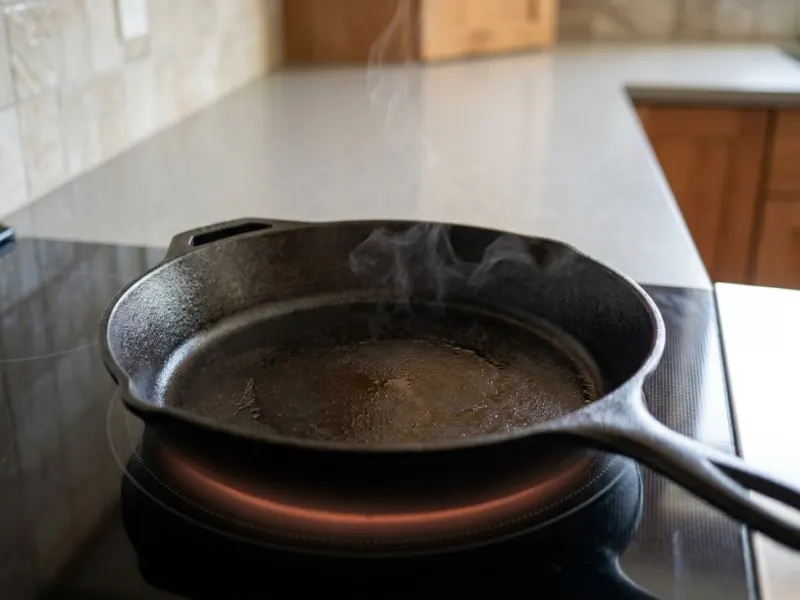
This is exactly why cooks on r/AskCulinary already default to stainless once a job calls for anything bigger than the 12-inch threshold. Past that weight, tilting the pan to plate food or lifting it off the burner with one hand stops being comfortable. The same thermal mass that makes cast iron sear so well is the property that makes it hard to manage once it scales up.
If you only ever cook at 12 inches or smaller, this threshold does not matter. It matters the moment you're shopping for a bigger skillet or a family-size frying pan.
What Cast Iron Does Better#
At 12 inches and under, cast iron's thermal mass is unmatched. A cold steak landing on preheated cast iron barely moves the surface temperature, so the sizzle stays aggressive and the crust builds fast and even, without the gray band of overcooked meat underneath. That thermal-mass advantage becomes even more dramatic with cold bone-in cuts, which we cover in more detail in our guide to frying chicken.
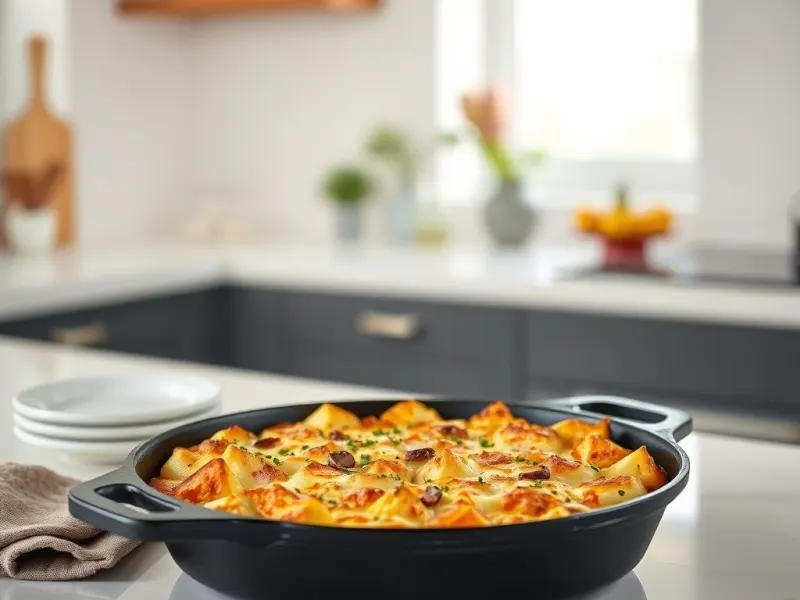
Cast iron also moves from stovetop to oven without a second thought, which matters for cornbread, frittatas, and skillet cookies.
The tradeoff, beyond weight, is responsiveness. Turning the heat down on cast iron means waiting noticeably longer before anything changes. On induction, cast iron works reliably since it is almost entirely iron and grabs a magnet instantly. On glass or ceramic tops, always lift rather than slide; a rough cast bottom scratches the surface.
What Stainless Steel Does Better#
Stainless is nonreactive. Tomato sauce, wine reductions, and vinegar deglazes all work cleanly in stainless, where the same acid would strip seasoning or leave a metallic taste on cast iron. A quick splash of wine in a well-seasoned pan is fine occasionally; an extended tomato simmer belongs in stainless.
Fully-clad tri-ply stainless also responds fast. Lower the heat and the pan follows within seconds, which matters for sautéing aromatics or cooking fish that goes from perfect to overdone inside a 30-second window.

Stainless also builds fond, the browned bits left after searing that turn into a pan sauce with a splash of stock and two minutes of scraping. Non-stick can't do this because nothing sticks. Cast iron technically can, but the dark surface hides the fond and acidic liquids fight the seasoning.
Why Stainless Steel Feels Harder Than It Is#
Most stainless complaints trace back to one mistake: not preheating long enough. Heat the empty pan on medium until it is thoroughly hot, flick a few drops of water onto the surface, and wait until they bead into a single ball that skitters across (the Leidenfrost effect). Add oil, let it shimmer, add food, and leave it alone. It sticks briefly, then releases once the crust forms.
The full method is in our guide to why food sticks to stainless steel. Most cooks need a handful of meals before the technique becomes automatic.
The Decision That Actually Decides It#
Skip "it depends." Run this instead: if the pan you need is 12 inches or smaller and the main job is searing meat or finishing in the oven, buy cast iron. If the pan needs to be bigger than 12 inches, or the main job is sauces, acidic cooking, or dishwasher convenience, buy stainless. Eggs and delicate fish go to a cheap non-stick either way, since neither material here handles them well without months of seasoning or a short learning curve.
For a first serious pan beyond non-stick, we point new kitchens to stainless first. It covers more situations, opens up pan sauces immediately, and scales gently if you upgrade to a larger size later. Add cast iron once you know you sear often enough to justify the extra weight and upkeep.
Our first-apartment cookware guide recommends stainless plus non-stick plus a saucepan as the day-one trio, with cast iron added in month three or four once the owner has settled into a searing habit. If storage is tight, that sequencing works here too: stainless first, cast iron only when you have the shelf space and the searing frequency to justify it.
The Product-Specific Catch With Each Pick#
Victoria pre-seasons its cast iron with flaxseed oil instead of the vegetable oil most competitors, including Lodge, use. Flaxseed cures into the most rigid polymer of any common seasoning oil, and rigid coatings crack under repeated heating and cooling. One forum-documented case describes most of a fresh flaxseed layer coming off during the very first cleaning after the first cook, an abrupt failure rather than the gradual wear you might expect. That doesn't make the pan defective, but it does mean the factory seasoning needs a gentler break-in than Lodge's softer, vegetable-oil coating, and a thin oil touch-up sooner than you'd expect.
Amazon Basics' 12-inch tri-ply skips the helper handle that a same-size Tramontina Signature includes. It is light enough to manage one-handed when empty, but a full pan of liquid is more secure with two points of contact, which this pan does not offer.
For cast iron sizing and surface texture specifically, our full guide to choosing a first cast iron skillet covers rough-cast versus machined-smooth surfaces. If the pan you actually need is bigger and heavier than either of these, carbon steel is the middle ground between cast iron's weight and stainless's reactivity gap; if you're weighing carbon steel against stainless directly, the carbon steel vs stainless steel breakdown covers that case. For help narrowing it down by your own habits, the cookware material selector walks through the same decision tree.
Specific Picks#
For stainless steel: the Amazon Basics Tri-Ply 12-Inch Stainless Steel Fry Pan. Fully-clad construction (check the rim for visible layers to confirm), induction-compatible, oven-safe. For the exact oven limits including the handle, check it in our oven-safe temperature tool.
For cast iron: the Victoria 12-Inch Seasoned Cast Iron Skillet. A rough-cast surface typical of budget cast iron, pre-seasoned with flaxseed oil instead of the vegetable oil most competitors use (plan a gentle break-in per the note above).
Both sit in the budget tier. Together they cost less than one premium All-Clad skillet and will outlast anything coated.