You followed the seasoning instructions to the letter, and the eggs still stuck on the second cook. That is the moment most carbon steel guides never prepare you for, because they assume seasoning is the hard part.
A carbon steel pan for beginners comes down to one skill, not a checklist: the heat-and-oil test you run before food ever touches the metal.
Get that right and a new pan releases food almost like non-stick from the first week. Miss it and even a perfectly seasoned pan turns every omelet into a scraping job.
Most guides do not lead with that test. They lead with seasoning, oven temperatures, oil types, multi-round rituals, because seasoning is what makes carbon steel look intimidating on the shelf. We went looking at what actually shows up in beginner troubleshooting threads, and the pattern points somewhere else entirely.
The Real Learning Curve of a Carbon Steel Pan for Beginners#
Search "why does my carbon steel pan stick" and you will find dozens of dedicated troubleshooting posts. That volume is far bigger than anything written about the seasoning process itself. That volume tells you something: sticking on a pan that was seasoned correctly is the actual beginner problem, not the seasoning.
Here is why it happens. Raw protein forms a weak chemical bond with bare or under-heated metal on contact. A cold or lukewarm pan gives that bond time to form before the surface is hot enough to stop it.
A properly preheated pan and oil layer create a thin cushion of heat and steam. That cushion keeps the food from ever touching bare metal long enough to stick.
That mechanism has nothing to do with brand, price, or how many times you seasoned the pan. It is a heat-and-timing problem, and it has a heat-and-timing fix.
The Heat-and-Oil Test That Ends the Guessing#
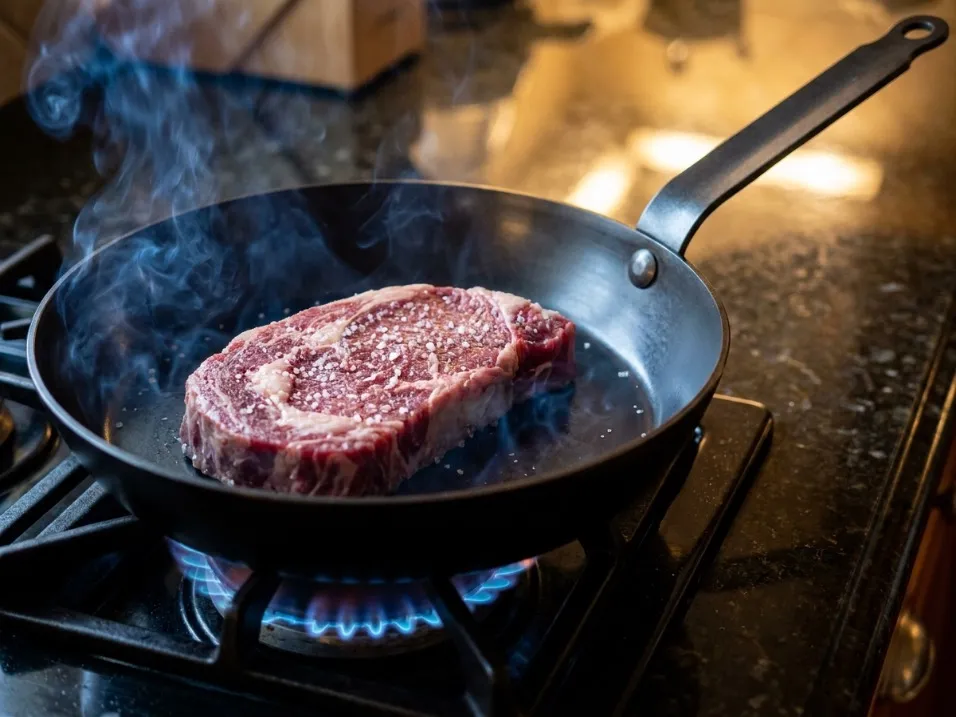
Before adding any food, run this test. Preheat the pan on low-medium until the surface just barely starts to give off a light smoke point haze. Then add your oil.
Watch what happens next. Correctly heated oil moves freely across the surface and visibly ripples, almost like water.
If the oil sits thick and sluggish instead of rippling, the pan is not hot enough yet. Give it more time and watch for the ripple.
Once the oil ripples, add your food. An egg dropped into a properly heated pan and oil will slide on its own within seconds, before you touch it with a spatula. That slide is the confirmation signal, not a lucky pan.
Run this test for a week and you stop guessing. You start recognizing the ripple and the slide the same way you recognize when pasta water is actually boiling.

Building the Habit: Cook a Dozen Eggs in a Row#
If the ripple test still feels abstract, force the repetition. Buy a dozen eggs and cook them one after another in the same pan, adjusting your heat slightly each time. We found the same pattern across carbon steel channels that teach this method: somewhere around egg seven, the pan's behavior stops feeling random and starts feeling predictable.
That is calibration, not coincidence. You are training yourself to read one specific pan on one specific burner, which is exactly the skill generic advice cannot hand you. A dozen eggs costs less than a replacement nonstick pan and teaches more than any seasoning guide will.

What a Pre-Seasoned Pan Actually Buys You#
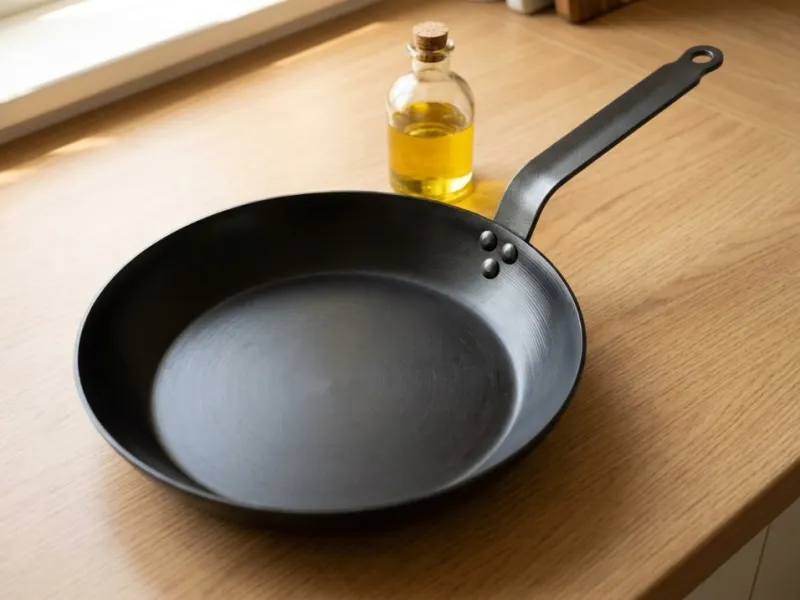
This is where a pre-seasoned pan like the BK Black Steel, rated safe under the broiler up to 660°F, changes the beginner math, and where it does not. It skips the traditional ritual. No stripping factory wax down to bare metal, no repeated oven bakes of 1 hour each before the pan is usable for the first time. That alone removes the part of carbon steel ownership that scares off the most first-time buyers.
What it does not skip is the heat-and-oil test above. A pre-seasoned surface still sticks if you drop food into a cold pan. The seasoning affects how quickly a working non-stick surface builds and how forgiving the pan is early on, not whether you still need to learn to read heat.
It is also worth being precise about "pre-seasoned." The pan still arrives under a thin protective wax layer that has to come off with a hot, soapy wash before the seasoning underneath does anything for you. Skip that step and you are cooking against wax, not seasoning. Budget 5 minutes for that wash the day it arrives, then a quick oil wipe on the stovetop, and you are cooking.
The Mistakes That Have Nothing to Do With Heat#
A handful of seasoning-adjacent mistakes still trip up beginners even once heat control clicks. None of them are about temperature.
- Too much oil during touch-up seasoning. The oil should go on, then get wiped with a paper towel until the pan looks almost dry. Visible streaks or drips mean too much oil is still sitting on the surface, and that excess turns gummy instead of bonding. Polymerization, the chemical reaction that turns oil into a hard, bonded layer, only works in a thin film. A thick layer hardens on top while liquid oil stays trapped underneath, which is the exact mechanism behind most "my seasoning came off in a sheet" complaints.
- Reaching for the wrong oil. Grapeseed, canola, or plain vegetable oil all work reliably for touch-ups. Oils with strong flavor or unusual smoke points complicate things beginners do not need to manage yet.
- Wiping on oil while the pan is still hot. Doing this while the pan is hot enough to sizzle or smoke that oil on contact skips the even, thin spread you actually want.
One mechanical risk deserves a mention too: warping. Carbon steel is thin enough to expand and contract quickly, so a sudden temperature shock, like rinsing a hot pan under cold water, can bow the center. It is avoidable with one habit: let the pan cool before it meets cold water, every time.
Picking the Best Carbon Steel Skillet When You're Starting Out#
A pan in the 8 to 10 inch range is the right starting size for most kitchens. It fits standard burners without overhanging, handles one to two portions comfortably, and is light enough to practice the tossing and tilting motions carbon steel rewards.
If skipping the seasoning ritual matters more to you than saving a few dollars, a pre-seasoned option like the BK Black Steel 8-inch gets you cooking the same day, once the wax wash is done. One sourcing detail worth knowing: despite BK's Dutch heritage marketing, the pan is manufactured in China, a detail the brand's own story does not lead with. It does not affect how the pan performs, but it is worth knowing before you pay a premium for a heritage pitch.
If you would rather learn the full stovetop seasoning process from day one and do not mind spending more, a bare pan like a de Buyer Mineral B works the same way. Wash off its factory beeswax with hot soapy water, then a short stovetop seasoning session gets the first layer on. The technique in how to season a carbon steel pan applies without changes.
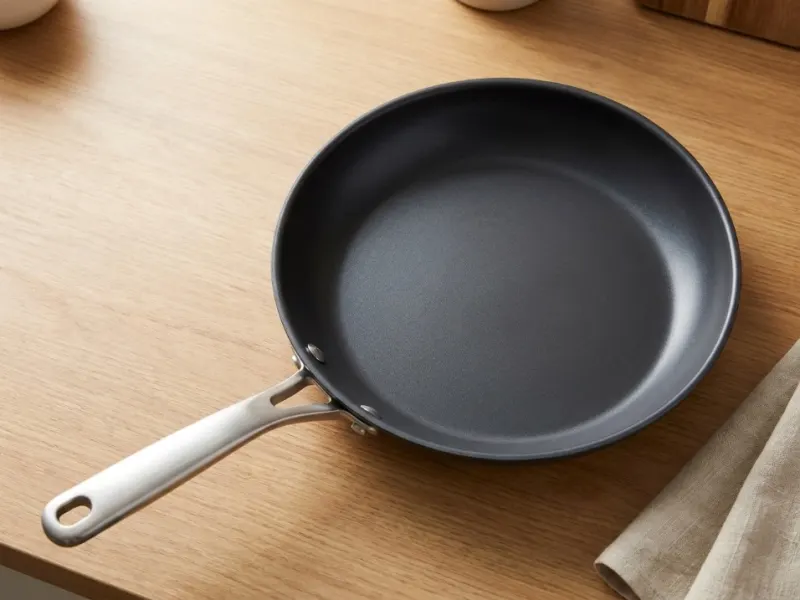
Either path lands you at the same place eventually: a pan that outlasts a nonstick coating's replacement cycle by years, provided the seasoning is maintained rather than damaged. If your seasoning is already flaking rather than just breaking in unevenly, that is a different, fixable problem covered in carbon steel pan seasoning coming off.
Still weighing whether carbon steel earns a spot in your kitchen at all, versus sticking with cast iron or nonstick? We laid out that tradeoff directly in is a carbon steel pan worth it. The material selector quiz walks through the same decision for your specific cooking habits if you want a faster answer. If you want to see how a one-time carbon steel purchase compares to years of replacing nonstick coatings, the cookware cost calculator runs those numbers too.
The seasoning ritual gets all the attention because it looks intimidating on video. The heat-and-oil test is the part that actually decides whether your first month with carbon steel feels like a win or a fight. Learn to read the ripple, run your dozen eggs, and the rest of it stops being a mystery.