You can use cast iron on induction, and every buying guide we checked says it heats evenly. We went looking for anyone who had actually measured that instead of just repeating it, and found two people who pointed a thermal camera and a skillet of bacon at the question. They found something different.
Cast iron works on induction: it's ferromagnetic, so it triggers the field instantly with no converter disc needed. But it doesn't heat evenly, which is the part the "even heating" marketing skips.
A Lodge 10.25-Inch skillet is the practical size to start with if you're testing induction for the first time. The gap between what cast iron gets credited for and what actually happens in the middle of the pan is bigger than most people expect.
Yes, You Can Use Cast Iron on Induction#
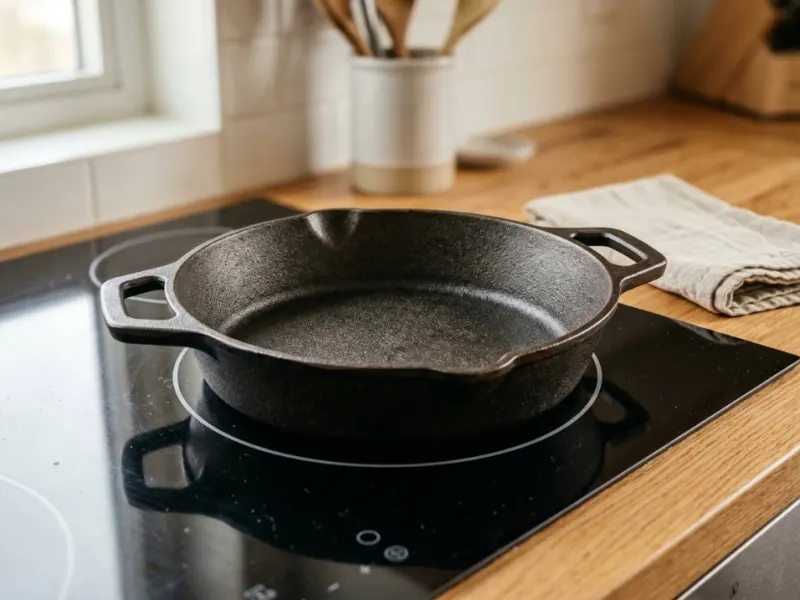
Cast iron's induction compatibility was never really in question. Any pan that grips a magnet firmly across its base will trigger an induction field, and cast iron does that as hard as almost anything else in a kitchen. Run the magnet test on any pan you own and cast iron passes without hesitation. If you're checking a whole cabinet of mixed cookware rather than just cast iron, our induction compatibility checker sorts what will and won't fire up before you buy anything new.
What several guides get wrong is the next claim. Search this exact question and you'll find pages describing cast iron's mass as something that "maintains a consistent temperature across its surface" or "distributes evenly." That's backwards. Two testers who checked directly found the opposite: a real, visible hot spot in the center of the pan.
What Two Testers Actually Found#
We dug through owner videos looking for anyone who ran a real test rather than asserting an outcome, and found two individual testers whose methods differ but whose results agree. One tester ran a thermal camera over a large Lodge skillet on an electric coil burner sized to match the pan's own diameter, with no diffuser between the two, and reported the center running dramatically hotter than the edge the whole time the pan sat directly on the coil.
That same tester then slid a slab of aluminum between the burner and the pan, and reported that the gap closed almost completely within a couple of minutes. That single change points at the pan's own metal, not the burner, as the reason heat wasn't spreading, at least in this one tester's setup.
A second tester ran a head-to-head cook, cast iron against carbon steel, on the same induction burner, and reported a center hot spot on both pans. In that tester's account it was less pronounced on the heavier cast iron, but still visible, and cast iron took noticeably longer to come up to temperature first.
Neither test is a lab measurement. Neither guarantees what your own pan and cooktop will do. But two testers, using two different methods, watched the same pattern. That's not a coincidence worth betting against.

Why the Heat Doesn't Spread#
The mechanism comes down to a basic materials gap. Cast iron's thermal conductivity runs about 52 to 53 W/mK, per professional engineering-reference tables. The 3003-series aluminum alloy used in clad cookware cores runs roughly 190 to 193 W/mK, three to four times faster.
Heat introduced at one point in solid cast iron crawls sideways through the iron slowly. Heat introduced into an aluminum-core clad pan spreads across the base almost as fast as it arrives.
Induction does not hide that weakness. Whirlpool's own cooktop documentation warns that cookware makers often quote the diameter across the top of the pan, which is usually larger than the base, so a pan that looks right for a zone can cover less of it than the label suggests. Whirlpool does not measure hot spots in cast iron, but heat that reaches the iron unevenly stays uneven longer, because the metal spreads it sideways so slowly.
The Fix If You Already Own Cast Iron#
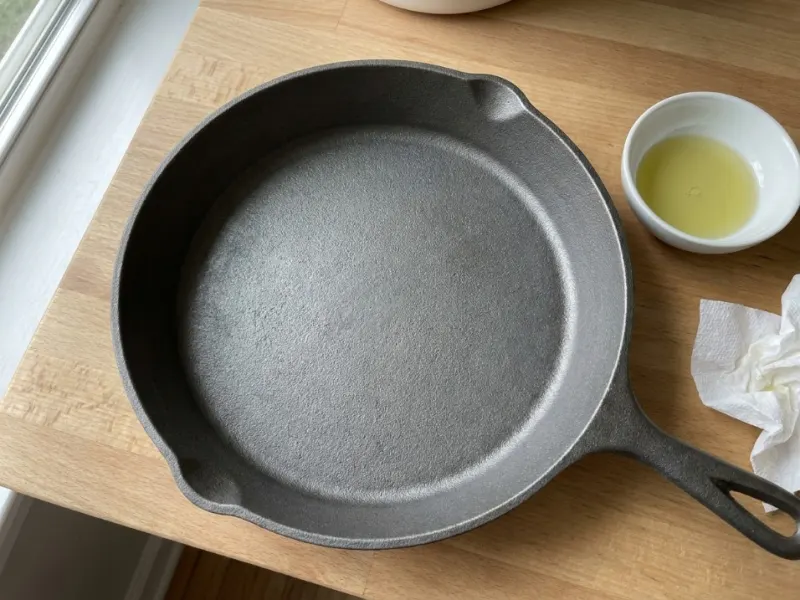
You don't need new cookware. Preheat on low or medium power, not high. Lodge's own guidance is direct: a heat setting above medium "isn't necessary," and the pan should "gradually pre-heat... on a similar-sized burner." A few extra minutes at a gentler setting gives the iron more time to conduct heat outward before food goes in.
Once cast iron is fully preheated, slow conduction stops working against you. The same thermal mass that resists heating up fast also resists cooling down fast. Drop a cold steak into a properly preheated cast iron pan and the surface temperature barely dips. That's the searing advantage cast iron keeps over faster, more responsive materials, on any stovetop.
The Scratch Risk Nobody Mentions Either#
There's a second complaint tied specifically to this Lodge skillet, not to cast iron as a category. Lodge's own aggregated review data, across more than 23,000 Amazon reviews for this exact model, calls out a rough bottom that scratches glass cooktops. That's the same surface sitting on induction glass, so the risk carries straight over.
Lift, never slide. That single habit prevents almost all of the scratching. A machined-smooth alternative sidesteps the issue entirely at a premium price, or you can smooth a standard Lodge base yourself before it touches glass. For the full rundown, see our glass top stove guide.
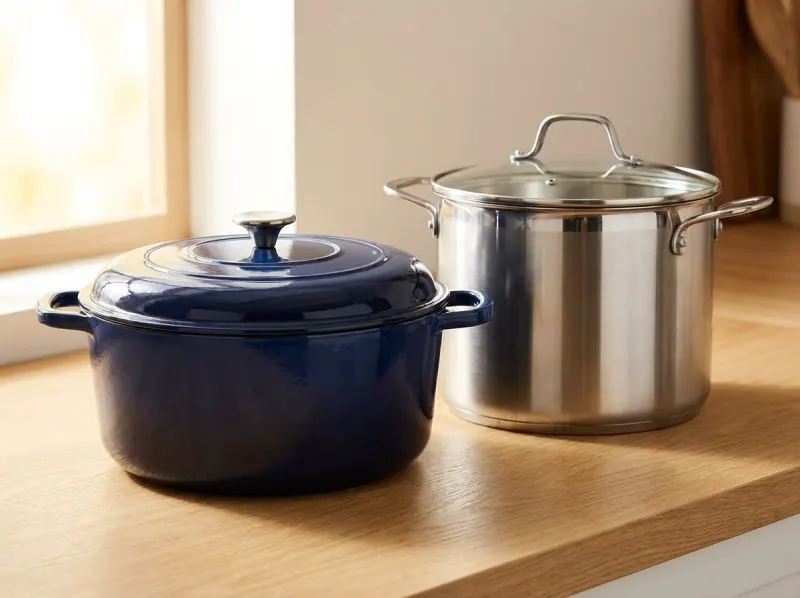
Enameled cast iron is worth a mention here. The iron body under the enamel is just as magnetic as bare cast iron, but the smooth enamel surface is inherently gentler on glass than an unsanded rough casting.
Buying New? Here's the Actual Decision#
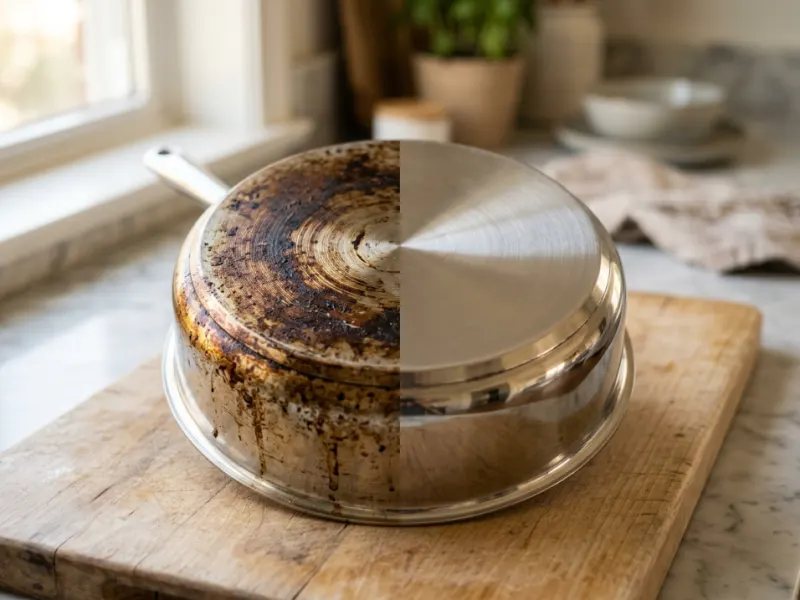
If even heating is your priority for an induction kitchen, cast iron isn't the pan that gets you there. A magnetic clad stainless pan spreads heat more evenly than cast iron, because its higher-conductivity aluminum core moves heat sideways faster than solid iron does. That's the same conductivity gap from above, just working in your favor.
That doesn't make cast iron a bad buy. It makes it the wrong buy for a specific priority.
Want searing power, heat retention, and a pan that improves with age? Cast iron on induction still delivers all three, once you accept the hot-center tradeoff and adjust your preheat habit. Want even heating across the whole surface, for something like a delicate sauce or an omelet? A clad stainless pan does that job better.
We break down that exact tradeoff, material by material, in our cast iron vs stainless steel comparison. Our material selector quiz walks through which material fits your specific cooking habits if you're still deciding.
The Verdict#
Cast iron on induction works. Compatibility was never the real question. The real question is whether even heating matters enough to trade away searing power and heat retention, and for most people cooking steaks or cornbread, it doesn't.
If you're buying your first cast iron pan specifically for an induction kitchen, the Lodge 10.25-Inch Cast Iron Skillet is the practical size to start with. Its cooking surface lines up with typical residential coil footprints, it's priced as a low-risk way to try induction, and the rough bottom is a one-time fix: sand it smooth, or commit to lifting instead of sliding. Preheat on medium, give it the extra few minutes, and the pan everyone says "just works" on induction will actually work the way you expected.