Electric elements take 30 to 45 seconds to climb back to temperature once cold food hits the pan. That single lag is the reason most stir fry made on an electric stove comes out steamed instead of seared, no matter how good the wok is.
We cross-checked long-term owner reports and current listing data on the products themselves, and landed on the same conclusion twice: the Yosukata 13.5-Inch Carbon Steel Flat-Bottom Wok is the best wok for an electric stove, but the wok alone will not fix soggy stir fry. Smaller batches and longer preheating matter just as much as the pan.
Here is the technique fix, the equipment fix, and why most electric-stove kitchens land on the same two picks.
Why Stir Fry Fails on Electric#
The first problem shows up immediately. A round-bottom wok barely touches the electric element. On gas, flames wrap around the curve. On a flat coil or glass top, only the very bottom tip makes contact, leaving most of the pan's surface barely warm.
The second problem is quieter. Even with a flat-bottom wok, results can still be mediocre. Vegetables release too much water. Chicken never quite browns.
The real issue is thermal recovery. Gas burners respond instantly, electric elements do not. When cold vegetables hit a hot wok on electric, the temperature drops and needs 30 to 45 seconds to climb back. In that window, food is not frying, it is steaming in its own moisture.
That same slow recovery is also why copper cookware is not worth the money on an electric stove, no matter how well copper conducts heat.
The fix is not just the right wok. It is the right wok paired with technique built for electric specifically. We walk through both.
The Technique Fix (This Matters More Than the Wok)#
Before the equipment question, here is what changes results overnight.
Preheat 3 to 4 minutes on medium-high. On gas, a wok is ready in about 60 seconds. On electric, plan on longer.
Flick water drops in. If they dance and evaporate in roughly 2 seconds, the wok is ready.
Cook in smaller batches. Protein first, spread flat, no moving for 45 seconds, then remove.
Vegetables next in two batches. Combine everything at the end. Each small batch gets a proper sear because the element's slow recovery never gets overwhelmed.
Stop stirring constantly. Place food flat against the hot base, leave it 30 to 45 seconds, then toss. Browning happens during contact time, not movement.
Add oil after preheating, not before. Swirl to coat, wait for the first wisp of smoke, then add food. Industry testing puts refined peanut oil at 446°F, comfortably above the temperatures a medium-high electric element reaches during stir fry.
On electric, technique outweighs equipment. Even a mediocre pan produces decent results once these habits click. We still recommend getting the equipment right, because it is the difference between decent and excellent.
The Equipment Fix: What to Look For#
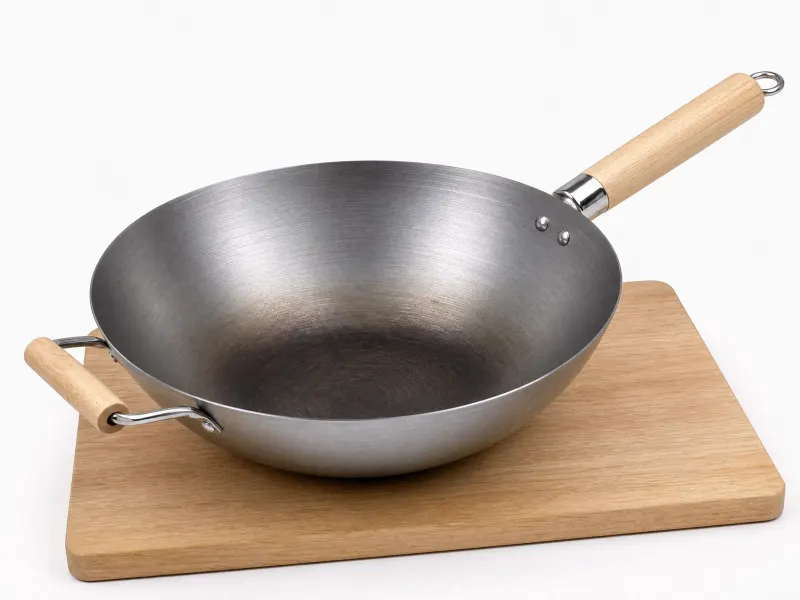
Once technique is sorted, the right wok takes results from good to excellent, and for electric specifically, four things matter: a flat bottom 4 to 5 inches across for proper element contact, carbon steel in the 1.5 to 2mm range (thinner warps within months, thicker takes too long to heat), a 14-inch diameter for batch-cooking room without overhanging the element, and a long handle for tossing leverage without lifting off the heat.
The Wok Most Long-Term Reports Settle On#
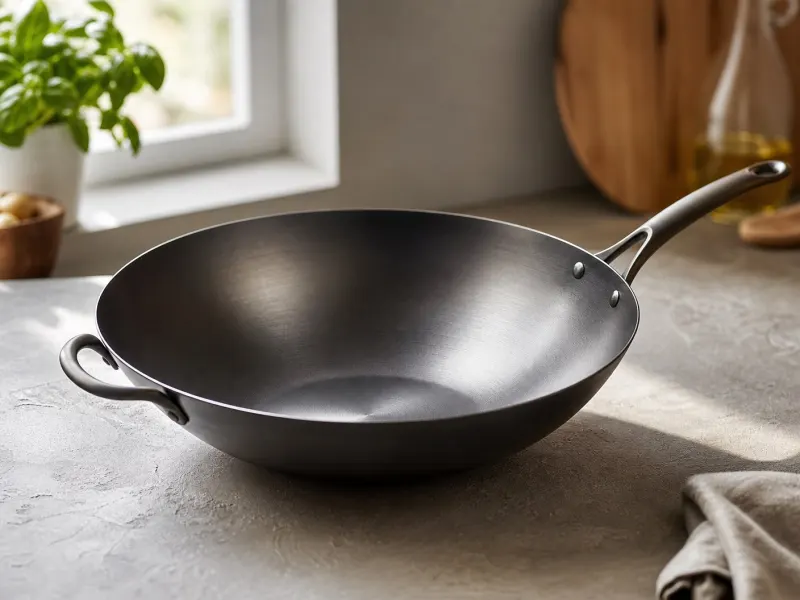
Thinner woks warp out within months, a recurring complaint in long-term owner reports. The Yosukata 13.5-Inch Carbon Steel Flat-Bottom Wok is the pick that holds up against that pattern, and it has become the everyday wok in many electric-stove kitchens we researched.
It hits every criterion we look for. Flat base sized right for electric elements, pre-treated carbon steel that most listings put around 2mm thick (some spec sheets for this line list 1.5mm, so treat the exact gauge as approximate rather than a fixed number), and a wooden handle that stays cool during long cooking sessions. At 3.6 pounds empty per Yosukata's own sizing chart, it is substantial enough to stay stable on glass but light enough for one-handed tossing with practice.
The "blue carbon steel" treatment gives seasoning a head start over raw steel. Two to three initial stovetop seasoning rounds are still required, but the surface bonds faster once those are done. Long-term reports describe eggs sliding across the surface without sticking after a few months of regular cooking.
The one downside owner reports keep flagging. Preheat time runs noticeably longer than thinner woks. On electric, where the wait is already 3 to 4 minutes, add roughly another minute. Once hot, though, it holds temperature better when cold food goes in, which is exactly the weakness electric stoves need compensated for.
Cost sits in the mid-range tier, meaningfully above the cheapest woks on the market. The thickness is the tradeoff: it will not warp and need replacing within a year the way thinner budget options often do.
Curious how we weigh manufacturer specs against community reports before making a call like this? Our review methodology walks through the process.

The Budget Option (For Cooks Still Experimenting)#
For cooks who want to try wok cooking on electric without committing to the mid-range price, the Babish Carbon Steel 14-Inch Flat-Bottom Wok sits in the budget tier and carries Amazon's Choice designation in the category, with well over a thousand ratings.
It runs slightly thinner than the Yosukata, which speeds up heat-up (a real plus on electric) at the cost of some long-term warp resistance. The 14-inch diameter, with a 6-inch flat base, gives a touch more cooking space. The handle is a similar wooden design, staying cool and long enough for leverage.
The straightforward call: cooks who already know they will wok cook regularly should go straight to the Yosukata and skip the eventual upgrade. Cooks still experimenting can start with the Babish at lower commitment.
What About Glass Top Stoves Specifically?#
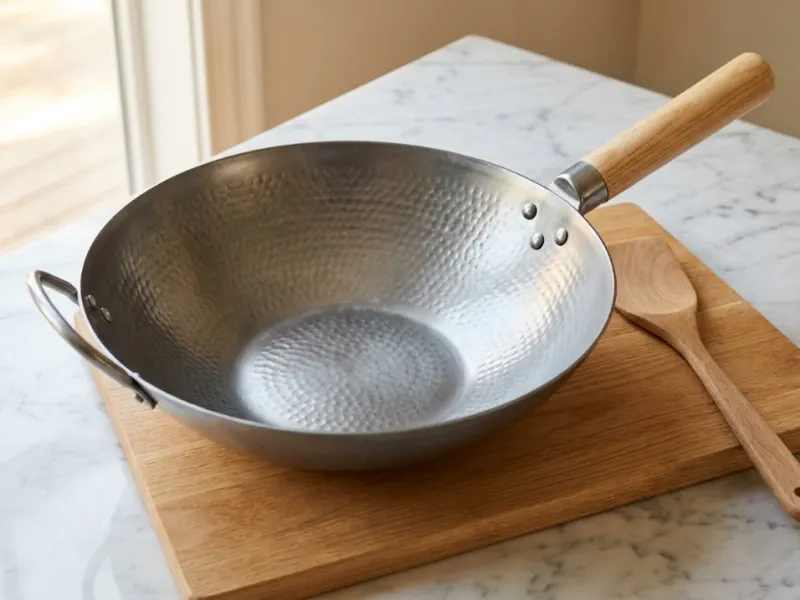
Everything above applies, plus one rule. Never slide the wok. Carbon steel can scratch glass if it gets dragged across the surface.
Use a smooth, not hammered, bottom wok, and always lift instead of sliding. Our guide to cast iron on glass top stoves covers glass-top specifics in more depth.
The Common Mistakes Owner Reports Document#
These are the recurring failure patterns we keep seeing in long-term owner reports.
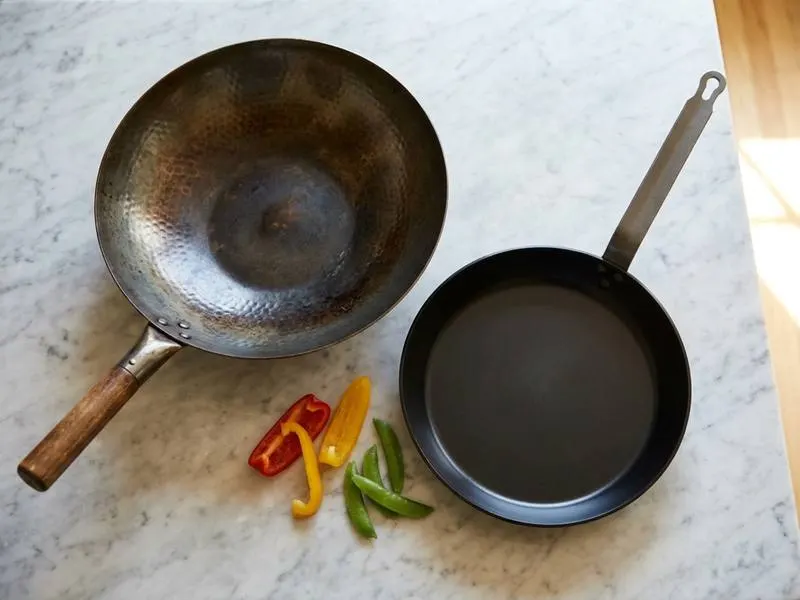
Buying a nonstick-coated wok. Non-stick coatings are rated for medium heat at most, so sear quality drops off fast once stir fry's sustained high heat crosses that limit regularly. Carbon steel does not have that ceiling. Seasoning only gets more useful with more cooking, never less.
One overlooked use for a flat-bottom carbon steel wok on electric: small-batch deep frying. The sloped sides give usable depth from a smaller pour of oil. Our best pan for deep frying at home guide still points first-time fryers to a Dutch oven for stability, but if a flat-bottom wok is already in the kitchen, it earns its place there too.
Using a round-bottom wok with a ring adapter. Those metal rings that hold a round-bottom wok on a flat stove add distance between the element and the wok bottom, cutting heat transfer further. They make an already-difficult heat problem worse. A flat-bottom wok is the direct answer, not a workaround.
Preheating on high. On electric, "high" often overshoots. One spot ends up screaming hot while the rest of the element has not caught up.
Medium-high for 3 to 4 minutes spreads heat more evenly across the flat base. Once the wok is uniformly hot, the dial can bump to high for the actual cooking.
The Short Version#
Bad stir fry on electric stoves is a technique problem first, an equipment problem second. Fix how the preheating works, batch the ingredients, and give food contact time. Then pair that habit with a flat-bottom carbon steel wok in the 1.5 to 2mm thickness range. That combination is what actually works.
The Yosukata and the Babish split on commitment level, not on whether either one works. Neither will fix soggy stir fry by itself. The habits above are what actually move the needle, on any flat-bottom carbon steel wok in the right thickness range.
Our carbon steel vs cast iron deep dive explains what makes the material so responsive for stovetop cooking. Not sure which direction to go? The material selector quiz asks six questions about your habits and gives a straight answer.