Same stove, same heat setting, two completely different results. One cook's stir fry comes out pale, pooling in liquid. Another's comes out charred at the edges and snapping with texture. The difference is rarely the recipe.
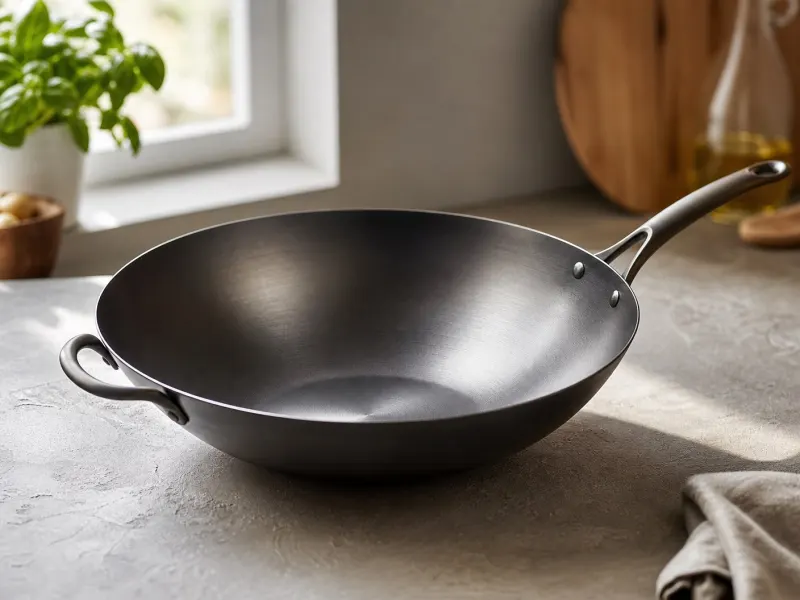
The best pan for stir fry is a 14-inch flat-bottom carbon steel wok, not a nonstick skillet.
Nonstick coatings cap out at a temperature stir fry needs to exceed. A flat, shallow shape traps the moisture that same capped heat still produces. Carbon steel removes both limits at once.
We went looking for why, digging through manufacturer care pages, government energy data, and owner threads on r/carbonsteel and r/Cooking.
Here is the part that trips people up. Buying a hotter nonstick pan is not an option. The ceiling is baked into the coating chemistry itself, not the pan's design. Switching pans, not turning up the dial, is the real fix.
Why Your Frying Pan Fails at Stir Fry#
Stir fry lives or dies on the Maillard reaction, the chemical process behind browning. Research from the Exploratorium, a nonprofit science museum, puts the real threshold at 140°C (280°F). Below that, food does not brown, no matter how long it sits in the pan.
Liquid water tops out at 100°C (212°F). It cannot get hot enough to trigger browning on its own. For a sear to happen, surface moisture has to boil off first, before the pan's heat can push past 140°C.
Nonstick coatings do not let you get there safely. PTFE begins releasing fumes at temperatures as low as 500°F, according to a StatPearls entry indexed by the National Center for Biotechnology Information. That sits close enough to stir fry's working range that most cooks sensibly hold the pan at medium heat. If you want a sourced verdict on what is actually in a specific coating, our PFAS safety checker breaks it down by brand and line.
At medium heat, surface moisture on your vegetables and protein does not evaporate fast enough. It pools instead. The food steams in its own runoff rather than browning.
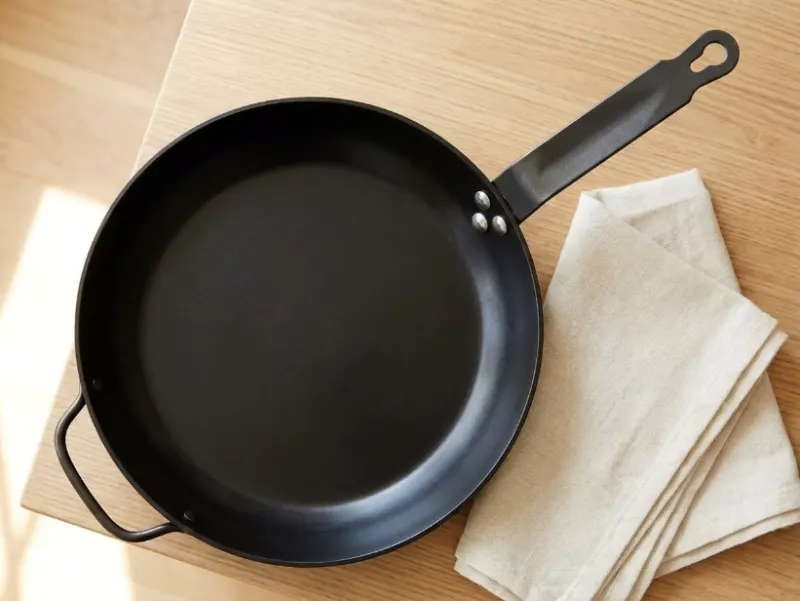
The two limits compound. A capped temperature, and a shape with nowhere for that moisture to escape once it is released. A sauté pan or frying pan is genuinely good at gentle browning and sauce reduction. It was just never built for stir fry's specific demands.
What Stir Fry Actually Requires#
Carbon steel is an uncoated iron alloy, under 2% carbon by composition. That low carbon content is what makes it stampable into thin, light sheets instead of cast like cast iron.
Because there is no coating layer to protect, you can run it as hot as your burner allows. Metal utensils are fine too, with nothing to scratch off.
Carbon steel also responds to heat changes faster than cast iron. Turn the flame down, and the surface temperature actually drops instead of coasting on stored heat. That responsiveness matters when you add room-temperature vegetables in batches and need quick recovery.
The tradeoff is real. Carbon steel reacts with acid, so tomatoes, citrus, and vinegar-heavy sauces strip seasoning and can pick up a metallic taste if they sit too long. For soy-and-rice-vinegar stir fry sauces, add them at the very end and serve right away.
None of this works if the oil gives out first. Refined peanut oil clears a 446°F smoke point, according to ISEO industry data, comfortably above the range stir fry needs. Refined canola and soybean oil sit in the same territory.
The Flat-Bottom Fix, and a Safety Detail Most Guides Skip#
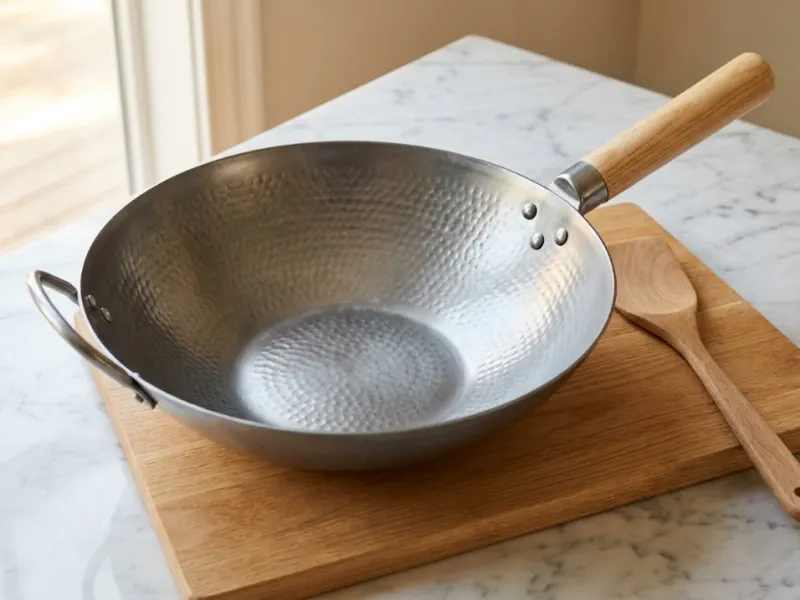
Flat-bottom carbon steel woks work on gas, electric, and induction stovetops without a wok ring. That is not just a performance detail.
On modern sealed-burner gas ranges, manufacturers explicitly warn against the accessory. Haier's own support guidance states that placing a wok ring over the burner can trap heat and block air to the burner, "resulting in a carbon monoxide hazard." A GE range's care manual documents the identical mechanism independently.
A flat-bottom wok sidesteps the issue entirely. It needs no ring at all.
If your only stove is electric or induction, there is good news the usual advice misses. Radiant and coil elements cycle fully on and off rather than modulating continuously like a gas flame. That is why they need a longer preheat and hold heat a little longer after you turn them off.
Induction is a different case, and it is not the slow one people assume. The US Department of Energy cites Consumer Reports testing that found induction cooktops boil water 20 to 40% faster than gas or traditional electric. On induction, the technique adjustment is about contact, not about working around a slow burner.
Carbon steel's own care instructions back this up. The 14-inch Craft Wok we point to below ships with manufacturer guidance that recommends heating gradually on medium when using it on induction, specifically to avoid warping the base. A gauge thick enough to resist that, 1.8mm and up, is exactly what a flat-bottom home wok needs on a flat element.
If you are shopping for one wok that handles gas, electric, and induction without drama, the Craft Wok 14-Inch Flat Bottom Pow Wok is our pick. Its 15-gauge steel sits at the thicker end of what home carbon steel woks come in. That buys warp resistance at the cost of a bit more heft when tossing one-handed. The 14-inch rim gives real room to work a batch without crowding it against the walls.
If you have not seasoned a wok before, expect some upfront work before it is ready to cook on. It gets easier from there. Carbon steel is a material that rewards high-heat cooking rather than being damaged by it.
If you are still weighing wok geometry against other pan shapes, our cookware material selector walks through the tradeoffs by use case.
The Mistake That Has Nothing to Do With the Pan#

Overcrowding ruins stir fry regardless of what you cook it in. It is the most commonly cited stir fry mistake reported across r/carbonsteel and r/Cooking threads.
If the food forms a continuous layer, with no pan visible between pieces, there is too much in there at once. Cook in two smaller batches instead of one crowded pass. The extra few minutes pays for itself in actual browning.
When a Frying Pan Is Actually Fine#
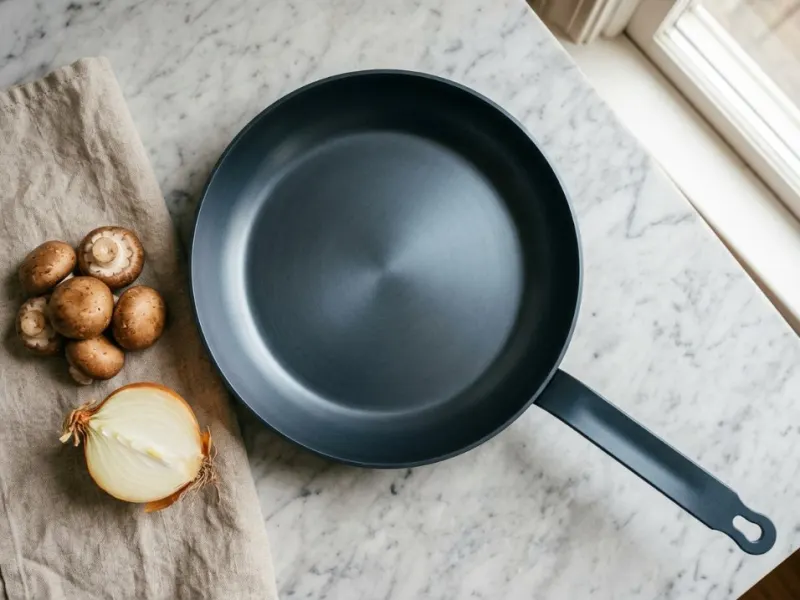
If you already own a good stainless steel or cast iron skillet with no coating to protect, you are not stuck. Neither material has a temperature ceiling, so the core problem this article describes does not apply the same way.
We broke down the wok vs skillet comparison across four measurable criteria for readers deciding whether a dedicated wok is worth adding. The short version: a skillet gives up capacity and tossing room, but an uncoated one keeps the heat a nonstick pan can never reach.
A nonstick skillet is the one genuine mismatch here. It stacks a hard temperature ceiling on top of a shape that traps whatever moisture that capped heat still produces. If easy cleanup matters more than real browning to you, that is a legitimate choice. Just know what you are trading away.