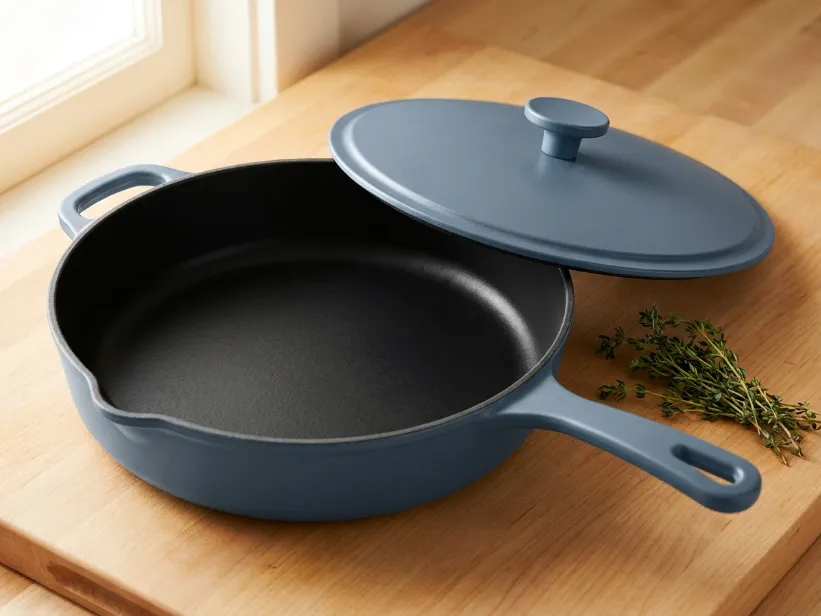
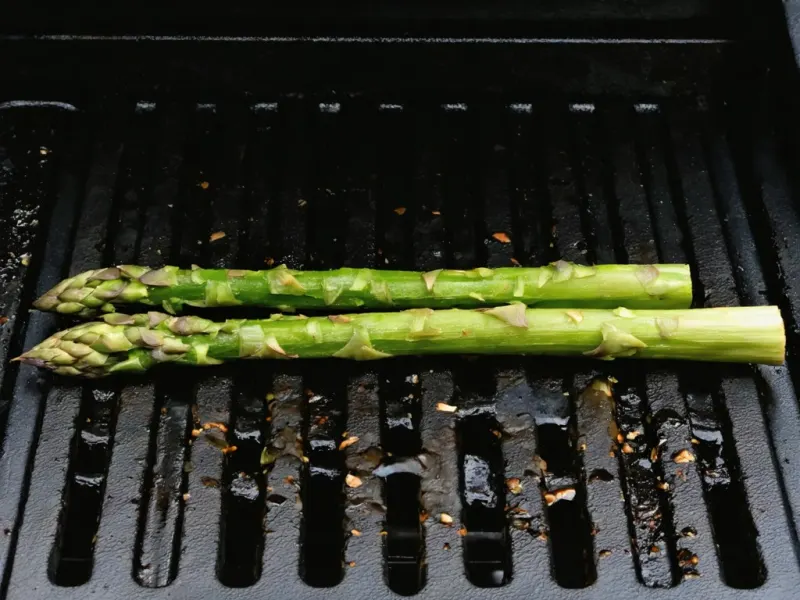
Golden, even browning on one pan. Pale centers with burnt edges on the other. Same batter, same stove, same morning.
We recommend the Lodge 10.25-Inch Cast Iron Skillet as the best pan for pancakes. Its 5.7 lbs of thermal mass holds surface temperature steady when cold batter lands. Owners across r/castiron report even browning from edge to edge once they switched from lightweight nonstick.
Most guides rank pans by material or coating. The variable that actually controls your results is how much energy the pan stores.
The pan you already own might be the problem, or the solution. Here is how we figured out which, after digging through r/castiron threads where owners consistently describe cast iron producing even golden browning on pancakes.
Why Weight Determines Best Pan for Pancakes Results#
Lodge's own cooking guide states that cast iron "holds heat" so effectively you do not need settings above medium. That property is exactly what makes a heavy pan produce even pancakes.
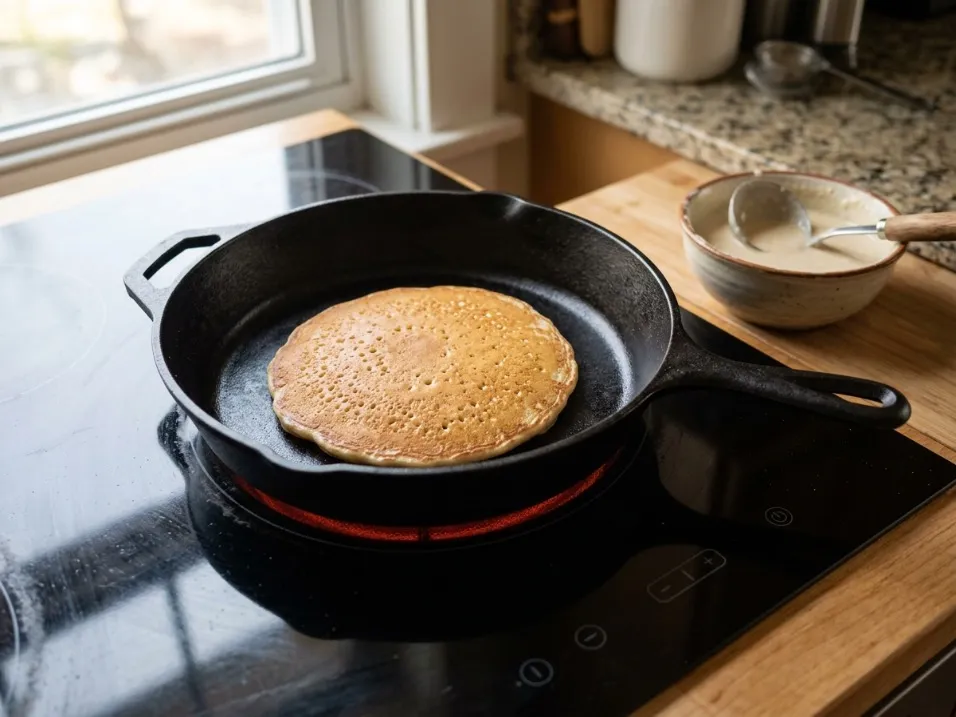
When you pour room-temperature batter onto a 5.7-lb iron surface, the mass stores enough thermal energy that the cooking surface barely changes temperature. The batter sees consistent heat from edge to edge. Same temperature everywhere. Browning develops uniformly.
Owners who made the switch describe golden, uniform results without the pale spots or burnt rings they got from lighter pans.
Pour that same batter onto a lightweight pan and the story changes. The thin metal surrenders its stored energy fast. The spot directly over the burner stays hot while the edges cool. You get that familiar spotty pattern where some areas are golden and others barely colored.
Owners on r/castiron who switched from nonstick to cast iron for pancakes describe this consistently.
This is not a material argument. Any pan heavy enough to store thermal energy works, regardless of whether it is cast iron, carbon steel, or some future alloy nobody has thought of yet. Cast iron just happens to be the most accessible option delivering this much mass in a 10-inch format at a budget price.
The First Pancake Is Information, Not a Failure#
Everyone has thrown away a first pancake. Lodge's cooking instructions explain why: "To ensure even heating, gradually pre-heat the cast iron skillet on a similar-sized burner."
Cast iron conducts heat slowly. Very slowly. It absorbs energy slowly and distributes it across the full surface over several minutes.
That first pancake hits a surface where the center is hotter than the edges. It reveals the uneven heating like a thermal map. By the second or third pour, the entire surface has equalized and every pancake comes out uniform.
On electric stoves, this matters more. The heating element cycles on and off to maintain your set temperature. A heavy pan smooths those power pulses into steady surface heat because the mass absorbs and releases energy gradually rather than spiking and crashing with each on-off transition. A lightweight pan responds to every cycle.
What Nonstick Gets Wrong About Pancakes#
Nonstick marketing emphasizes release. Nothing sticks. Easy cleanup. That solves a problem pancakes do not actually have.
Pour batter onto preheated, oiled cast iron and it slides right off the surface because the polymerized oil layer combined with a fresh thin wipe of neutral fat creates a mechanical barrier that batter cannot grip.
Release is not the problem. Lodge ships their skillets foundry seasoned and ready to use. A thin coat of neutral oil before each batch is all the release you need.
The actual pancake failure mode is uneven browning. The cause is insufficient heat retention.
A lightweight nonstick pan is optimized for eggs and quick sautés where responsiveness matters. For pancakes, which sit on the surface long enough for temperature consistency to matter, responsiveness works against you. You want a pan that refuses to change temperature.
If you already own a well-seasoned cast iron skillet in the 10-inch range, you already have the best pancake pan in your kitchen. No purchase necessary. Done.

Wall Height: The Flip Problem Nobody Mentions#
The second variable we found that competitors ignore is wall height. Standard frying pans have tall straight walls. Those walls force your spatula into a steep approach angle, and half-cooked batter tears.
Cast iron skillets typically have shorter sloped walls. A flat spatula approaches from any direction at a shallow angle, slides cleanly under the pancake, and flips without resistance.
If you are shopping specifically for pancake performance, check the product photos for wall profile. Low and sloped beats tall and straight for this job every time.
The Technique That Outweighs Equipment#
Three adjustments we keep seeing in owner threads improve results more than any pan swap.
Preheat longer than you think. Set your burner to medium-low and wait several minutes before the first pour. Touch a drop of water to the surface. If it dances and evaporates quickly, the pan is ready.
Lodge specifically recommends medium heat and gradual preheating because cast iron needs time to equalize.
Oil between every batch. Not cooking spray, which leaves sticky residue. A folded paper towel dipped in vegetable oil, wiped across the surface in three seconds.
Butter works for flavor but burns unpredictably between batches. Neutral oil gives you the same release performance batch after batch without any of the burning or residue problems butter introduces.
Accept that the first pancake is a temperature probe. Too pale means wait longer. Too dark means dial back. Treating it as deliberate information rather than failure makes pancake mornings far less frustrating.
When Cast Iron Is Not the Right Call#
You want something lighter for quick weekday mornings. A thick-bottomed nonstick gives acceptable results without the preheat wait. Look for one heavy enough that you cannot flex the base. The heavier the base, the more even the heat.
You make crepes or thin European-style pancakes. Cook time is under a minute per side, so thermal mass matters less. What matters is shape and very low walls for tilt-and-swirl technique.
You cook for a crowd. A two-burner cast iron griddle applies the same thermal mass advantage across a wider surface and handles four pancakes at once.
Our Verdict#
If you already own a cast iron skillet in the 10-inch range, you already own our pick. Preheat it properly, oil it well, and practice the technique above.
If you are buying new, we recommend the Lodge 10.25-Inch Cast Iron Skillet. Check the item weight on any product listing before you buy. The Lodge at 5.7 lbs is the benchmark.
If the pan feels light enough to toss with one hand, it probably does not have the thermal reserve for consistent pancake browning on electric stoves.
Look for low sloped walls. Skip any pan where the flat cooking surface is tiny relative to overall diameter.
If you are deciding between cast iron and stainless steel for breakfast, cast iron wins on thermal mass per dollar. The Lodge remains budget-tier pricing for generational durability. Still weighing material options generally? Run through the material selector quiz for a 30-second recommendation based on how you actually cook.