The wings hit the oil, and the burner cannot keep up. Splatter climbs the backsplash, the temperature crashes, and twenty minutes later what comes out is pale and greasy instead of crisp.
That is not a technique failure. It is a vessel failure.
Whatever pan is already on the stove gets pressed into service. An inch of oil goes in, because that is all the pan can hold without spitting everywhere. The oil temperature never recovers once cold food hits it.
The best pan for deep frying at home, for most people, is not a skillet at all. It is a cheap, bare cast iron Dutch oven with high sides.
We point to the Victoria Cast Iron Dutch Oven, priced in the budget tier (check current price).
It holds heat, so the oil recovers temperature fast. The tall walls keep splatter contained, and it is cheap enough to dedicate entirely to frying.
A flat-bottom carbon steel wok works too. There is more on that tradeoff below.
The part most buying guides skip is why a shape decision matters more than any brand decision here.
Why Pan Shape Decides Whether Frying Works#
Frying is mostly a temperature-recovery problem. Oil needs to hold steady at a properly hot frying temperature. When cold food drops in, the oil temperature dips, and how fast it climbs back decides the outcome.
Recover quickly and the food crisps before it has time to soak up grease. Recover slowly and the result is greasy, pale, and disappointing.
Thin pans lose this fight immediately. A lightweight aluminum pot or a thin stainless one bleeds heat the second cold food hits it, and the burner never quite catches up.
Cast iron works the opposite way. It is slow to heat initially, but once hot, the metal holds that heat. Adding cold food barely moves the oil temperature. That heat retention is why we consider a cast iron pot more forgiving for home frying than a thin alternative.
The second factor is depth. Oil splatter is not just messy, it is a burn risk. A skillet with two-inch sides cannot safely hold enough oil to submerge food, and what little it holds spits everywhere. Real frying needs high sides, which is exactly what a Dutch oven shape provides.
The Best Pan for Most People: A Bare Cast Iron Dutch Oven#
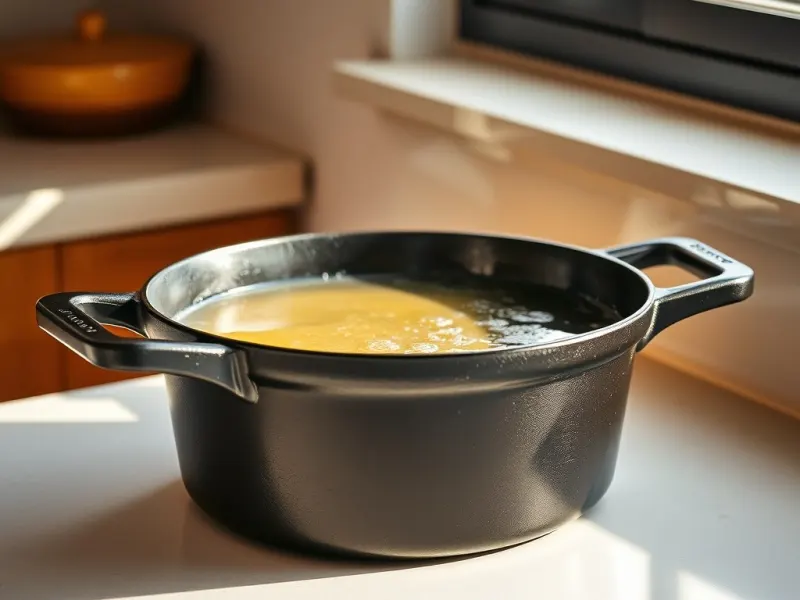
Set a bare cast iron Dutch oven like the Victoria Cast Iron Dutch Oven next to a skillet and a wok, and the difference in outcome is not subtle. The oil barely moves when the wings go in. Splatter stays inside the pot, and the wings come out actually crispy instead of pale.
The 6-quart size sounds excessive until you remember the fill rule. Filled only a third of the way with oil, that extra headroom is the safety margin that keeps oil from surging over the rim when a cold, wet basket of fries goes in.
A note on brand: the real recommendation is any bare cast iron Dutch oven in the 5-to-6-quart range. A Lodge already in the cabinet does the same job, so there's no need to buy the Victoria on top of it. We link the Victoria because its 6-quart size hits the right balance of capacity and price, which makes it an easy default to point to.
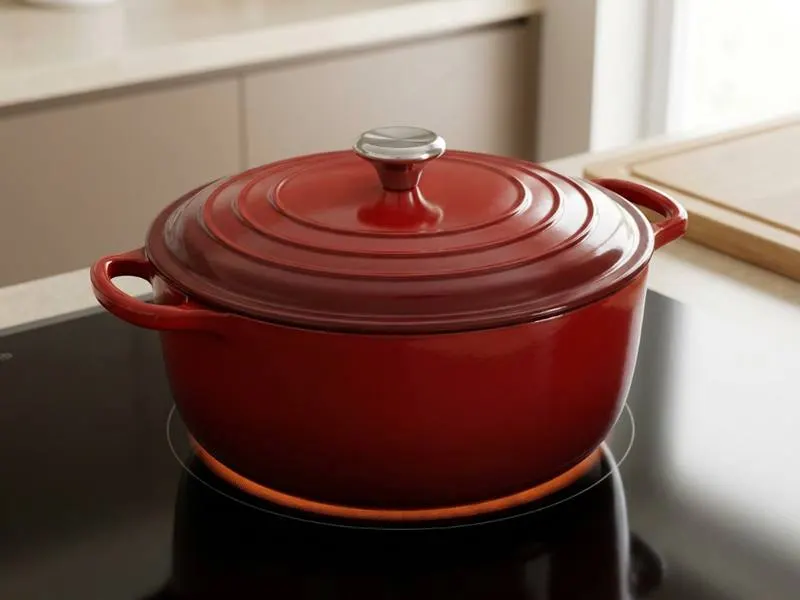
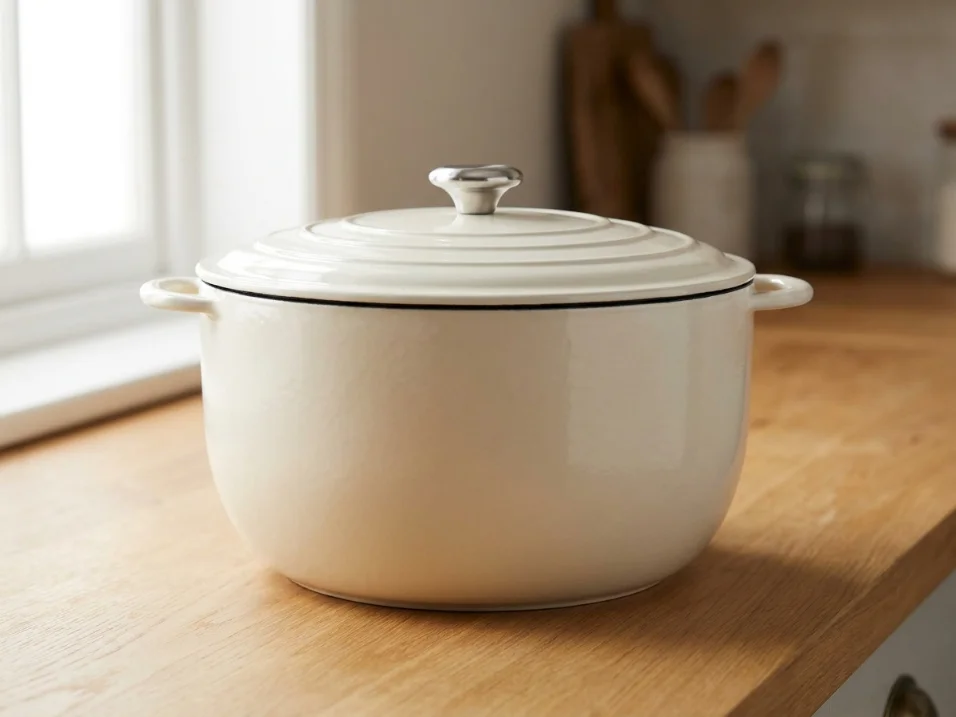
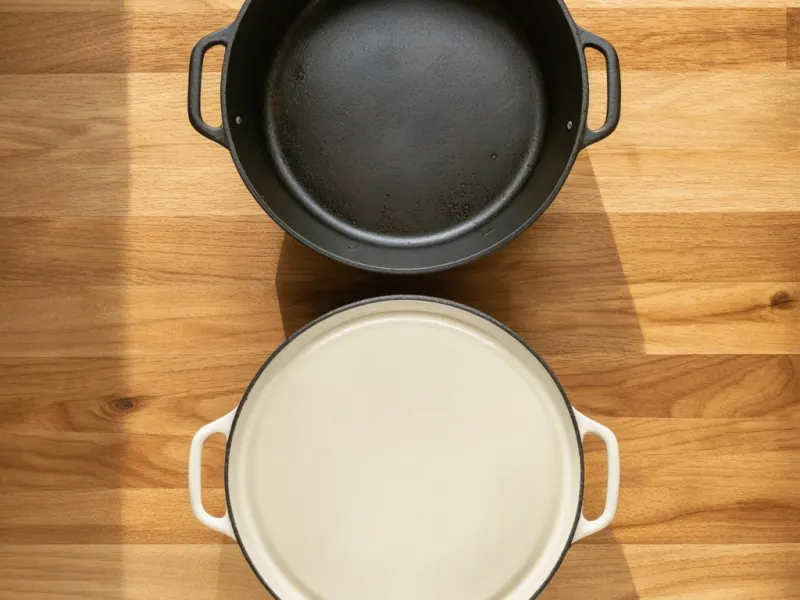
Why bare cast iron over an enameled pot? The published heat ratings on enameled cast iron, Le Creuset and Lodge enamel among them, both run to around 500°F. That puts typical frying temperatures comfortably inside spec on paper.
The real problem is what repeated frying does to a coated interior over time. Hot oil leaves a brown ring of cooked-on residue at the oil line that is genuinely hard to lift off. That is our own editorial read against using an enameled pot as a dedicated fryer, not a manufacturer restriction.
None of that ends an enameled pot's life for regular cooking. It does end its life as a pretty pot, and dulling an expensive Dutch oven on a tray of doughnuts is a bad trade. Anyone weighing enameled options for general cooking can see a full comparison here, but neither belongs on fryer duty.
Bare cast iron carries none of that risk. It can run hard indefinitely, and at that budget-tier price, we think dedicating one pot to smelling faintly of fry oil is an easy trade.
The downsides are honest ones. It is heavy, and a Dutch oven full of hot oil is not something to move until it cools. There is no pour spout, so straining and storing the oil afterward takes a steady hand and a funnel.
Like any bare cast iron, it needs basic seasoning upkeep, though frying itself seasons it beautifully over time. One caution for glass-cooktop owners: cast iron is rough enough to scratch glass if dragged rather than set down. For anyone new to caring for a raw cast iron surface, the oil used to season it matters more than most people expect.
The wok alternative, if one is already in the kitchen#
A carbon steel wok is genuinely one of the best frying vessels there is. The sloped sides funnel oil into a deep well at the bottom, so food submerges using surprisingly little oil. A flat-bottom wok is especially good for small batches, like a single round of tempura, since it heats fast and drains easily up the sides.
The tradeoff is not the flat base itself. A flat-bottom wok sits fine on a glass cooktop. It is the shape overall: a wok is wider at the top than at its base, so a hot pot full of oil is harder to keep level while stirring than a straight-walled Dutch oven is.
A round-bottom wok on a ring stand is genuinely unstable on home stoves. Even a flat-bottom one demands more attention than a Dutch oven does.
Anyone who already owns and trusts a flat-bottom wok can fry in it without hesitation. Anyone buying their first frying vessel gets a steadier start from the squat, stable Dutch oven shape. A deeper look at choosing a wok that actually works on an electric stove covers the rest of that decision.
Why Guessing Oil Temperature Ruins Things#
The other variable that makes or breaks a fry is knowing the oil temperature instead of guessing it. Guessing is how food ends up burnt outside and raw inside. It is also how food gets dropped into oil too cool to crisp anything, leaving a grease sponge instead of dinner.

We like the KT THERMO Deep Fry Thermometer, sold as a two-pack at the budget end of the category (check current price). Its 12-inch stainless probe reads across a wide temperature range, long enough that the dial sits clear of the heat at the top of a deep pot.
A real spring clip bites the rim instead of slipping. There are no batteries to die mid-fry, and a spare sits in the pack for when the first one inevitably gets dropped or bent. Most decent analog fry thermometers at this price land in the same place functionally.
What changes once one is clipped on is that guessing stops entirely. A temperature dip after a basket goes in becomes something to watch climb back, rather than something to panic over. Clip it on, wait for the oil to hit temperature, fry in small batches so it never crashes, and pull the food once it hits color.
One safety note before starting#
Hot oil is among the most dangerous things in a home kitchen, and few beginners plan for what to do if it ignites. Never throw water on an oil fire. Water flashes to steam and erupts the oil outward, which is how a stovetop fire becomes a house fire.
The US Fire Administration's cooking fire safety guidelines recommend keeping a lid within reach for the entire time oil is on the heat, so the burner can be killed and the lid slid on to smother it before it spreads. A small Class K or B/C kitchen extinguisher is the right backup; baking soda only handles a small flare-up. Setting this up before the oil goes on matters, because there is no time to think once it happens.
What We Would Buy, Starting From Zero#
Anyone who fries more than a couple times a year, and does not already own a suitable pot, should get the Victoria Cast Iron Dutch Oven and a clip-on fry thermometer. Together they stay in the budget tier and replace a dedicated fryer that would cost more and take up cabinet space most kitchens do not have.
Anyone who already owns a flat-bottom wok, or a bare cast iron pot deep enough to hold two quarts of oil with two inches of clear rim above it, is already set. Save the money and just add the thermometer.