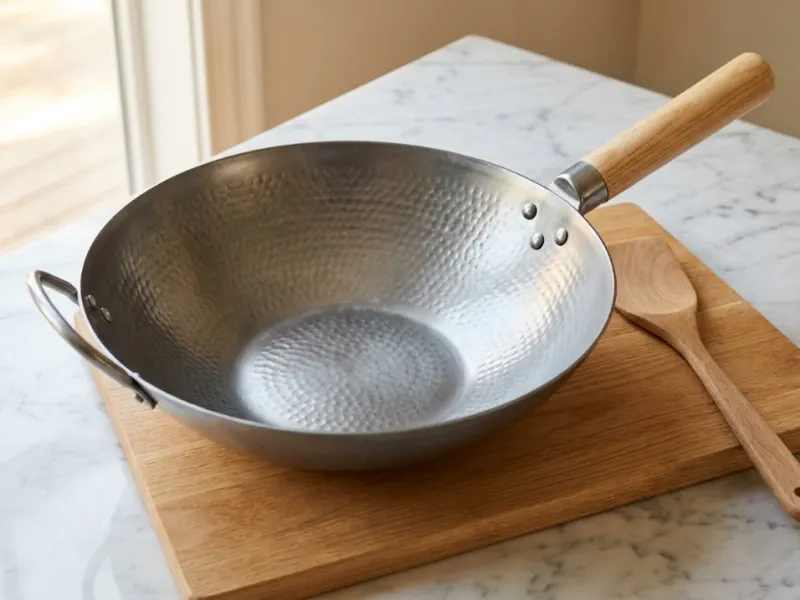
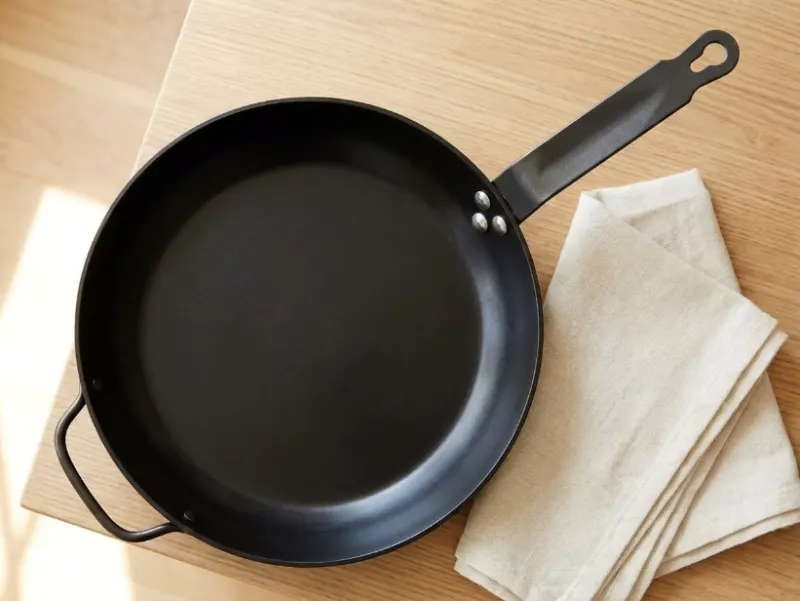
Two pans on the same stove, same fillet, same oil. Pull the fish and one releases clean while the other tears the fillet into pieces the moment you try to lift it.
That difference is not technique. It is the pan.
The best pan for cooking fish for most home cooks is the Cuisinart Chef's Classic Nonstick Hard-Anodized 12-Inch Skillet. It handles delicate cod and skin-on salmon, heats evenly across the surface, and stays forgiving when timing is imperfect.
For anyone chasing restaurant-level crispy skin and willing to accept a short learning curve, the de Buyer Mineral B 12.5-Inch Carbon Steel Fry Pan is the upgrade that justifies the patience.
The question most buying guides skip: which one is right for your fish, not fish in general.
Why Fish Behaves Differently From Everything Else You Cook#
Most proteins grip a pan when they first hit heat. Steak and chicken do this too, but they are sturdy enough to release once a crust forms, and they will not fall apart if you nudge them early.
Fish is fragile by comparison. Lean fillets like cod, halibut, and sole are mostly water held together by thin connective tissue. When that tissue heats, the fillet wants to flake apart on its own. If it is also stuck to the pan, moving it turns dinner into broken pieces instead of a plated fillet.
The fix is choosing a pan surface that removes sticking from the equation entirely, so the only variable left to manage is timing.
The Best Pan for Most People: A Good Ceramic Non-Stick Skillet#
For anyone cooking fish once or twice a week, a quality non-stick pan eliminates the biggest source of failure. The fillet slides freely, which means a confident flip and a whole piece on the plate instead of fragments.
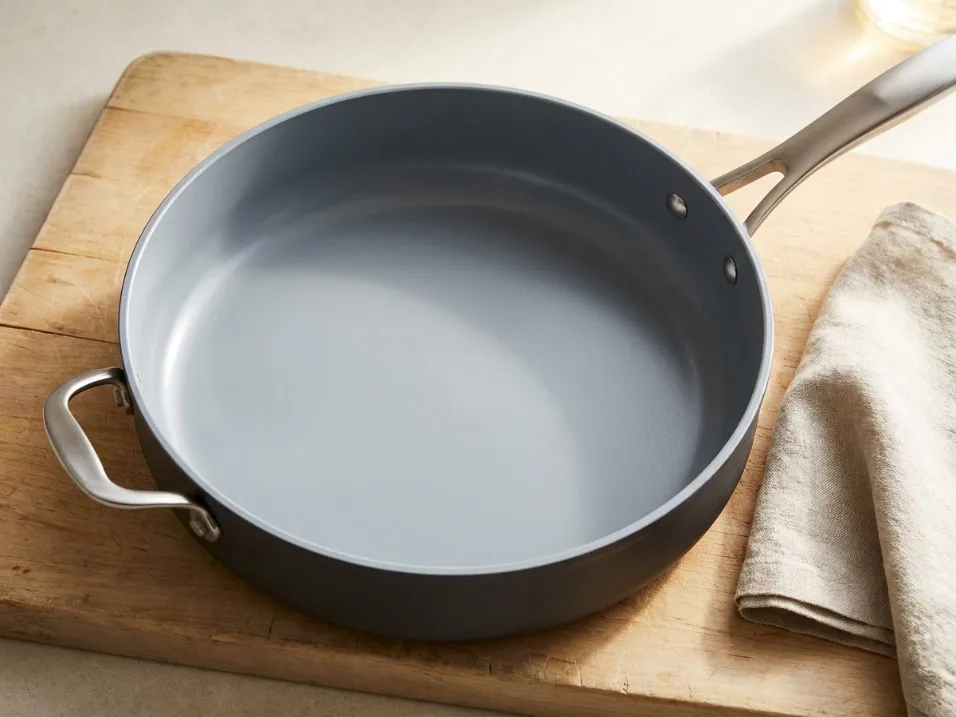
The Cuisinart Chef's Classic Nonstick Hard-Anodized is our top pick in this tier. It heats evenly across the full surface with no hot spots, which matters for fish since scorching on one side while the other stays pale is a common complaint with thinner, uncoated aluminum pans. It handles both delicate cod and skin-on salmon without a struggle, which covers most of what a home cook throws at a fish pan.
One correction worth making here: this pan does not use PTFE. Cuisinart's Chef's Classic Nonstick Hard-Anodized line runs on PURELYCERAMIC, the brand's sol-gel ceramic coating, not the Teflon-family polymer many buyers assume. That distinction matters for how long the coating lasts. You can look up a brand's PFAS status in our cookware safety checker, which quotes the source for every verdict it shows.
Ceramic sol-gel coatings are harder on the shelf but degrade faster in practice. Published reporting puts ceramic-coated pans at about two years of effective release on average. The hard-anodized aluminum body underneath resists warping regardless, so the pan itself outlives the coating even after release starts to fade.
So why pick it over a longer-lasting PTFE pan? For fish cooked once or twice a week, even heating matters more than coating longevity. This pan delivers that at a budget price, with no PTFE. A cook searing fish daily, or anyone explicitly chasing coating life over PFAS-free positioning, should take the PTFE picks in that guide instead.
Our full breakdown of what separates a lasting non-stick pan from a disposable one is here.
One caveat on induction: Cuisinart does not clearly confirm induction compatibility for this specific skillet. Run a magnet over the base before assuming it will work. A hard grip across the whole base means it fires an induction burner; a hard-anodized pan with no bonded steel disc will not.
Tips for non-stick fish success#
Preheat on medium for about a minute before adding oil. Add a thin layer of a high-smoke-point oil, avocado or refined canola work well, then wait for the shimmer before the fish goes in. Even on non-stick, a cold pan means pale, steamed fish instead of golden, seared fish.
Pat the fillet completely dry with paper towels first. Surface moisture has to evaporate before browning can start, and this single step changes results more than switching pans does. The same discipline applies to pancakes, where even heat across the full surface separates spotty browning from a golden, edge-to-edge finish. Our best pan for pancakes guide covers that in detail.
Cuisinart's PFAS-free claim for this coating is manufacturer-only. We looked for an independent lab test or a published composition disclosure backing it, the way a couple of ceramic competitors do, and came up empty. That gap between what a listing claims and what it can actually back up is exactly the kind of thing we flag instead of repeating as settled fact. See our methodology page for how we cross-reference claims like that against manufacturer specs before they make it into an article.
The Upgrade: Carbon Steel for Crispy Skin#
If fish is a frequent enough cook that basic technique is already comfortable, carbon steel is where things get interesting. A well-seasoned carbon steel pan approaches non-stick performance while holding intense, sustained heat that turns fish skin into a cracker.

The de Buyer Mineral B 12.5-Inch is the recommendation here, and it is noticeably heavier in hand than a non-stick pan of the same size (carbon steel is denser than the aluminum used in coated pans). It ships with a beeswax coating that needs stripping and requires seasoning before its first real cook. It will stick for the first few weeks until that seasoning builds. Once seasoned, though, it sears crispy skin salmon better than any non-stick pan can manage, and it will outlast every coated pan on the market.
The mechanism behind that difference: non-stick pans are lightweight and lose surface temperature the moment cold food hits them. Carbon steel holds its heat, so the fish skin stays in contact with high temperature from the first second on the pan. That is the difference between skin that shatters and skin that stays rubbery. We compared carbon steel to cast iron here if the full breakdown is useful.
Seasoning is a short repeatable process: a thin coat of oil, heated past its smoke point, repeated a few passes. After that initial session, the surface improves with every cook rather than degrading.
The de Buyer is also confirmed induction-compatible. Carbon steel is inherently ferromagnetic, so it fires any induction burner without a bonded disc. That puts it ahead of the Cuisinart on that specific point. de Buyer rates the Mineral B's flash-oven tolerance at 392°F (200°C), a separate spec from the Cuisinart's 500°F oven rating on its own covered variants.
What About Stainless Steel?#
Fish cooks on stainless steel. Professional kitchens do it constantly. For home cooks, though, it is the hardest of the three surfaces to get right.
Preheat precisely until water droplets bead and skate across the surface. This has a name in physics, the Leidenfrost effect, though most home cooks just learn to call it "the water test." Then oil, wait for the shimmer, and place the fish skin-side down. Leave it alone for 3-4 minutes while the crust does the work of releasing the fillet.
Fatty fish like salmon handles this reasonably because the skin carries enough natural oil to aid release. Lean fish on stainless is a genuinely difficult case. We wrote a full explanation of why food sticks to stainless steel if the mechanics are useful.
The short version: if a stainless skillet is already in the kitchen and skin-on salmon is the target, the technique above works. For lean fillets, reach for non-stick or carbon steel instead.
The One Tool That Matters More Than the Pan#

Get a fish spatula. The thin, flexible, slotted blade slides under delicate fillets without tearing them, flexes to match the pan's curve, and drains excess oil as it lifts. The Dexter-Russell Fish Turner is a well-regarded budget-tier option; OXO and Mercer both make solid versions too. A regular spatula is simply too thick and rigid for fish work.
Matching Your Pan to Your Fish#
Skin-on fatty fish (salmon, trout, mackerel): carbon steel or stainless. Sturdy fillets and natural skin oils make maximum crust the goal. High heat, skin-side down for most of the cook, a brief flip at the end.
Lean white fish (cod, halibut, sole, flounder): non-stick, every time. Fragile, no skin fat to fall back on, needs gentle handling and generous oil.
Breaded or battered fish: non-stick or carbon steel with plenty of oil. A 12-inch pan avoids crowding so the coating crisps evenly on all sides.
Whole small fish (branzino, trout): carbon steel or cast iron for sustained heat. Twelve inches minimum so the tail does not hang over the edge.
What We Would Buy, Starting From Zero#
For occasional fish cooking where reliability matters more than ceiling performance, the Cuisinart Chef's Classic Nonstick handles the job at a budget-friendly price with minimal learning curve.
For anyone cooking fish three or more times a week and chasing crispy skin as the goal, the de Buyer Mineral B is worth the patience it demands, at a mid-range price that reflects the upgrade. Whichever pan wins out, pair it with a proper fish spatula. If the choice still feels open, the material selector quiz matches cooking habits to the right material in under a minute.