Grapeseed oil is roughly 70% polyunsaturated fat. Flaxseed oil is higher still, and by the internet's favorite logic, that should make it the better seasoning oil. It does not.
Grapeseed oil is the best all-around choice for seasoning cast iron, in the oven or on the stovetop, because it balances a high polyunsaturated fat content against enough flexibility to survive thermal cycling. Flaxseed polymerizes into a harder layer, and that hardness is exactly why it chips first.
Our cast iron cookware guide covers the seasoning habit alongside the rest of cast iron ownership, from rust to the bare-vs-enameled call.
We went looking for why some seasoning jobs hold up for years while others flake within weeks. Most guides stopped at ranking oils by smoke point alone. The number that actually predicts survival under searing, stir-frying, or a hot oven turned out to be a different one entirely. Almost nobody explains it in plain terms.
How Seasoning Actually Works (The 30-Second Version)#
Seasoning is not a coating sitting on top of the metal. It is a chemical transformation of the metal surface itself.
When oil is heated past its smoke point on cast iron, fat molecules break apart and reconnect into long polymer chains. This process, called polymerization, is the same reaction that turns liquid epoxy into hard plastic. The resulting layer bonds to the iron at a molecular level. Soap does not dissolve it, water does not lift it, and normal scrubbing does not strip it.
Every high-heat cook adds another microscopic polymer layer. Hundreds of layers, built up over months, produce the dark glossy surface that makes well-used cast iron release food like non-stick. We dug into exactly how that layer forms, and how well it holds up over months of real use, as part of the research process we describe on how we review cookware.
The oil you choose determines how strong and flexible those polymer chains are once they form.
What Makes One Oil Better Than Another#
Two properties matter most.
Polyunsaturated fat content. Fats with more double bonds in their molecular chains create more cross-links during polymerization, producing a harder, denser layer. Each double bond acts as a connection point.
More connection points means a tighter network. Saturated fats, like coconut oil or Crisco, have fewer connection points and build softer layers.
Smoke point relative to your oven temperature. The oven needs to exceed the oil's smoke point to trigger polymerization. A 450°F oven clears grapeseed's smoke point with room to spare.
Push the oven too far above the smoke point and the oil burns off before it can bond. For a specific pan's oven limit, including the handle and lid, check our oven-safe temperature tool.
A distant third factor is neutral flavor. Nobody wants food tasting like the oil baked into the pan. Most common cooking oils clear that bar easily.
The Best Oil for Seasoning Cast Iron (and Why)#
We cross-referenced owner reports on Crisco, flaxseed, canola, and avocado oil against seasoning-chemistry data. For both initial oven seasoning and daily maintenance wipes, grapeseed oil is our pick. The Pompeian 24oz bottle sits at the budget end of cooking oils at most grocery stores.
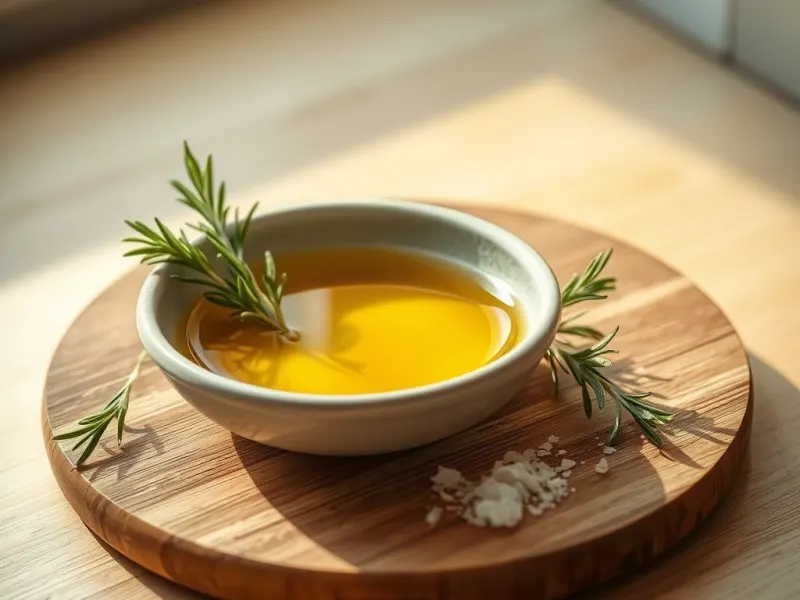
Grapeseed oil runs around 70% polyunsaturated fat, among the highest of common cooking oils, which translates to dense cross-linking during polymerization. Its smoke point runs high enough that a 450°F oven clears it comfortably. It is thin, spreads evenly, and carries no flavor.
The seasoning it produces is dark, even, and, critically, flexible. That flexibility is the property the internet's other favorite oil is missing.
One note on sourcing: buy refined grapeseed oil, not cold-pressed. Any grocery-store bottle simply labeled "grapeseed oil" is refined, which is the version this seasoning process is built around.
The Flaxseed Oil Problem#
We spent time in cast iron forums, and flaxseed oil kept coming up as the scientific gold standard. The logic seemed airtight going in: flaxseed has the highest polyunsaturated fat content of any food oil, so it should polymerize into the hardest layer.
It does. That is precisely the problem.
Flaxseed forms an extremely rigid polymer. Cast iron expands when heated and contracts when it cools, and a rigid layer on a surface that keeps moving eventually cracks.
We saw the same pattern repeat across owner reports in cast iron forums. Seasoning looks great for the first several weeks. Then chipping and hairline cracks appear at points of thermal stress, widening into visible flakes during high-heat searing.
The most common complaint tied to flaxseed seasoning is gradual flaking that gets worse under aggressive cooking. Anyone who sears, stir-fries, or puts a pan through rapid temperature swings will get more mileage from a more flexible oil.
A pan stripped of a failed flaxseed layer and re-seasoned with a more flexible oil is not fighting the same rigidity problem, which is the fix for anyone dealing with this specific complaint.
The Other Contenders#
Crisco (vegetable shortening) is what Lodge officially recommends. It is forgiving if applied too generously, and it is cheap. The tradeoff: higher saturated fat content means a softer polymer layer that takes roughly 5-6 oven cycles to reach the durability grapeseed achieves in 3-4. Not a dealbreaker, just slower to build.
Canola oil performs similarly to Crisco. Around 30% polyunsaturated fat, a 400°F smoke point, neutral flavor. The recurring complaint in canola-seasoned pan reports is a tacky residue that takes extra cycles to fully harden, usually from applying too thick a layer in the first place.
Refined avocado oil carries a very high smoke point, above 500°F, which makes it forgiving during everyday cooking. Its polyunsaturated fat content is moderate, well below grapeseed's, so it polymerizes less efficiently per layer. It also costs more than grapeseed per bottle, a premium that is hard to justify for dedicated seasoning use. If avocado oil is already in the kitchen for high-heat cooking, it doubles fine as a seasoning oil.
The One Rule That Matters More Than Oil Choice#
The gap between any two oils above is smaller than the gap between correct and incorrect application. The single biggest factor is layer thickness, and that holds whether the bottle in hand is grapeseed or something else already in the pantry.
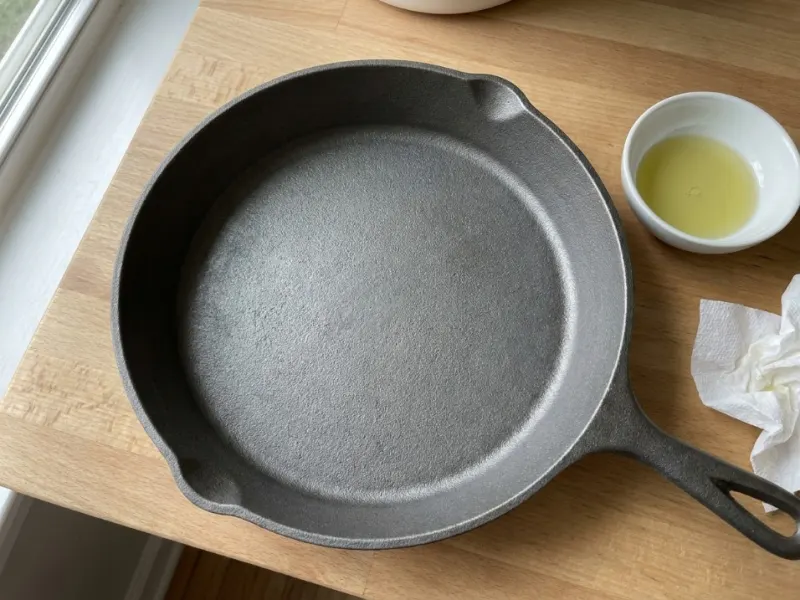
Every layer needs to be thin. After coating the entire pan with oil on a paper towel, take a second clean paper towel and wipe until the pan looks completely dry. What remains, an invisible film, is exactly the right amount.
A thick layer will not polymerize all the way through. The surface hardens on top while liquid oil stays trapped underneath, creating a sticky texture that peels away during cooking. This mechanism is behind most "my seasoning keeps coming off" complaints, regardless of which oil gets blamed.
Whatever oil ends up in your hand, apply it thinner than feels right.
The Seasoning Process#

For a new or stripped pan: set the oven to 450°F. Apply a small amount of grapeseed oil to the entire pan (cooking surface, outside, handle) with a paper towel, then wipe aggressively with a fresh paper towel until it looks bare. Place upside-down on the middle rack for one hour, then let it cool in the oven with the door closed. Repeat three to four times.
For daily maintenance: rinse with hot water, scrub with a stiff brush if needed, dry on a hot burner for 60 seconds, then wipe one barely-visible layer of grapeseed oil over the cooking surface.
If a cast iron skillet is already in regular rotation several times a week, seasoning builds naturally every time it hits the stove with oil. The oven method just gives a bare pan a head start. The real seasoning comes from months of ordinary cooking.
Does This Apply to Carbon Steel Too?#
Same polymerization chemistry, same oils work. Weighing carbon steel against cast iron, both respond well to grapeseed. Carbon steel builds visible seasoning faster because its thinner walls mean quicker temperature changes across the surface.
Many carbon steel pans ship with a protective wax coating. Strip it with hot soapy water before seasoning, or nothing bonds. If carbon steel seasoning keeps flaking despite the right oil, the thinner walls cycle temperature faster than cast iron and stress the coating differently. Our carbon steel seasoning troubleshooting guide covers the fix.
When to Strip and Start Over#
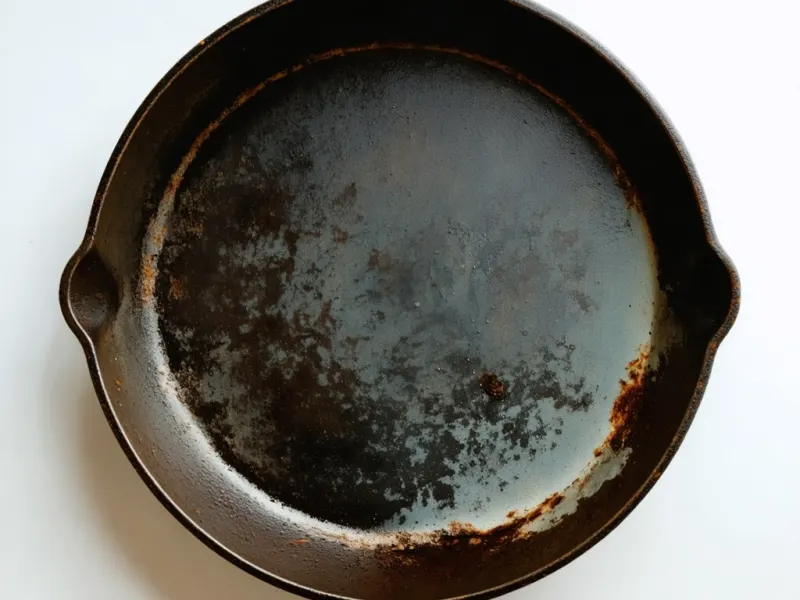
If seasoning is flaking, persistently sticky, or visibly patchy after weeks of use, a full reset is sometimes faster than fixing it layer by layer. A lye bath (gloves, eye protection, ventilated area) dissolves seasoning down to bare metal in 24 to 72 hours without warping risk. The oven's self-clean cycle also works: it runs at very high temperatures that burn soil to a powdery ash, well beyond any cooking temperature, though that same heat risks warping thinner pans; it is best reserved for thick Lodge-style skillets. If bare metal showed up because of rust rather than a stripped layer, here is how to get rust off a cast iron skillet before re-seasoning.
Between the two, flaxseed's rigidity is the more common cause of a failed seasoning job, not the choice of oil overall. Flaxseed does, along with layers applied too thick.