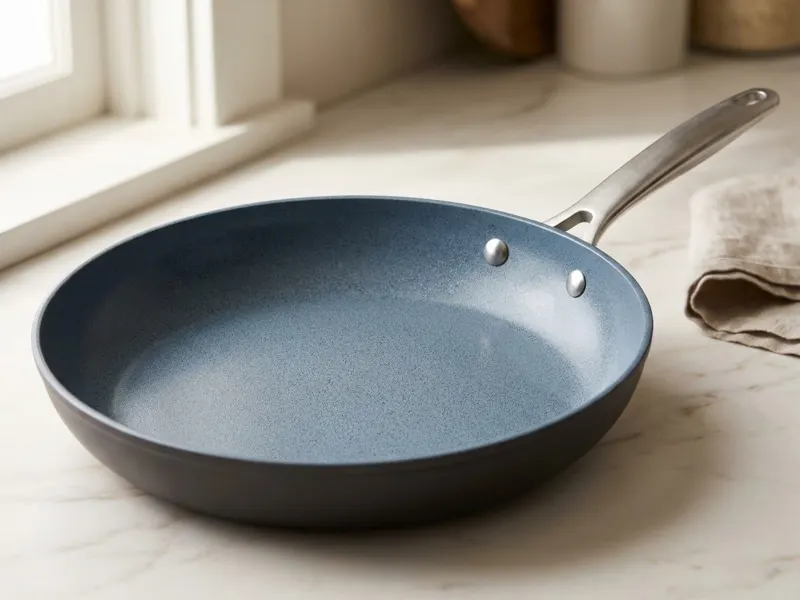
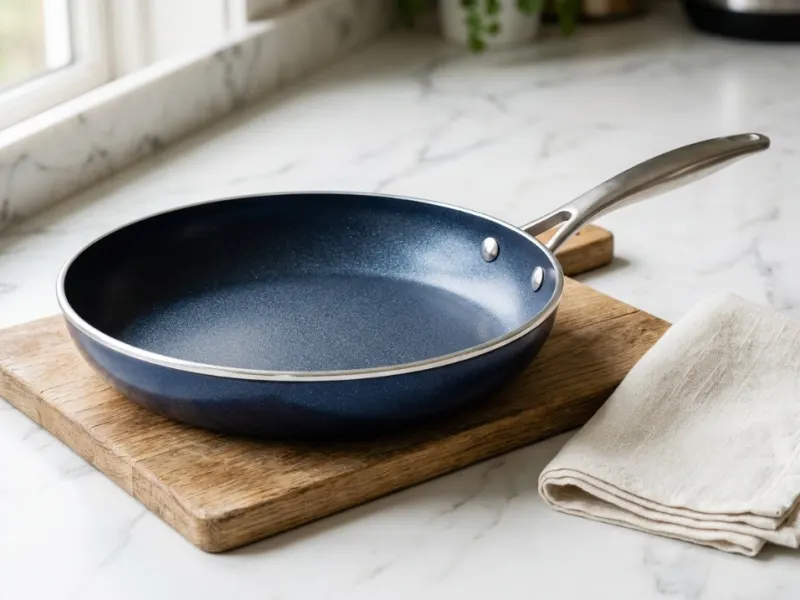
You already own a pan that sautés, fries, and makes sauces. Every nonstick pan on the market does those things. So why does the Our Place Always Pan keep surfacing as the answer to "what is the best everyday pan" in community threads? We dug through owner discussions on r/Cooking and r/cookware to find out what separates genuine daily-driver satisfaction from marketing hype.
The Always Pan earns its recommendation for weeknight cooks who steam vegetables alongside sautéing at least twice per week. Its integrated steamer basket eliminates a separate pot from the routine, combining protein and vegetable prep on one burner. For cooks whose weeknight pattern is sauté-only, any mid-range deep-sided nonstick handles the job without the premium.
That distinction matters. The coating underneath is a consumable, not a permanent surface. Every ceramic nonstick pan will eventually stop releasing food cleanly.
The question is whether the steamer basket earns its keep before that happens. How often do you steam? That is your answer.
What Makes the Best Everyday Pan Different#
Our Place markets the Always Pan as replacing 10 kitchen tools: frying pan, sauté pan, steamer, roasting dish, baking dish, skillet, saucier, nonstick pan, spatula, and spoon rest. Community discussion on Reddit reveals a consistent split among owners.
Satisfied buyers cite the steamer basket as the feature that genuinely changes their routine. Dissatisfied buyers report two frustrations.
Coating degradation is the primary complaint. Sticking starts well before expectations.
High-heat performance comes second. Ceramic nonstick cannot sustain the temperatures needed for proper browning.
Home cooks on Reddit describe the same weeknight routine: medium-heat sautéing, quick sauces, eggs, and reheating. High-heat searing waits for the weekend.
The steamer basket is the only feature that eliminates a separate tool from your counter. Nothing else on the 10-function list is unique to this pan. Sautéing and frying are what every nonstick pan already does.
What the Steamer Actually Changes#
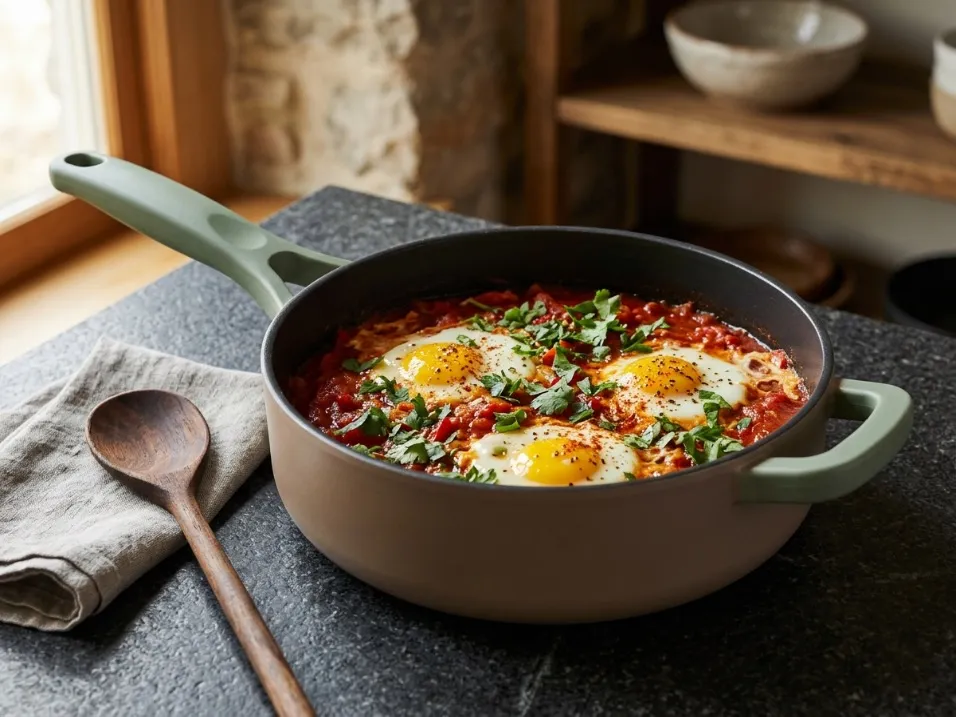
The steamer basket nests inside the pan and lets you cook vegetables above whatever sautés below. One burner. One pan. Protein and vegetables finished at the same time without touching a second pot.
Owners on r/Cooking and r/cookware call this the feature that actually changes their evenings, and the reasoning behind that enthusiasm is straightforward. Dirtying a second pot for a side of broccoli is the friction that makes people skip vegetables on a Tuesday. Remove that friction and the vegetables actually happen.
The basket lifts out when you do not need it. It doubles as a colander for draining pasta or rinsing produce. Useful even on nights you do not steam.
If you already own a separate steamer setup, or you steam vegetables fewer than twice per week, the Always Pan offers nothing your kitchen does not already do. Save the premium and put it toward a pan that solves a problem you actually have. Our ceramic vs Teflon comparison covers the coating chemistry decision in detail if you want to go deeper.
The Coating Truth#
The Always Pan uses Our Place's proprietary Thermakind® ceramic nonstick coating, made from sand derivative, free of PFAS, PTFE, PFOA, lead, and cadmium. It is oven-safe to 450°F. The pan body is 100% post-consumer recycled aluminum, and the current version carries a 3-year warranty covering manufacturing defects.
None of that changes the physics. Ceramic nonstick coatings rely on a thin oleophobic layer over a sol-gel silica base. Heat cycles crack that layer. Food grips where it used to slide.
PTFE lasts longer because its fluorine polymer bonds resist thermal stress at a molecular level. Owners across r/cookware and r/Cooking report ceramic losing release within months to about a year and a half of heavy daily use, regardless of brand.
For comparison, owners in r/cookware and Amazon review threads report replacing mid-range PTFE pans around the 2-3 year mark with normal use. Careful users in those same long-term-ownership threads report 4-5 years before needing a replacement. Ceramic's shorter window is the tradeoff for a PFAS-free cooking surface.
That is a valid tradeoff. If it matters to you, the Always Pan delivers it. If coating longevity matters more, a mid-range PTFE pan like the T-fal Professional lasts longer at a fraction of the price.
The Alternative Worth Considering#

The KitchenAid Hard Anodized Ceramic Nonstick Skillet is induction compatible, noticeably lightweight, and sits comfortably in the mid price tier. It does not include a steamer basket or an integrated spatula. The hard anodized body gives it durability the Always Pan's standard aluminum cannot match.
If induction compatibility matters, the KitchenAid wins. If you do not steam regularly, it wins. If you prefer a larger cooking surface, same answer.
It handles every weeknight sauté the Always Pan handles, just without the steamer basket. For most weeknight cooks who do not steam regularly, that is more than enough.
How to Decide on the Best Everyday Pan#
Track what you actually cook for one week before deciding. Write down every meal that uses a pan. Note whether you wished you could steam at the same time.
If three or more meals would have benefited from a steamer, the Always Pan pays for itself in convenience. If none would have, save the money for something else.
We recommend the Always Pan for weeknight cooks who steam regularly. The coating will degrade regardless of what you buy. That is the nature of ceramic nonstick.
The premium buys the steamer basket, the aesthetic design, and a 3-year warranty that covers manufacturing defects. Use those three things. That is where the value lives. Everything else about this pan is standard ceramic nonstick at a higher price point.
Thinking of an uncoated pan instead? The cookware cost calculator sets the two side by side at your own prices. If you are weighing material types more broadly, the material selector quiz matches your cooking habits to the right surface in about 30 seconds.