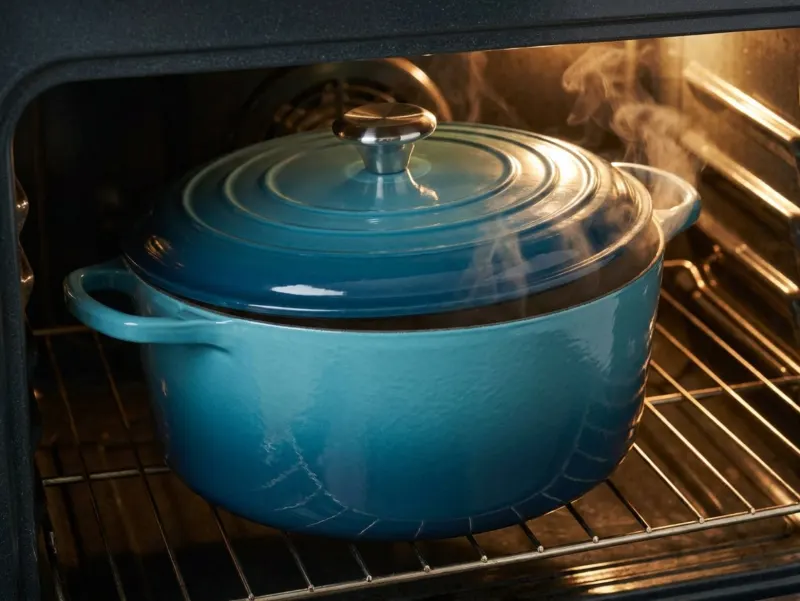
Thirty minutes at 475°F. That is how long Lodge's own sourdough recipe keeps heating its empty Combo Cooker before the dough goes in. Lodge's enamel care manual gives the opposite instruction for an enameled dutch oven.
The best dutch oven for sourdough bread is the Lodge Cast Iron Combo Cooker, a bare cast iron pot that Lodge wrote its sourdough method for. Which preheat instructions apply in your kitchen depends on what your pot is made of, not how many quarts it holds.
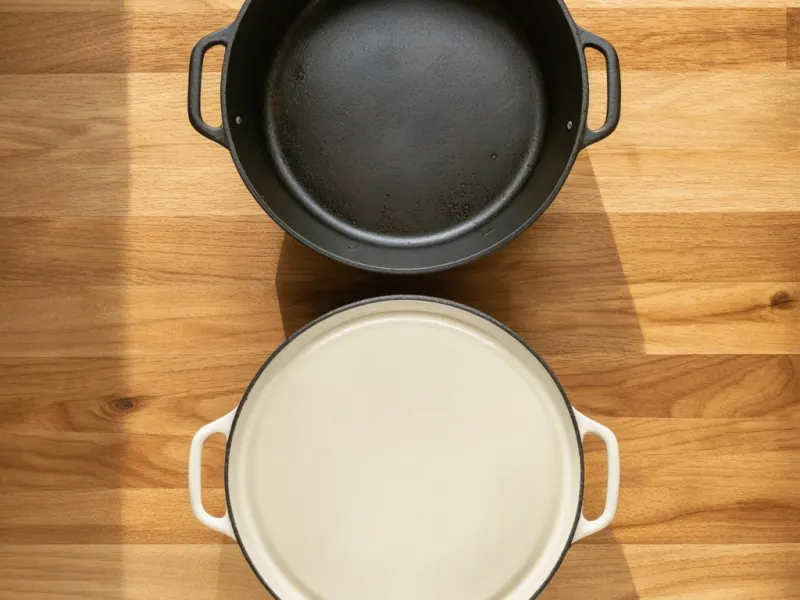
The Lodge Cast Iron Combo Cooker also has a shallow skillet half, which makes loading dough easier than lowering it into a deep pot.
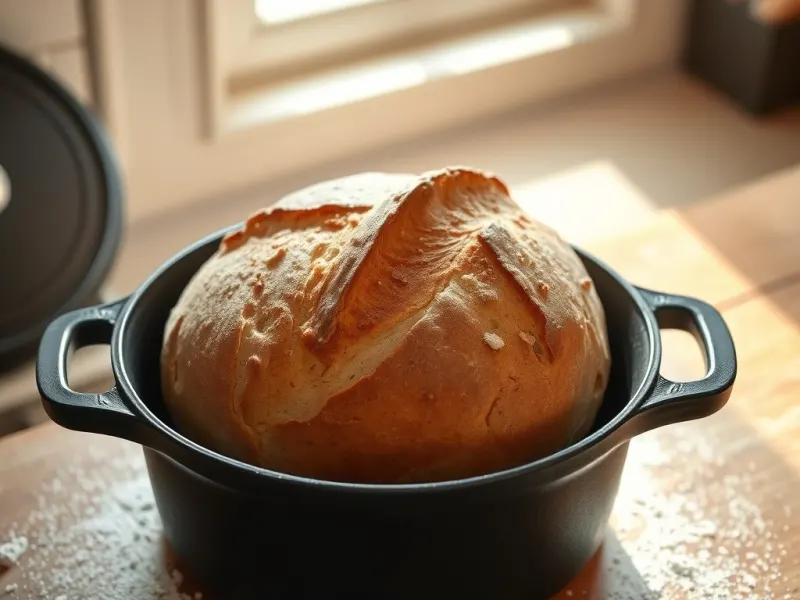
Why Material Decides Whether You Preheat Empty#
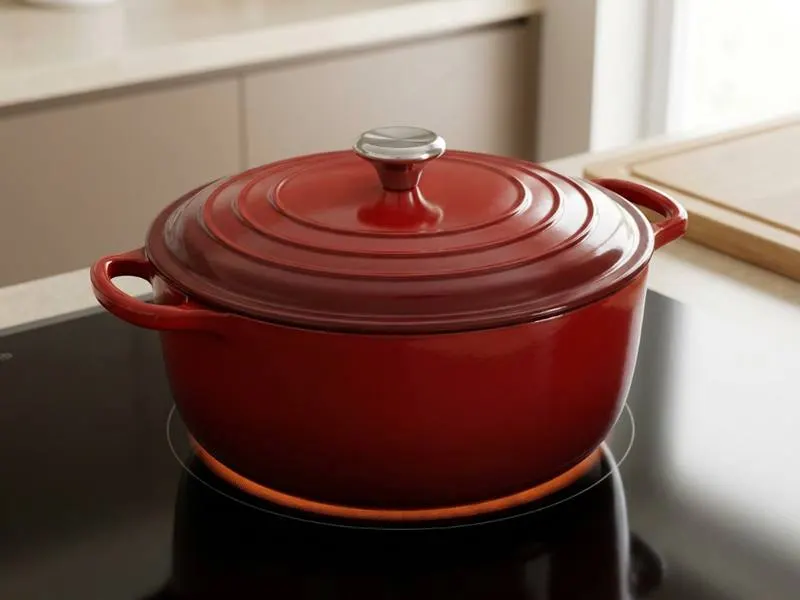
The line in Lodge's enamel use-and-care manual reads "Do not heat an empty enameled Dutch oven or covered casserole." It covers Lodge's enameled dutch oven line, not the bare cast iron Combo Cooker.
For the Combo Cooker, Lodge does the opposite on purpose. Its product page calls the LCC3 a 3.2 quart cast iron sourdough bread pan. Its recipe uses an empty preheat, with the cookware already inside the oven while it comes up to temperature.
Le Creuset's care instructions make a related point about its enameled pots: never heat the product too quickly, and never use maximum heat for preheating, because that kind of sudden surface temperature change can craze, crack, or chip the enamel. Lodge and Le Creuset are each describing their own cookware, yet both point the same direction. An empty, fast preheat is a bare cast iron habit, not an enameled one.
So ask what your pot is made of before you ask how big it should be. The material decides whether a maker's preheat method even applies to you.
What Size Dutch Oven Actually Fits a Sourdough Loaf#
Lodge writes one sourdough recipe, built on 500 grams of flour, for three of its bare cast iron bread pots. Those are the Combo Cooker, the 5-quart Double Dutch, and its Seasoned Cast Iron Bread Oven. The Combo Cooker holds 3.2 quarts, and the Double Dutch holds 5.
That is one maker's flour weight for a specific recipe, not a capacity rule that applies the moment you cross some other number. No sourced size threshold holds across every brand of dutch oven. Treat any flat quarts-per-loaf rule you see elsewhere as unverified until the maker who sells that pot says otherwise.
If you already own a dutch oven, check what its maker's bread recipe calls for before buying a different pot.
Getting Dough Into a Hot Pot Safely#
A deep, fully preheated dutch oven is the hardest part of baking bread this way. A slip means a burn.
The Combo Cooker's two pieces are a 10-1/4 inch skillet 3 inches deep and a 10-1/4 inch shallow skillet 1-1/2 inches deep that doubles as the lid, per a retailer spec listing. Set the dough on the shallow piece and cover it with the deep one, and you are sliding dough onto a nearly flat surface instead of lowering it past a deep, hot rim. That reading comes from the pan's shape, not from a Lodge instruction.
That inversion is also why the two pieces matter for handling. Assembled, the Combo Cooker weighs 12.85 pounds. You are lifting two separate cast iron pieces rather than one lid off one pot.
Compare that against a standard dutch oven setup for the same loaf. The tradeoff is one pot and a deeper reach, versus two pieces and a shallower one. Our guide to the right size dutch oven for everyday cooking covers that tradeoff for uses beyond bread.
Why a Covered Pot Traps Steam#
A dutch oven works for bread because the lid traps the moisture dough releases as it bakes. King Arthur Baking's reference material explains why that matters: once a crust forms, oven spring drops off, and the loaf's ability to gain more volume gets cut short right there. Keeping the dough's surface moist longer delays that crust, which is exactly what the steam under a closed lid does.
Challenger Breadware describes its domed lid the same way: it holds steam in contact with the surface of the dough, which gives the loaf a more controlled rise. Challenger also makes its pan oval rather than round, by its own design, specifically to fit a wider range of loaf shapes.
The Combo Cooker is round, and its two 10-1/4 inch pieces mean a boule works. There is no oval option built in, the way a dedicated oval pan offers for a batard. If your household bakes mostly oval loaves, that shape mismatch matters more than any quart figure.
Enameled Dutch Ovens for Sourdough#
Whether you buy a budget pot or a premium one, the material should steer your preheat method more than the price tag does.
Enamel and bare cast iron also split on upkeep. Enameled cast iron needs no seasoning, and Lodge says its enameled surface "can stand up to acidic ingredients." Bare cast iron needs seasoning upkeep in return for the empty preheat Lodge's recipe uses, while enameled cast iron trades that upkeep for easy cleanup and acid resistance. Our material selector walks through that tradeoff if bread is only part of what you cook.
If you already own a Le Creuset or Staub dutch oven, check the knob before copying any preheat method. Le Creuset rates its Signature phenolic knob to 250°C, below the 500°F it lists for the pot body, so the knob sets the ceiling at high bread temperatures. Our oven-safe temperature lookup covers limits like this across brands before you commit a pot to a hot empty oven.
The Lodge Enameled 6 Quart is a reasonable choice if you want one all-purpose pot that also bakes bread. Lodge's product page pitches it for "soup season, meal prep, or even home-made bread," and the same company's enamel manual still says not to heat an enameled dutch oven empty. If you bake in it, follow Lodge's enamel guidance rather than the Combo Cooker method. For a side-by-side of Lodge against enameled brands on cost and durability, see our Lodge versus Le Creuset comparison, which covers the rest of that decision.
How Lodge Bakes It#
Lodge's Combo Cooker recipe gives a full sequence for a loaf made with 500 grams of flour. It is specific to this product, not a universal bread rule.
- Preheat the oven to 475°F with the Combo Cooker already inside.
- Once the oven reaches temperature, keep preheating the empty cookware for 30 more minutes.
- Score the dough, carefully remove the hot cookware from the oven, place the dough inside, and cover with the lid.
- Bake covered for 30 minutes, then remove the lid.
- Bake uncovered for another 15 to 20 minutes, until the loaf reaches 200°F to 210°F internally.
That internal temperature, not a clock, is the real finish line. An instant-read thermometer check removes the guesswork that crust color alone leaves behind.
Beyond Bread: Everyday Uses#
Cast iron dutch ovens, enameled or bare, earn their shelf space outside baking days too, from soups to braises.
The Combo Cooker carries that double duty further than most dedicated bread pans. Lodge describes it as "a dutch oven and a skillet that doubles as a lid," so once bread is done, the shallow piece works as an everyday cast iron skillet. That versatility is worth weighing against a dedicated oval pan that only ever does one job.

For sourdough specifically, our pick stays the Lodge Combo Cooker, because its size and shape already match the recipe Lodge wrote for it. The empty-preheat method it uses is exactly what bare cast iron, not enamel, is built for.
If an enameled pot is already in your kitchen, follow its maker's preheat guidance instead, rather than borrowing a bare-iron method that was never written for it. Our dutch oven versus slow cooker breakdown is a good next read if bread is only one of several jobs you want this pot to do.