Everyone moving into a first apartment hears the same advice. Buy a cookware set. The data tells a more complicated story.
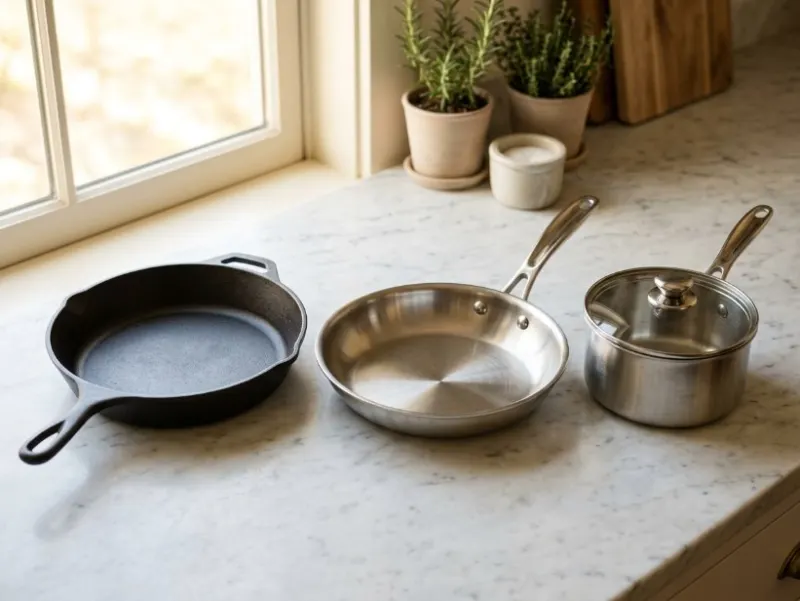
The best cookware for a first apartment is three individual pieces, not a set: a 10-inch nonstick skillet, a 10-inch stainless steel pan, and a 3-quart saucepan. Bought separately, they stay in the budget tier and cover nearly everything a first-year cook realistically makes.
Those 10 to 15 piece bundles look like great value on paper. One box, whole kitchen sorted. But count what actually gets used, and most sets fail the same test. Three or four pieces earn a spot in the daily rotation while the rest sit in the cabinet, making it harder to grab what you need.
Why Sets Are a Trap for Small Kitchens#
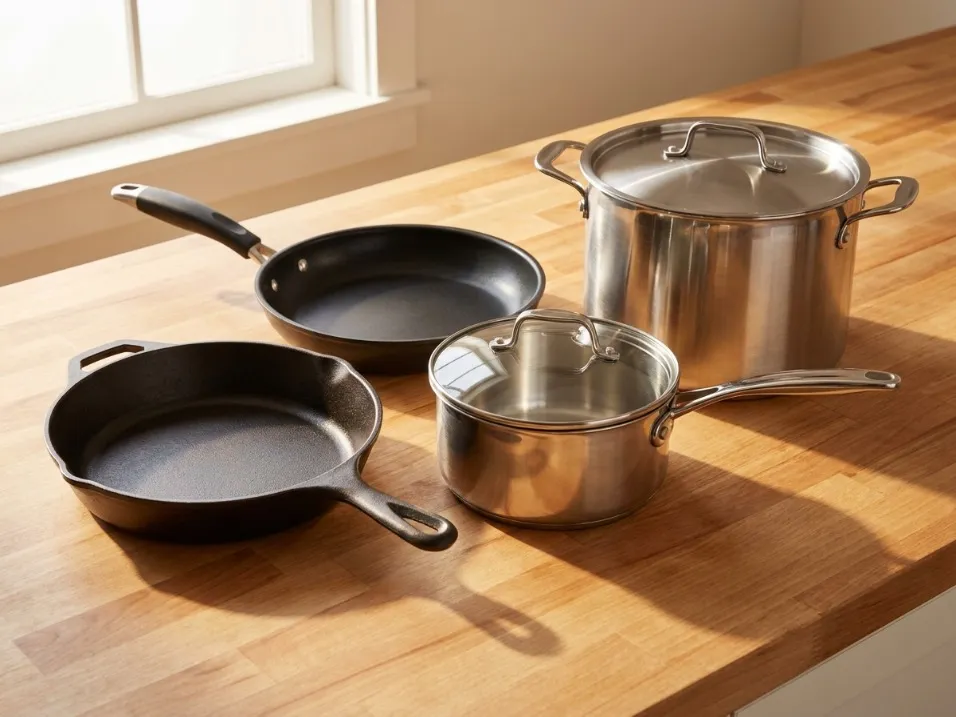
Here's what's actually inside a typical 15-piece bundle: three pan sizes when you'll reach for one of them, matching lids that count as separate "pieces" toward that headline number, a couple of utensils, maybe a steamer insert nobody asked for. The count is inflated by design, and the smaller skillet, the second lid, and the steamer insert are the pieces that go untouched.
In a small kitchen with limited cabinet space, every item needs to earn its spot. A smaller skillet sounds useful until the 10-inch turns out to do everything it does, plus more. A stockpot sounds essential until it gets used twice a year.
The other problem with sets: they force one material onto every job. An all-nonstick set means never properly searing a steak. An all-stainless set turns scrambled eggs into a frustrating morning science experiment.
The stronger approach mixes materials based on what each piece actually needs to do. Our material selector quiz walks through which materials match your cooking style before you spend anything.
Here is a test that cuts through the "bargain" framing before you buy: count how many pieces in the set you would still choose if you had to buy each one separately at its own price. If the answer is fewer than half, the discount is padding an average, not lowering your real cost. A set built from 15 pieces where you would only pick 4 is not a 15-piece discount. It is a 4-piece purchase with 11 pieces of storage tax attached.
The Best Cookware for a First Apartment: 3 Individual Pieces#
We cross-referenced owner reports across nonstick, stainless, and saucepan categories to find the pieces people actually keep using past year one, not just the ones they bought. These three came out on top every time.
Piece 1: A 10-Inch Nonstick Skillet#
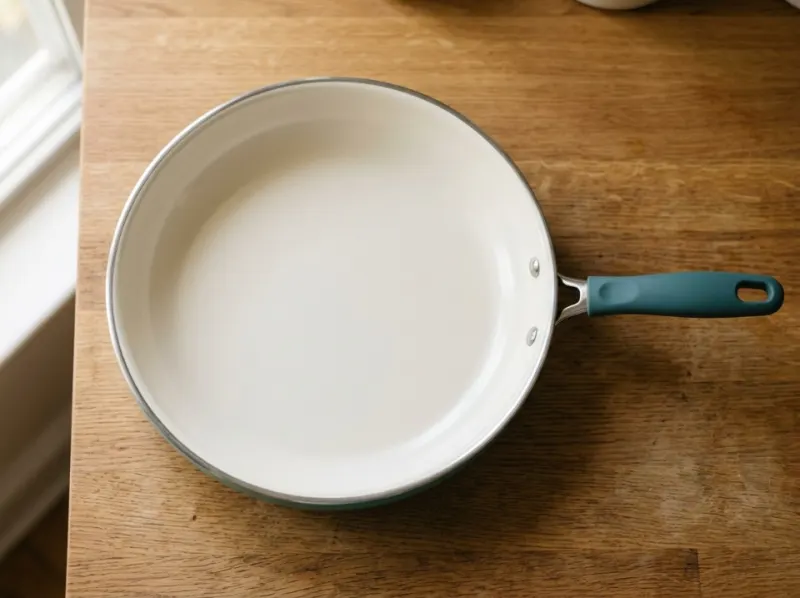
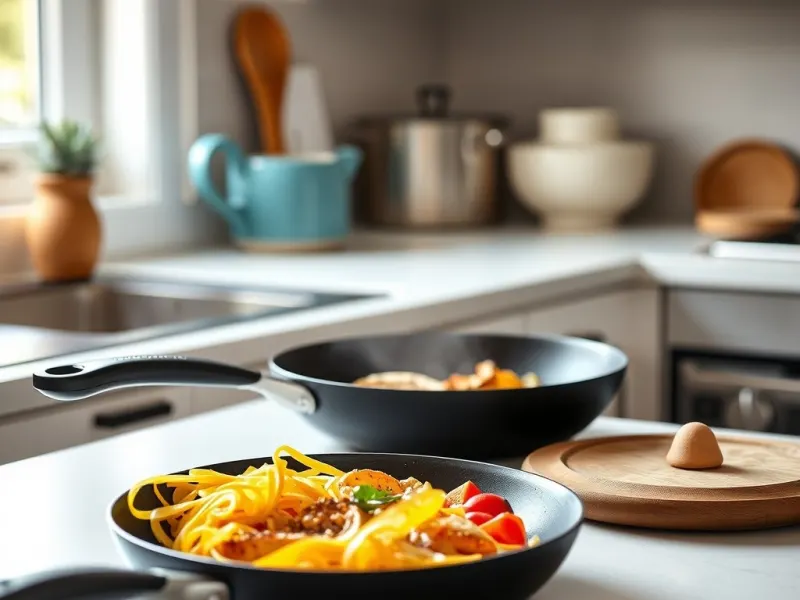
This is the daily workhorse: eggs, pancakes, grilled cheese, quick stir fry, reheating leftovers. Anything that tends to stick, or that you want cleaned up in 30 seconds, goes here.
The T-fal Professional Nonstick 10-Inch stays in the budget tier and holds up for the first couple years the way owners expect from a daily-use pan. Its Prometal Pro nonstick interior is built to resist scratching, and the Thermo-Spot indicator helps beginners avoid overheating, the single biggest reason nonstick coatings die early. Our how we review methodology page walks through exactly how we cross-check claims like this against manufacturer specs and owner reports before an article makes a recommendation.
The coating will not last forever. No PTFE coating does, and owner reports on mid-range PTFE like this one span about a year on the short end to 4 to 5 years with careful care before it's time to replace it. T-fal's 10-inch nonstick lines are commonly rated oven-safe to 400°F, with the handle as the limiting factor rather than the coating. You can look up a brand's PFAS status in our cookware safety checker, which quotes the source for every verdict it shows.
At this price point, replacing it after that window costs far less than one premium pan.
This one runs 10 inches across, which fits standard electric elements without wasted heat around the edges, handles 1 to 2 person portions, and stores easily. A 12-inch pan overhangs small burners and eats more cabinet space than the extra surface is usually worth.

Piece 2: A 10-Inch Stainless Steel Pan#
This pan covers everything the nonstick can't: searing chicken thighs, building pan sauces, caramelizing onions, anything where you want fond, those browned bits stuck to the bottom that become flavor. The mechanism is the opposite of nonstick's: PTFE creates a near-frictionless barrier so food releases easily, which is exactly why fond can't form on it. Stainless has no barrier, so a properly heated pan lets food make direct contact, sear, and release a crust that becomes the fond a pan sauce is built from. Stainless steel also goes from stovetop to oven without worrying about coating damage.
The Tramontina 10-Inch Tri-Ply Clad stays in the budget tier. Our dedicated All-Clad vs Tramontina comparison runs the year-long, cost-per-year math and finds it produces results close to an All-Clad D3 at a fraction of the price. A full aluminum core runs up the sides for even heating. We also covered why food sticks to stainless steel and how to fix it in our stainless steel technique article, but the short version: preheat properly and it performs the way it's supposed to.

Piece 3: A 3-Quart Saucepan with Lid#
We rank the saucepan as quietly the most versatile piece in a first kitchen: pasta, rice, oatmeal, reheating soup, boiling eggs, making sauces. It handles every liquid-based task the other two pieces can't.
The Tramontina Tri-Ply Clad 3-Quart Saucepan matches the skillet above (same line, same build quality) and stays in the same budget tier. A stainless interior means no coating to degrade, so it outlasts this apartment and probably the next one after it.
What You Do NOT Need on Day One#
A stockpot. Unless soup gets made weekly, a stockpot sits unused most of the year. The 3-quart saucepan already handles most soup portions for one or two people.
A cast iron skillet. This one is a genuine tradeoff. Cast iron rewards owners who understand seasoning and heat management, but that learning curve competes directly with learning to cook in the first place.
The stronger sequence, given how the two skills interact, is adding cast iron in month 3 or 4, once basic pan skills are already comfortable, rather than fighting both learning curves at once. Our full beginner guide to cast iron is there when that time comes.
A wok. Same logic applies. It's a great tool, but it demands specific technique, especially on electric stoves, that's easier to pick up after basic pan skills are already solid.
Anything "specialized." Crepe pans, grill pans, egg pans, fish spatula pans. Each does one job a good skillet already covers. Our piece on kitchen gadgets worth skipping goes deeper on this if you want the full list. If a single pan that covers most weeknight duties sounds more appealing than three separate pieces, our best everyday pan guide covers what to look for there instead.
The Three-Piece Breakdown#
| Piece | Recommendation | Handles |
|---|---|---|
| Nonstick skillet | T-fal Professional 10-Inch | Eggs, pancakes, quick reheats, anything that sticks |
| Stainless pan | Tramontina Tri-Ply Clad 10-Inch | Searing, pan sauces, oven finishing |
| Saucepan | Tramontina Tri-Ply Clad 3-Qt | Pasta, rice, soups, boiling |
All three stay in the budget tier.
Compare that to a similarly priced 15-piece nonstick set where half the pieces collect dust. The spend lands in a similar range, but individual pieces in the right materials for each job outperform a set built around a single coating.
If you're still weighing the overall approach, our cookware sets vs individual pieces piece lays out the full case both ways. And if a set genuinely fits your kitchen better, at least get a tri-ply one that performs. Our review of the best budget-tier cookware set covers which option actually delivers on per-piece value.
When to Add Your Fourth Piece#
After about 3 months, the pattern of what actually gets cooked becomes obvious. That pattern tells you what to add next.
Cooking a lot of meat and want better searing? A cast iron skillet. Making bigger batch soups and stews? A 5-quart Dutch oven.
Cooking pasta frequently? Upgrade to a larger pot. Stir fry becoming a habit? A carbon steel wok.
But wait until the pattern is clear. The worst kitchen purchases are the aspirational ones, buying for who you think you'll become rather than how you actually cook today.
Our pick for a first apartment stays the same across every owner-report comparison we cross-checked: the T-fal Professional Nonstick, the Tramontina Tri-Ply Clad skillet, and the Tramontina Tri-Ply Clad saucepan, bought individually rather than boxed into a set.