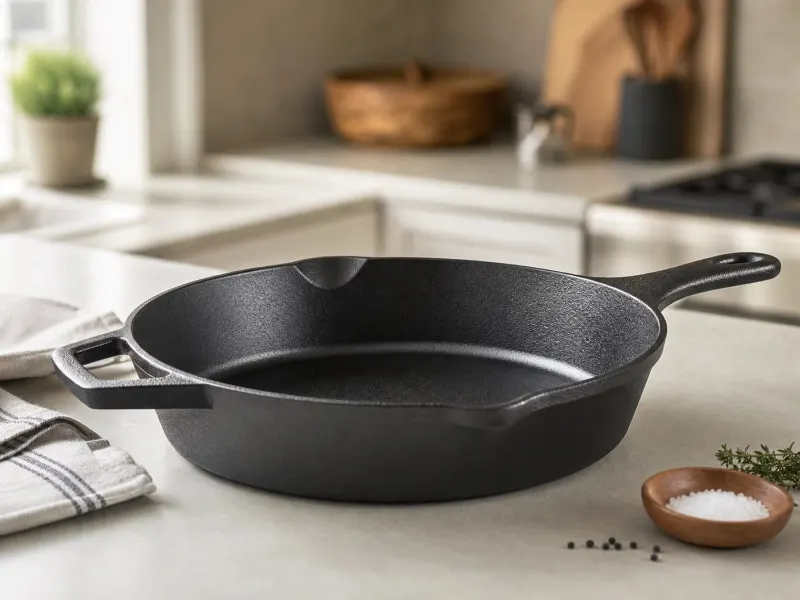
5.2 pounds is what the Stargazer 10.5-Inch weighs per the manufacturer spec sheet, a pound or more lighter than most standard cast iron skillets its size. That matters because weight is half the reason a rough-bottomed Lodge scratches glass: sliding a heavy pan out of gas-cooking habit is how the first scratch usually happens.
For a glass top stove, the best cast iron skillet is the Stargazer 10.5-Inch. Its machined smooth bottom will not scratch glass. On a tighter budget, sanding the bottom of a standard Lodge works too. Either way, the rule that actually prevents damage is simple: lift, never slide.
Our cast iron cookware guide covers the other axes that matter beyond stovetop compatibility, including seasoning and the enameled option.
Two questions follow from that scratch. Is cast iron done on this stove for good, and if not, which fix is worth the effort? We dug through manufacturer specs and independent glass-top guides on both repair paths to find out, and checked each claim against the standard laid out on the how we review page.
The Two Approaches#
After the first scratch, the advice online splits into two camps.
Camp 1: sand the pan you already own. Take 80-grit sandpaper to the bottom of a standard Lodge, smooth out the casting texture, and the result costs nothing but time.
Camp 2: buy a skillet that is already smooth. Spend more upfront on a pan machined smooth from the factory, no DIY required.
The physical reason either fix works is simple: a rough casting surface is covered in microscopic sharp peaks, and it is those peaks, not the iron itself, that dig into glass. Sanding or machining removes them, and both routes converge on the same outcome once that peak-removal step is done.
The Budget Route: Sanding a Lodge 10.25-Inch#
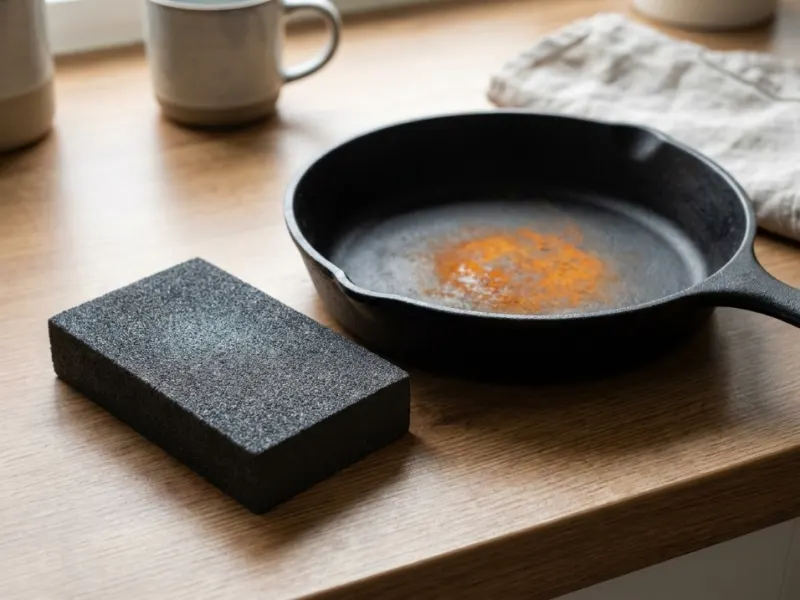
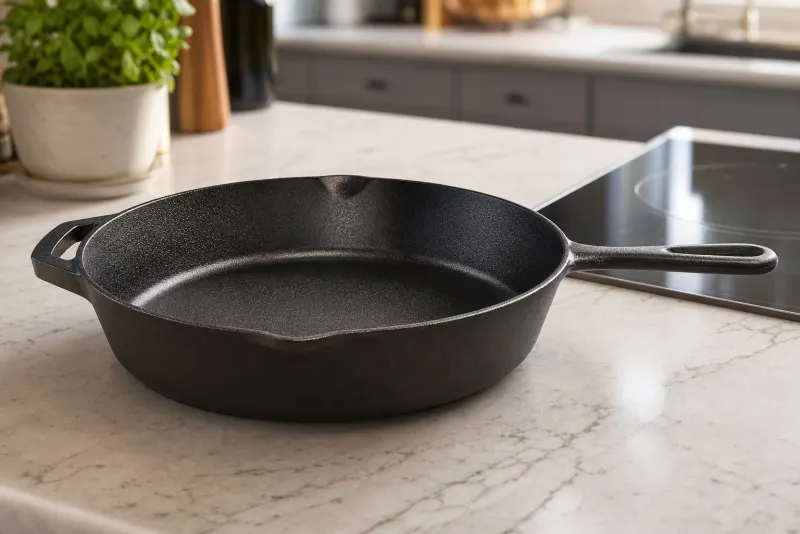
Sanding the bottom of a Lodge with 80-grit sandpaper, followed by a pass with 120-grit, takes the texture from rough pebbly casting to something resembling fine concrete. Not glass-smooth, but no more sharp ridges to catch.
Cost is close to zero when you already own the pan. Just the price of sandpaper.
What works: the scratching stops, since the sharp casting peaks that caused it are gone.
What does not work as well: the sanded bottom is not truly smooth. It behaves more like very fine sandpaper. You still cannot slide it (more on that below), and a hand run across the bottom feels a slight grit. Sanding also means re-seasoning the bottom afterward, which takes a few oven cycles to build back up.
The bigger issue is the vigilance that never fully goes away, since the surface was never designed for glass in the first place. Sanding makes the pan less dangerous. It does not make it safe by design.

The Premium Route: Stargazer 10.5-Inch Skillet#
The Stargazer 10.5-Inch Cast Iron Skillet sits at the premium end of cast iron pricing. Its whole pan, cooking surface and bottom alike, is machined smooth after casting.
What works: the bottom feels nothing like a sanded Lodge. Where sanding leaves a fine-grit texture, the Stargazer bottom feels like a ceramic plate, built specifically for this. Aggregated owner reports confirm zero scratching after months of regular use, which tracks with that machined finish.
It is also lighter, at 5.2 pounds, with a stay-cool handle that makes controlled placement easier.
The cooking surface benefits too. Food releases more easily from the machined-smooth interior, and seasoning bonds evenly across it. This is not just a glass-top fix. It is a better skillet, full stop.
What does not work: the price. A single skillet at this cost is a real ask. And for the first couple of weeks, old habits die hard. Aggregated reviews of the Stargazer line note that new owners often need a few weeks to trust a smooth bottom after years of rough cast iron, glass top or not.
The Verdict#
Both approaches work. Neither scratches glass once the initial incident is behind you. The two paths still differ in what they ask of you afterward.
The sanded Lodge is good enough with effort. Sanding properly, re-seasoning the bottom, and staying aware every time the pan goes on the stove are the price of admission. It is the right call if you already own a Lodge and do not want to pay Stargazer's premium.
The pan works. It just comes with a low-grade vigilance that never fully disappears.
The Stargazer removes that mental load. After the first few weeks, the conscious tracking drops away and you are just cooking. The smooth bottom, the lighter weight, the better handle: it adds up to a pan you trust on glass without thinking about it.
Our pick for a fresh start on a glass top stove is the Stargazer, since it skips the DIY phase entirely. On a tighter budget, sanding a Lodge works, provided you commit to lift-never-slide permanently.
What Actually Scratches Glass (and How to Prevent It)#
Most online advice is heavy on fear and light on specifics. The actual causes of scratching break down into four.
Carbon buildup on the bottom is a scratch cause that gets underrated compared to casting texture. Carbonized food and grease build sharp, uneven deposits over time. Flip the pan over and check it before assuming the casting itself is the problem.
The slide reflex from gas cooking is the next one. On glass, every slide is a scratch risk no matter how smooth the pan is. Always lift with two hands. This single habit change matters more than which pan is in the kitchen.
Thermal shock is the hidden danger. A very hot cast iron skillet set on a cold section of glass can crack the cooktop. The glass expands unevenly and fractures at the stress point.
Preheat slowly on medium heat and never move a hot pan to a cold burner, and this path disappears. Scratching from rough bottoms or sliding is far more common in practice. For pans that keep warping on glass instead, the mechanics are different: our breakdown of why pans warp covers which materials resist it.
Weight distribution rounds out the list. Center the pan on the element, set it down flat instead of edge-first, and use both hands. A 10-inch skillet is easier to control than a 12-inch, since it is lighter to lift. Our 10 vs 12 inch skillet breakdown covers how your cooking habits should drive that choice.
The heavier the pot, the more this matters. A Dutch oven used for deep frying has a bottom just as rough as a skillet, plus a loaded weight that runs much higher, so the same set-it-down-do-not-drag rule applies double.
Choosing the Best Cast Iron Skillet for a Glass Top Stove#
Shopping for glass top compatibility comes down to four checks. Run a fingernail across the bottom. If it catches, it will catch on glass.
Look for 5.2 pounds or under, since lighter means less damage risk if you drop it. Favor a longer handle for controlled placement, and pick 10-inch over 12-inch if your burner size allows it. The Stargazer hits all four.
If you are weighing stainless steel instead of cast iron for your glass top, we covered the best stainless steel cookware for glass top stoves separately.
Where to Go From Here#
Both picks are linked above: the Stargazer 10.5-Inch Cast Iron Skillet and the Lodge 10.25-Inch Pre-Seasoned Skillet. Whichever route fits your kitchen, the lift-never-slide habit is what actually protects the glass, not the price tag.
If stainless steel is also on your shortlist for a glass top, we cover why food behaves differently on that surface in Why Does Everything Stick to My Stainless Steel Pan?
For the full lineup of glass-top-safe cookware beyond cast iron, including the short-cycling mechanism most guides miss, see our best pots and pans for glass top stove guide.
For cooks weighing options beyond cast iron entirely, our carbon steel vs cast iron comparison covers the trade-offs in detail. The material selector quiz can help narrow this down based on how you actually cook.