Over 23,000 people have rated the same 10.25-inch skillet on Amazon, and a good chunk of the low scores say the same thing: it arrived rough to the touch, and they assumed that meant something was wrong with it.
Nothing is wrong with it. For your first cast iron skillet, the Lodge 10.25-Inch Cast Iron Skillet is the pick. It ships pre-seasoned and ready to cook. Its 10.25-inch diameter fits standard stovetop burners without overhanging.
Our cast iron cookware guide covers the seasoning habit and the bare-vs-enameled call, once you decide it fits your kitchen.
Its walls are also cast just as thick as skillets that sell for several times more, and heat retention in cast iron comes down to mass, not polish. The budget pan does the same core job as the premium one.
The debate that actually matters when you're just starting out isn't which brand to buy. It's whether that rough, factory-fresh surface is a defect, and what two minutes of maintenance after each meal really requires.
We dug through cast iron forums, owner reviews, and the material science behind seasoning to sort out which parts of that debate matter to you, and which are just brand loyalty.
Best Cast Iron Skillet for Beginners: Why Mass Beats Machining#
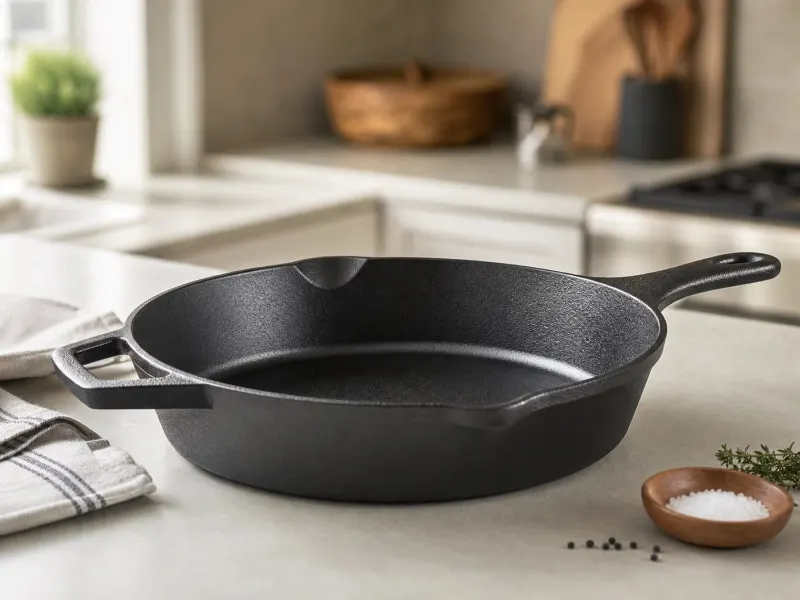
Cast iron holds heat because it's dense. Pick up a standard 10.25-inch skillet and you're holding close to 5.7 pounds.
That mass acts like a thermal battery. It takes several minutes to fully preheat, then barely dips when you drop a cold steak onto the surface.
At the level you're starting from, a budget Lodge holds heat close to what a hand-poured skillet does, because heat retention comes down to mass rather than manufacturing polish. There's no independent lab test putting a precise number on that gap, so take any specific percentage you see quoted online with a grain of salt. What the community consensus and the material science agree on is the direction: the difference between them is casting consistency built up over decades, not day-one cooking performance you'd actually notice at the stove.
The reason cast iron has to be this thick isn't cosmetic. The metal contains 2 to 4 percent carbon, which makes it more brittle than the steel used in stamped cookware.
Thin cast iron would crack under thermal shock. That's why manufacturers pour it into sand molds at a wall thickness built to survive that brittleness.
That same sand-mold process is also what leaves your pan's surface bumpy straight out of the box, which the next section covers.
A 10.25-inch skillet is the size worth starting with. It fits most residential burners without hanging off the edge, it handles two servings comfortably, and it stays manageable for you to lift and tilt with two hands while you're still building the habit.
A 12-inch pan cooks more food at once but adds real weight. Our 10 vs 12 inch skillet comparison breaks down when the larger size earns its extra weight for you.
If searing is the main reason you're buying cast iron, our best pan for searing steak guide covers the preheat and fat choices that build a crust without wrecking your first pan.
The Rough Surface Nobody Warns You About#
Modern Lodge skillets ship with a rough, bumpy cooking surface, and it catches a lot of first-time buyers off guard. Older cast iron, the kind you'd find at estate sales, was machined smooth at the factory.
Modern Lodge skips that extra machining step to keep your price down, so the surface comes straight out of the sand mold.
The rough finish isn't permanent, though. It's a starting point that regular cooking changes.
A few months of regular seasoning fills in the casting's texture from the inside, which is the actual reason your surface stops catching food.
We looked into why this happens, and the mechanism is simple. Seasoning isn't a coating sitting on top of the metal. It's oil that's been baked by heat into a hard, bonded coating that fuses into the iron itself.
On a rough casting, that coating fills the microscopic valleys first. After a few months of regular cooking, owner reports describe your surface smoothing out at a microscopic level.
That's the actual mechanism behind eggs sliding off a well-seasoned Lodge that stuck constantly during its first weeks.
If the texture still bothers you after several months, the Lodge Blacklock Skillet is the documented step up. It's noticeably smoother and lighter than a standard Lodge.
It's not where you should start, but it's the logical next purchase once you want a more refined version of the same tool.
What Seasoning Maintenance Actually Requires#
Pre-seasoned means the oil coating is already baked on at the factory. Your new Lodge skillet is cookable the day it arrives.
Once we broke the routine down to what it actually requires, it turned out simpler than the internet makes it sound. Keeping that coating intact takes about two minutes after each use:
- Rinse with hot water, and scrub with a stiff brush if food is stuck
- Dry it on a hot burner for about a minute to drive off trapped moisture
- Wipe on a barely visible layer of oil with a paper towel
Modern dish soap is mild enough that it won't strip your seasoning, contrary to persistent kitchen folklore. The rule that actually matters is not soaking your pan.
Standing water for hours, especially overnight, is what causes rust. A squirt of soap isn't the problem.

Preheating solves a problem most beginners never connect to the pan's finish. A cold skillet gives your food time to sit against the rough casting, long enough for proteins to mechanically catch on every microscopic peak the mold left behind.
Preheat your pan for 3 to 4 minutes on medium heat and you'll sear a crust fast enough that food never gets the chance to lock into that texture. Our guide to the best oil for seasoning cast iron covers which oils build a durable coating fastest for you, and which ones flake.
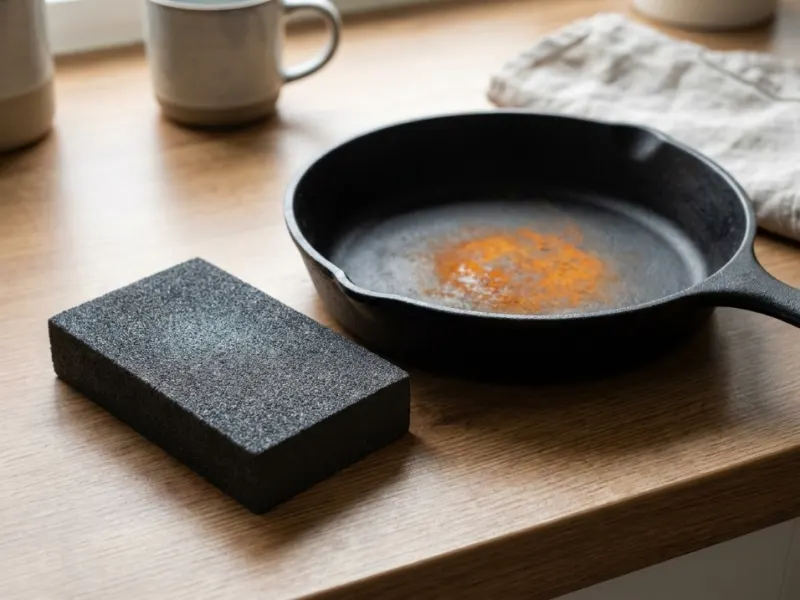
Rust looks alarming the first time it shows up on your pan, but it isn't a death sentence. It means the seasoning failed in one spot and the bare iron underneath oxidized. The metal itself isn't compromised.
Steel wool to bare metal, a fresh oven seasoning cycle, and your pan is back to normal.
Cast Iron on Glass Top Stoves: the Honest Version#
Cast iron and glass cooktops can coexist, but the constraint is real. Lift your pan, never slide it.
A rough cast iron bottom dragged across glass will scratch the surface. Set a hot pan straight onto a cold section of glass and you risk cracking it outright from thermal shock.
When we looked at why some cooktops crack and others don't, the mechanism behind both failure modes turned out to be straightforward. If you consistently lift with two hands, and let a hot pan cool before you set it on a cold section of glass, you avoid both problems entirely.
If you're sliding out of an old gas-stove habit, you're the one who ends up putting a scratch on the glass. The difference isn't the pan. It's the handling.
What Not to Buy When You're Just Starting Out#
A three-piece cast iron set is the most common first-purchase mistake. One 10.25-inch skillet covers most of what you'll actually cook when you're getting started.
Cast iron is heavy enough that storing three pieces becomes its own problem. If your single skillet earns its place after six months of regular use, our cast iron griddle guide or a Dutch oven are the logical next additions for you, not a matching starter set.
Unbranded, rock-bottom-priced cast iron sold at some discount retailers is the other trap. Thin, uneven casting is more likely to crack under thermal shock, which defeats the entire point of buying cast iron for its mass and heat retention.
The Lodge is already the budget option in the category that actually performs. Our budget cast iron skillet guide covers the one legitimate step up in ergonomics without a big jump in price.
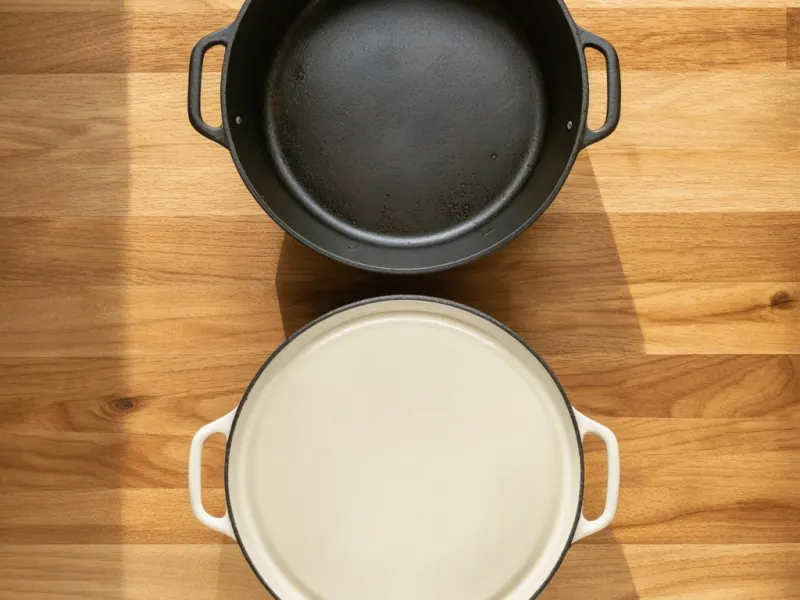
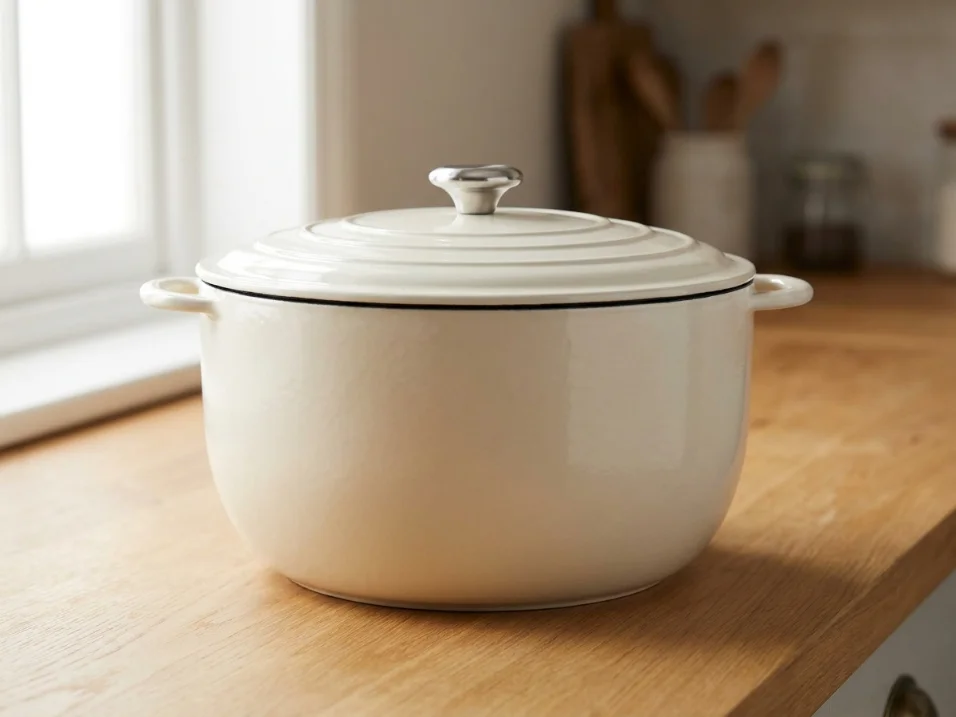
Enameled cast iron, like Le Creuset, gets confused with bare cast iron constantly, but it's a different tool. The enamel coating means you have no seasoning to build.
That makes it excellent for braises and soups, and a poor choice if you want to sear a steak. If you're still weighing materials for your first kitchen setup, run through our material selector quiz in about two minutes.
The Cast Iron Skillet Beginners Should Actually Buy#
For your first cast iron skillet, the Lodge 10.25-Inch Cast Iron Skillet is the one worth buying. It's priced at the budget end of the category, and it works straight out of the box.
Heat it before you add oil and you'll solve most of the sticking problems you'd otherwise run into early on.
Skip the soak, season it regularly, and cook with it often. Within six months, the seasoning builds into a surface that releases food easily, and unlike a non-stick coating, that surface keeps improving instead of degrading on you.
A cast iron skillet doesn't need replacing every few years the way non-stick does. Its real cost per year of ownership runs lower than almost anything else in your kitchen. If you are choosing between one cast iron skillet and replacing a nonstick pan, enter both prices in the cookware cost calculator to compare total spending over your chosen years.
That's the case we'd make to you as a first-time buyer. Cast iron passed down across generations, the kind people post photos of on cooking forums, isn't an exaggeration. These pans outlive the people who buy them.
The only realistic way you'd kill one is to crack it outright. Rust, stuck food, and patchy seasoning are all fixable in about twenty minutes.
Start with one pan. Start with the budget option. Start cooking.