You're comparing Ballarini against a T-fal, a Cuisinart, maybe a GreenPan, trying to work out if the Italian heritage story is worth paying for, and whether "Ballarini" even means one product.
Ballarini isn't one product. It spans a lightweight nonstick line, Parma Plus, with a Granitium coating, and a separate carbon steel line, Professionale Series 3000, with no coating to wear through. Consumer Reports rates the Parma line very good for coating durability, backed by a lifetime warranty, but Zwilling now sells a different product under the same "Parma Plus" name. The line you pick decides more than the brand name does.
That durability score carries an asterisk: owner reports split sharply past the first year or two, and the reviewed pan's exact coating chemistry isn't confirmed by Zwilling's own spec pages. Here's what's actually documented, collection by collection.
Ballarini Cookware Spans Two Very Different Lines#
Ballarini was founded in Italy in 1889. It's now owned by Zwilling J.A. Henckels, the German cutlery and cookware group. The bare ballarini.com domain redirects straight to Zwilling's own site.
That ownership hasn't moved production. The Parma Plus 10-inch fry pan reviewed here still lists Made in Italy on the label.
Two lines matter most when you're shopping this brand:
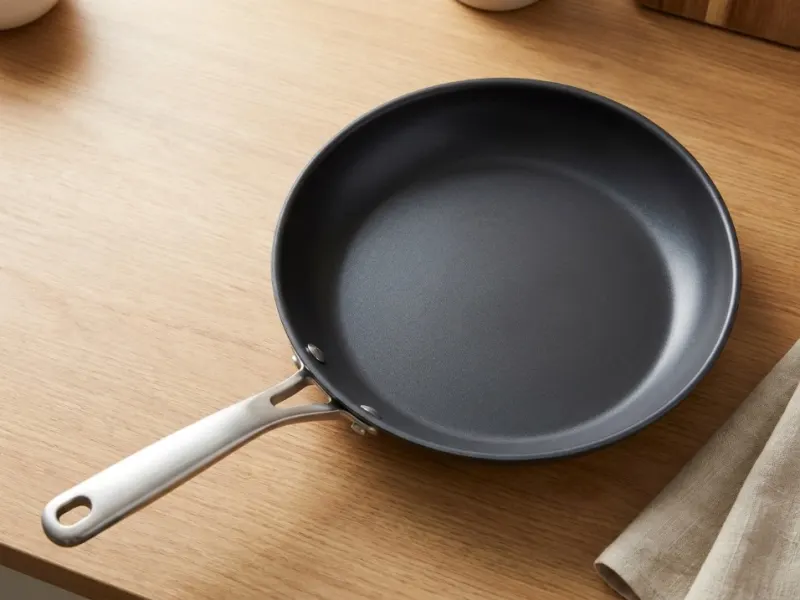
- Parma Plus: forged aluminum body, Granitium nonstick coating, the everyday frying-pan line
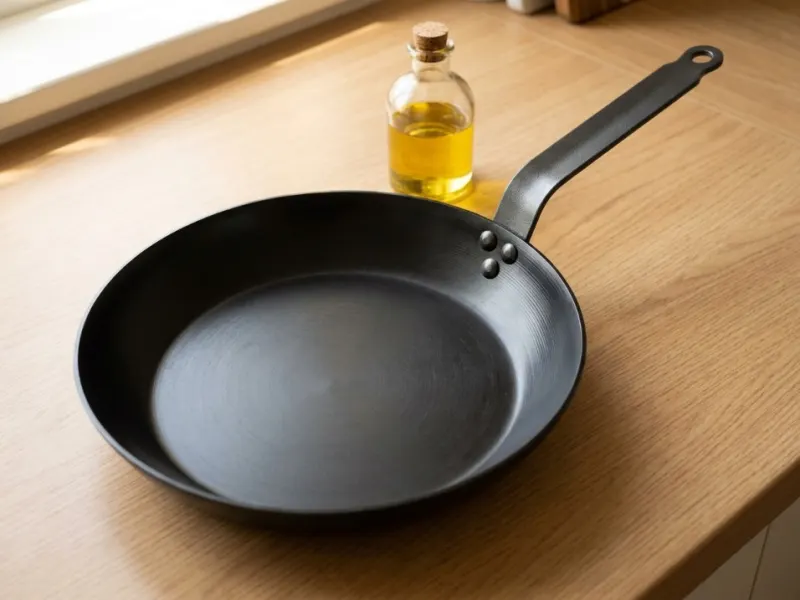
- Professionale Series 3000: carbon steel, no nonstick coating, a heavier and more traditional pan
Picking between them isn't a brand decision, it's a construction decision. There's a wrinkle inside the nonstick side, too: Zwilling now sells a product called "Parma Plus Ceramic" on its own US site. It is not the same pan as the Amazon-listed "Parma Plus by HENCKELS" reviewed here. The rest of this review keeps that boundary straight.

Collections at a Glance#
Ballarini and Zwilling sell the nonstick side under a dozen-plus names. Only a handful have a spec page or lab test behind them:
| Collection | Body material | Coating | Induction | Oven limit | Thermopoint |
|---|---|---|---|---|---|
| Modena (base) | Aluminum | PTFE, ceramic-particle reinforced | No | 300°F | Yes |
| Professionale 2800 (nonstick) | Aluminum | PTFE, ceramic-particle reinforced | No | Not stated | Not stated |
| Professionale Series 3000 (carbon steel) | Carbon steel | None, uncoated | Yes | Oven-safe (no number given) | Not stated |
| Parma Plus Ceramic (current Zwilling US product) | Aluminum | Ceramic, explicitly PTFE-free | No | 300°F | Not stated |
| Parma Plus by Henckels (this reviewed pan) | Aluminum | Not confirmed for this exact SKU | Not confirmed for this exact SKU (CR calls the tested Parma set induction-compatible) | 300°F (Consumer Reports) | Not stated |
The blank spots matter as much as the filled ones. Two products share the "Parma Plus" name but aren't interchangeable: one is Zwilling's newer, confirmed-PTFE-free ceramic pan; the other is the older Granitium-coated pan sold on the Amazon listing this review covers.
How the Pans Are Built#
Construction details that never make it onto a marketing page still decide how a pan feels and wears.
The carbon steel Professionale Series 3000 is rivetless on the inside, per two independent Reddit owners. One reports "no rivets on the inside like the matfer" and likes it so far. A third chose the pan over a De Buyer for the same reason, calling it "much easier to clean and more hygienic." One owner puts the wall thickness at roughly 2.5mm, "the same thickness as the DeBuyer pans," though that figure is a single report, unconfirmed elsewhere.
Handle fixing turns out to be collection-specific, not a brand standard. Modena's handle is welded per its own spec page. Professionale 2800 uses a riveted hollow-tube stainless handle. Parma Plus Ceramic's handle is screwed on.
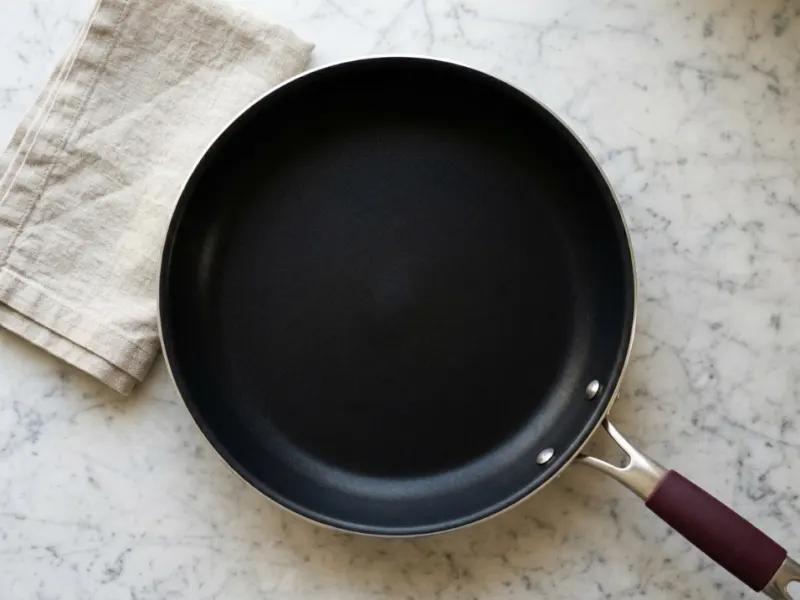
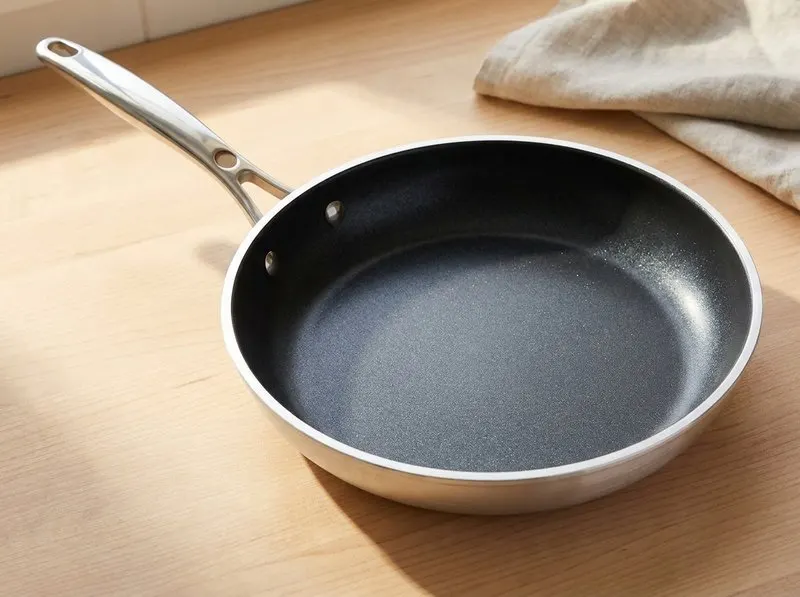
No spec page confirms the fixing on the Parma Plus by Henckels pan reviewed here, which is why the hero image is captioned "stainless handle," not a guessed rivet, weld, or screw.
Modena also carries a patented Thermopoint heat indicator, a visual preheat cue, per its own product page. It's not mentioned on the Professionale 2800 or Series 3000 spec pages, and it isn't documented for the reviewed Parma Plus pan either.
What's Actually in the Granitium Coating#
Ballarini brands its nonstick surface Granitium. Zwilling's storefront calls it "fork-proof, metal-safe and easy to clean," and calls the brand an R&D house with an "ever-expanding" line of coatings.
Here's what Zwilling's own spec pages resolve, and what they don't. Two collections are confirmed: Modena's own spec table lists "Internal coating: PTFE," and so does Professionale 2800's. Both describe the coating as ceramic-particle reinforced, not a PTFE-free ceramic system. That settles the PTFE-versus-ceramic question for those two lines.
It does not settle it for the pan reviewed here. Zwilling's current US "Parma Plus" listing is a different, newer product called "Parma Plus Ceramic," and its own spec table states "Internal coating: Ceramic coating." That product's marketing copy says it is made without PFAS, PFOA, PTFE, lead, or cadmium.
That's a real, PTFE-free product, but it isn't the "BALLARINI Parma Plus by HENCKELS" pan on the Amazon listing this review covers. No current Zwilling page states that older pan's coating chemistry either way. The honest answer: it isn't confirmed by a brand source, not that it's secretly one or the other.
The safety case for nonstick coatings holds up either way. PTFE is FDA-authorized for food-contact use and only becomes a fume risk once a pan sits empty on high heat, well past cooking temperatures.
What every family shares is wear. The coating degrades with age and use no matter the chemistry, and Consumer Reports draws its line at visible damage: a scratched or pitted pan "can potentially release pieces of the nonstick coating into your food." The lab test below measures that wear, and it is why bare metal in the owner reports means replace the pan.
What Consumer Reports Found in the Lab#
Consumer Reports tested the Ballarini Parma nonstick set.
The durability number matters most for a buying decision. CR rated the coating very good for withstanding up to 2,000 strokes of steel wool on the frying pan surface. That simulates years of scraping with metal utensils and abrasive cleaners.
The rest of the lab card, all T1:
- Cooking evenness rated excellent, speed of heating rated excellent
- Food release rated very good on CR's four-egg release test
- Handle temperature rated very good, handle sturdiness rated good, simmering performance rated very good
- Oven-safe to 300°F, induction-compatible, and dishwasher-safe
- Aluminum construction with glass lids
- Lifetime warranty on the set
That 2,000-stroke figure sounds abstract alone. Compare it to what owners describe over real years, and the lab data and community reports start to disagree.
What Owners Report After Years of Real Use#

Amazon owners on the Parma line repeatedly call the pans noticeably lightweight, and one review names the set easier on arthritic hands than a heavier all-metal alternative. That's a genuine, repeated advantage.
The coating story is more mixed. Two independent owners, in separate Reddit threads, report the nonstick surface flaking or wearing through. Both describe it happening at a spot dead center on the pan, after years of regular use.
One owner puts it directly: "the non-stick lining is starting to let go in the middle," with "a spot in the dead center where the granite coating has flaked off," after years of ownership. The other inherited a hand-me-down pan worn down to bare metal. A commenter in that same thread called worn nonstick coating "trash" once it reaches that state.
That center-point wear pattern points to a mechanism: a spatula or spoon hits the same spot on every flip, so the coating thins there first.
Set against that: one owner reports the opposite outcome on a Parma skillet and lid set, used almost daily for at least 2 years and "still like new," favorably against a GreenPan set they had to throw out. That's one report, not a pattern.
A second wear data point comes from a different line. Amazon owners on a Modena 3-piece set describe discoloration then sticking, and separately describe the coating peeling in under two months. A third owner reports success only with "low heat and no oil," a real technique caveat. Amazon's own "Customers say" summary for that listing claims the set lasts "about 4 years," but that's an aggregation, not an individual account, so treat it as one data point, not a pattern.
If years of coating wear worries you, the fix isn't a different nonstick brand. It's stepping outside nonstick entirely. The Ballarini Professionale Series 3000 carbon steel line sidesteps the question since there's no coating to wear through. One catch: it's hard to find in stock in the US right now, and the two US Amazon listings checked for it currently show unavailable.
Owners who found it like it. Two compare it favorably to De Buyer's Mineral B Pro on weight and build, calling it "thick and heavy" with "excellent craftsmanship," and a third calls it "really high quality" after seasoning. Both note the initial blued seasoning fades fast, and it doesn't patina as readily. All three still call it very good once broken in.
The Lifetime Warranty, on Paper and in Practice#
Consumer Reports records a lifetime warranty on the tested Parma set, unchanged here. No current Zwilling warranty page for this SKU turned up in researching this review, so that gap is noted rather than filled with a guess.
What's changed is the practical picture from owners. Two 1-star reviews on the Amazon Modena listing describe the warranty not being honored. One got a first replacement, then a second claim refused, with "the metal is exposed," calling it "dangerous." The other reports the coating "delaminating" in under two months, with the warranty not honored at all.
That doesn't make Consumer Reports wrong. A warranty existing on paper and a claim being approved in practice are two different facts, and only the first is lab-verified: budget for possible friction on a multi-year claim, rather than assuming a lifetime warranty guarantees a replacement.
Our Verdict on Ballarini#
For most home cooks, the Parma Plus fry pan is still the sensible pick if you value the CR data over an unresolved coating-chemistry question: real lab data, a lifetime warranty on paper, and a lightweight build owners praise. The center-pan wear pattern only shows up after years, and the warranty-friction reports on file are tied to a different collection (Modena), not this exact pan.
If a brand-confirmed, PTFE-free coating matters more than the CR record here, Zwilling's current "Parma Plus Ceramic" answers that directly. It's a different pan from the one sold on this article's Amazon link.
If you cook daily and want to skip the coating-wear question, the Professionale Series 3000 carbon steel line is the honest alternative, so long as you can find it in stock. The tradeoff: you learn to season and maintain a pan the older way, and the two US listings checked for this review show unavailable.
Either path beats guessing from the "Made in Italy since 1889" story alone, or assuming every pan named "Parma Plus" is identical. Our nonstick cookware buying guide covers how Granitium-style coatings compare across the wider PTFE-versus-ceramic decision, and our material selector quiz can help if you're torn between nonstick and carbon steel. Our cookware safety checker lists which lines are bare metal and which carry a coating, with the source quoted for each.
Want the 10-piece version instead of the single fry pan? The Ballarini Parma 10-piece set covers frying pans, saucepans, a sauté pan, and a Dutch oven with the same Granitium coating.
Two lines, three overlapping names, two different aging patterns. The brand name on the box was never the whole decision.