You are choosing between a 10 vs 12 inch skillet, and every guide points you toward the bigger one for versatility. That advice skips the question that actually decides which pan earns its shelf space.
For one or two people cooking on a typical weeknight, start with the 10.25-inch cast iron skillet and add the 12-inch later. It is lighter, it fits one or two portions without wasted space, and it costs less. Step up to 12 inches only for regular crowds. That means feeding three or more, or cooking one-pan meals for a group.
We compared the two sizes on weight and real cooking surface, checked the manufacturer specs, and read what owners say about living with each. Two findings stood out, and they pull against the usual advice.
Here is the catch. A 12-inch skillet is not as much bigger as its label suggests. It is also bigger than most kitchens need most nights.
Both are true, and the number we dug into first explains why.
The Rim Number Overstates How Much Pan You Get#
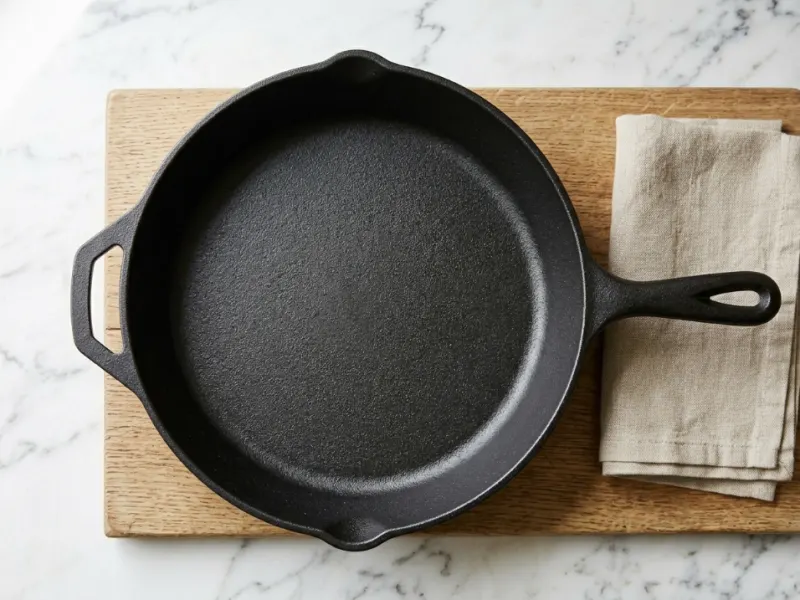
Skillet size is measured rim to rim. The flat cooking surface, where food actually sits, is smaller, because the sloped walls eat into that diameter.
Stargazer's own spec listing shows it plainly: its 10.5-inch cast iron skillet lists an 8.1-inch cooking surface. The exact loss depends on how steeply a pan's walls flare, but the rim number always overstates the flat space you actually cook on.
That holds for the 10-inch and the 12-inch alike, so both give up cooking room the label never mentions.
Here is the part that surprised us. The gap between the two sizes is bigger than the labels imply, because cooking area grows with the square of the diameter, not in step with the rim. Lodge's two sizes are 10.25 and 12 inches, and running the area math on them, the 12-inch has close to 37% more rim area, roughly 113 versus 83 square inches.
Lodge's own sizing guide confirms it on the flat surface that matters. The company lists the 10.25-inch at 53.43 square inches of cooking surface and the 12-inch at 74.62, about 40% more. A two-inch step up on the label works out to well over a third more surface, far more than the rim numbers alone suggest.
Two Sizes, Two Pounds Apart#
The size gap shows up in your hand. When we pulled the manufacturer figures, Lodge lists its 10.25-inch cast iron skillet at about 5.7 pounds empty, and the 12-inch at about 7.9 pounds.
Roughly two pounds sounds like nothing on paper. Then you lift a hot pan one-handed to tilt it, baste, or carry it to the sink.
Cast iron is dense and heavy for its size because that mass is what lets it hold heat once hot. What we kept coming back to is that for a cook feeding one or two people, those two pounds decide the daily experience.
One pan is easy to maneuver. The other wants two hands every time it moves.
How to Choose Between a 10 vs 12 Inch Skillet#
Three questions settle it fast, and we built them from the sizing data above rather than from habit.
- How many people do you feed on a typical weeknight? One or two, start with 10 inches; three or more, start with 12. Lodge's own sizing guide draws the same line, labeling the 10.25-inch "dinner for two" and calling the 12-inch "great for a family of four." Count the meals you actually cook, not the dinner party you host twice a year.
- What do you cook most often? Eggs, a single protein, vegetables for two, and grilled cheese all favor the smaller pan, which keeps food in contact with less empty metal around it. One-pan dinners, batch cooking, and searing more than two portions want the 12-inch, which stops the pan from crowding.
- Does weight matter for your setup? To lift and tilt one-handed, the 5.7-pound 10-inch is far easier than the 7.9-pound 12-inch.
The Mistake: Buying for the Big Cook, Not the Typical One#
The default advice says buy the 12-inch because it is more versatile, and on paper it does everything the 10-inch does and more. The pattern we noticed is that this advice sizes the pan for the largest meal you might occasionally make instead of the meal you actually make most weeknights. That is the mistake.
Cook for one or two people and the 12-inch hands you more flat surface than you need, plus the extra weight to manage every time. The "versatile" pan turns out to be oversized for the cooking that fills most of your week.
Where the 12-Inch Earns Its Place#
The bigger pan is the right call for three jobs:
- Searing several portions at once. Two steaks sit with space between them, or four chicken thighs go skin-down without touching, so they brown instead of steam.
- One-pan meals for a family. Think sausage, peppers, and onions, or a frittata that feeds four.
- Stovetop-to-oven-to-table dishes. A whole roast chicken or a cornbread scaled for a crowd needs the room.
For a household of three or more that cooks these meals often, the weight earns its keep because the capacity actually gets used.
Why the 10.25-Inch Is the Daily Driver for Most#
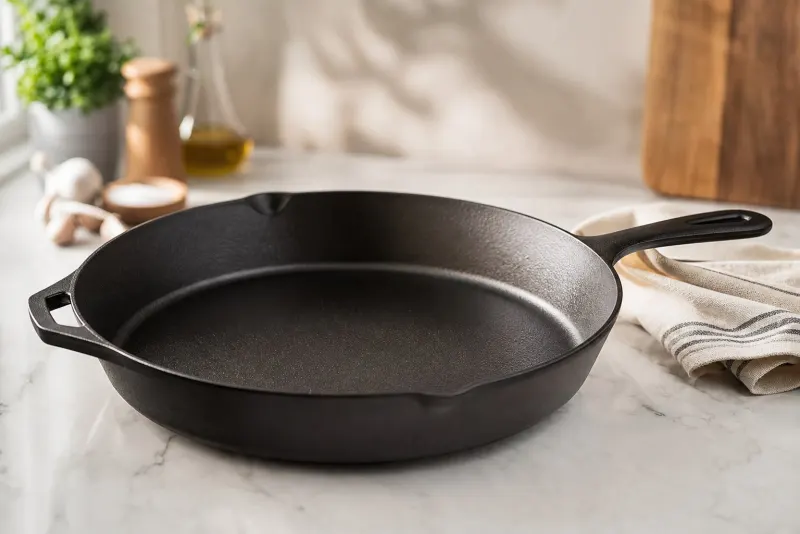
For one or two people, the 10.25-inch does the everyday work, and Lodge's own "dinner for two" label for this size matches what we found in the surface numbers. Two eggs fit with room to spare, and two chicken breasts sear without crowding.
A single steak holds the surface in closer contact with the food. It arrives pre-seasoned and ready to cook, oven-safe at any temperature, and works on induction, electric, and gas.
One honest limitation stood out in our research. Lodge's standard casting has a rough, pebbly surface, unlike the machined-smooth finish on premium skillets, so eggs and delicate foods catch on the texture in the early going, before seasoning fills it in.
It is also bare cast iron, which means drying it and wiping on a thin film of oil after each wash, never the dishwasher.
The Lodge 10.25-Inch Cast Iron Skillet sits at the budget end of cast iron. It is stocked almost everywhere, which makes it easy to replace and easy to find answers for.

Already cooking for a crowd most nights? The Lodge 12-Inch Cast Iron Skillet is the same construction and rough-cast surface in the larger size.
The mistake is not owning it. The mistake is buying it first, before a pan that fits your typical weeknight.
The Buying Order That Works#
Start with the size that matches your most common meal, then add the other later. For most one or two person households, our read of the surface and weight numbers says the 10.25-inch first, and the 12-inch comes down the road when a bigger cook calls for it.
You learn cast iron on the pan you use every day, so the habits form fast. By the time the second pan arrives, managing seasoning and heat is second nature.
The best skillet is the one that comes off the shelf tonight, not the one that could technically handle any meal. Match the size to the cooking you actually do.
Related Reading#
New to cast iron? Our guide for beginners covers seasoning and what to cook first. On a glass-top range, the best cast iron skillet for glass top stoves walks through the flat-base and weight concerns that matter most there.
Still deciding on material? Our carbon steel vs cast iron breakdown shows when each one wins. And if you are not sure a skillet is even the right shape, skillet vs saucepan covers the wall geometry that decides it.